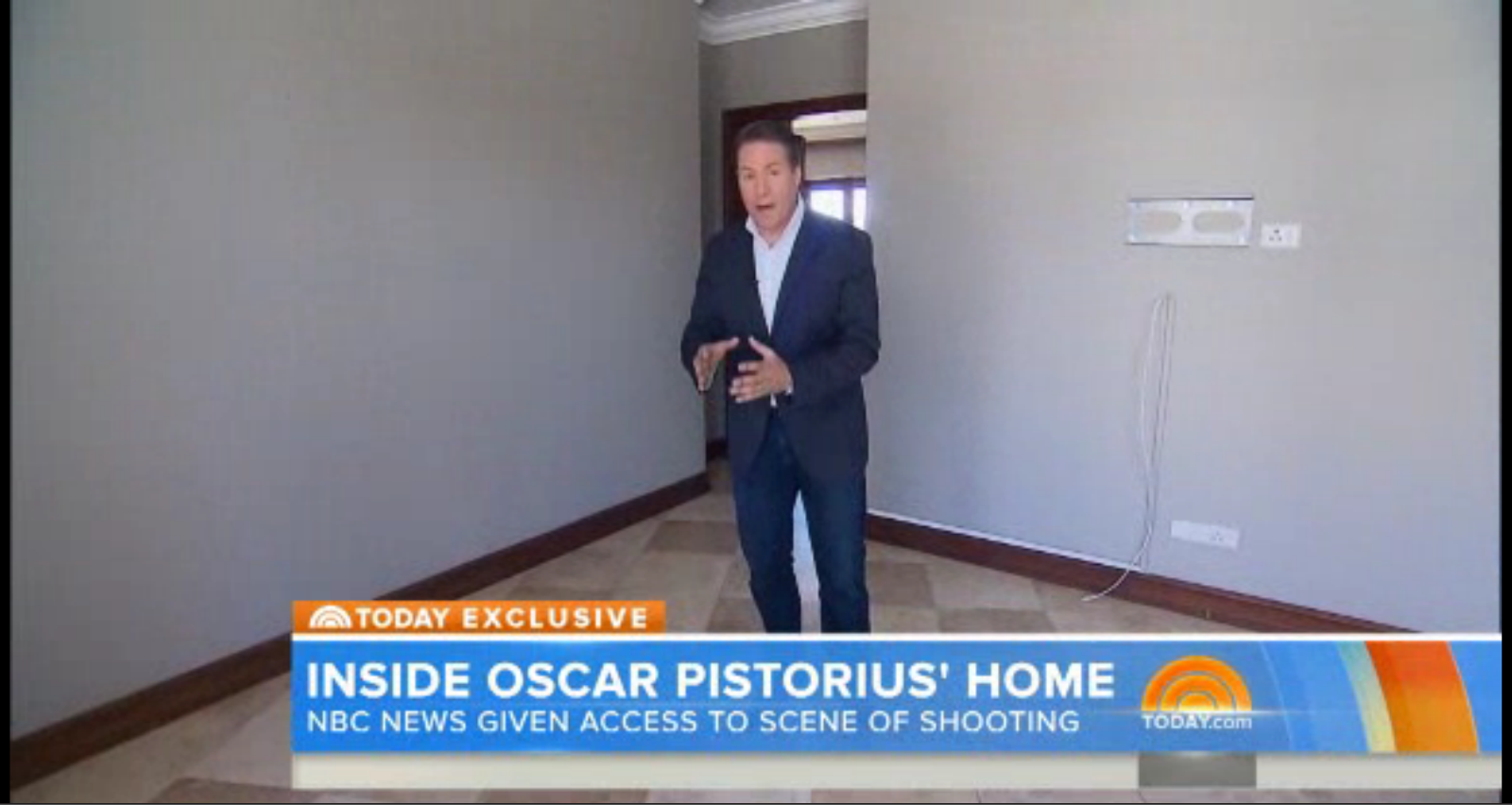
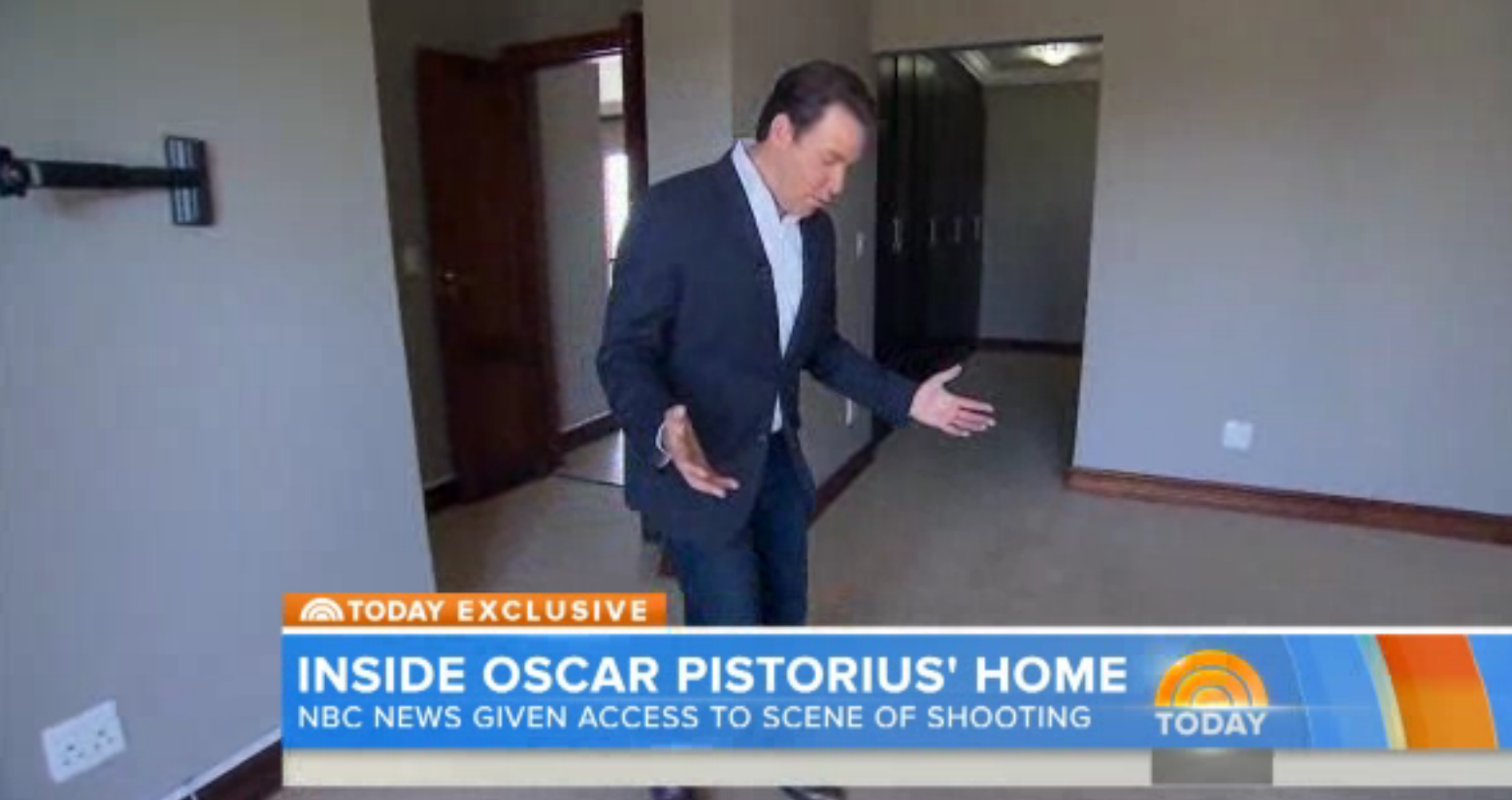
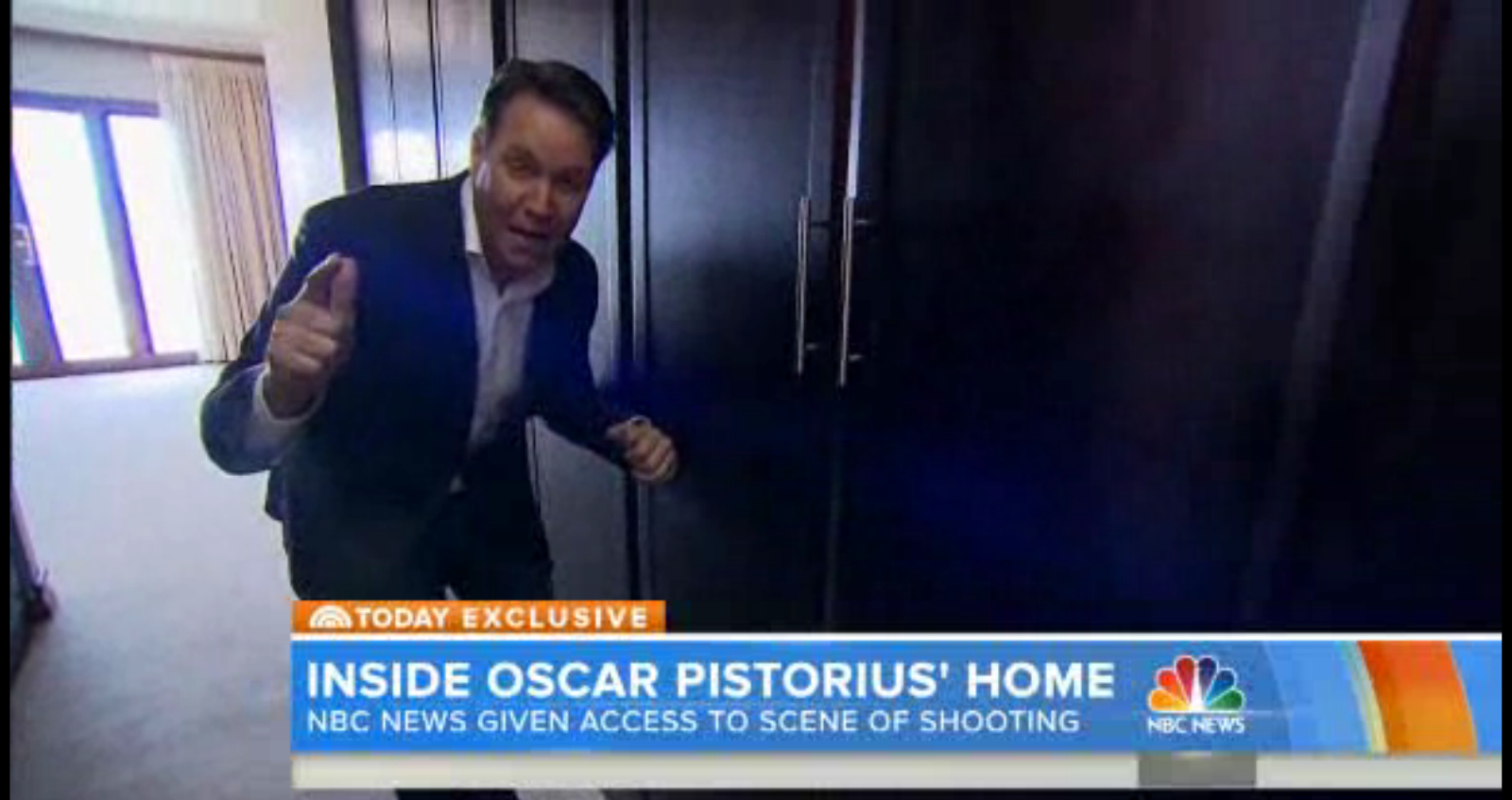
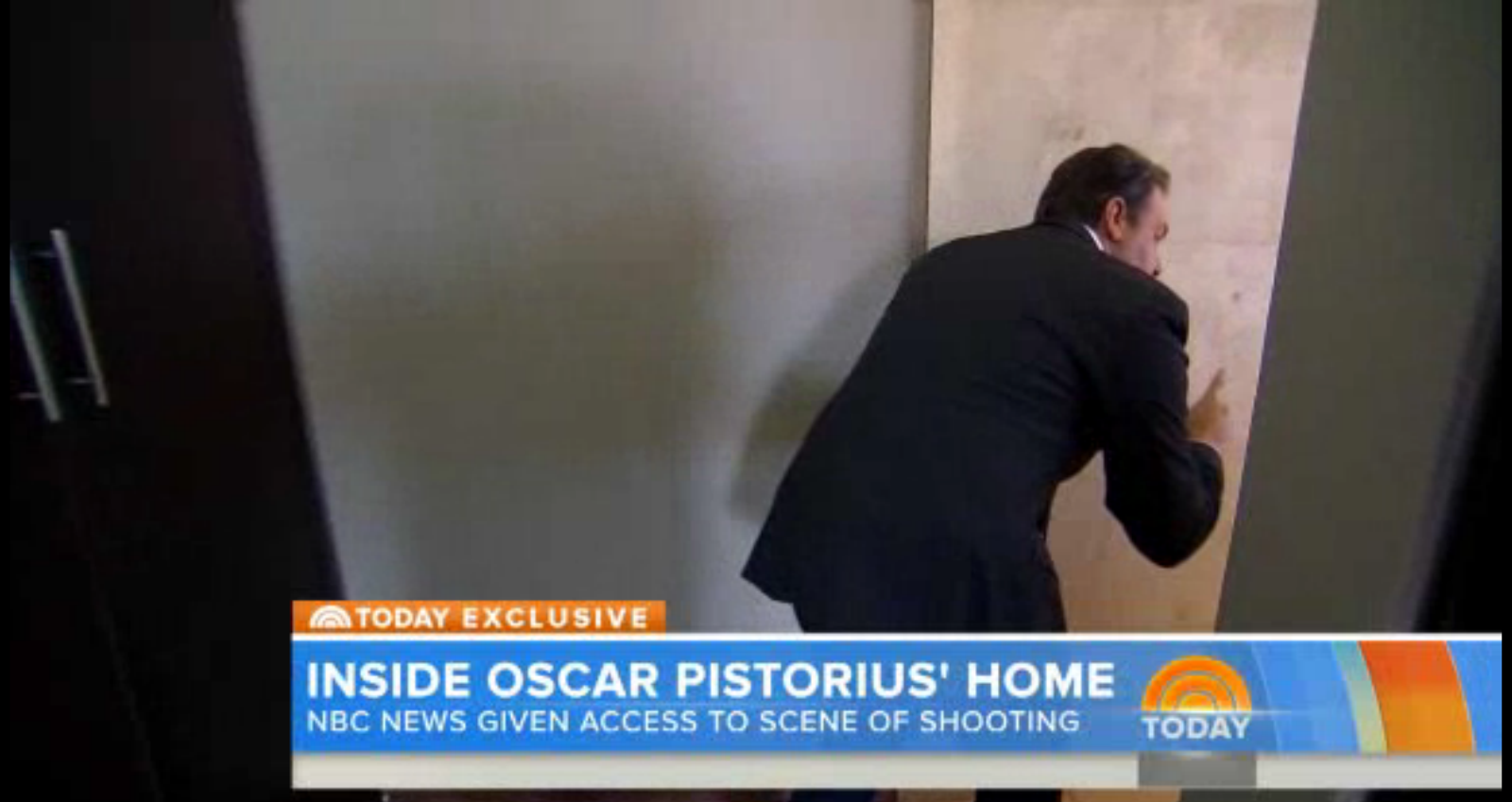
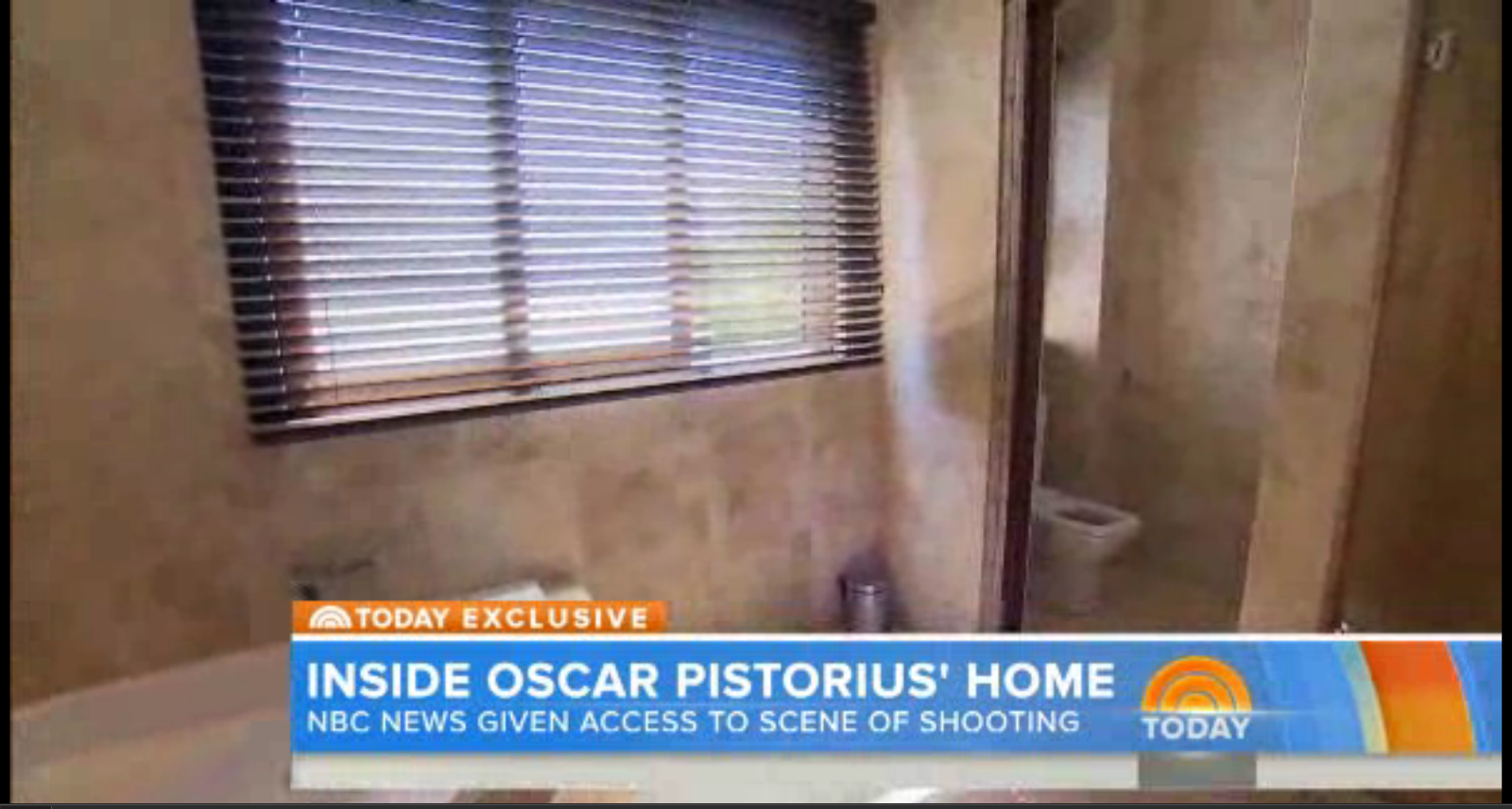
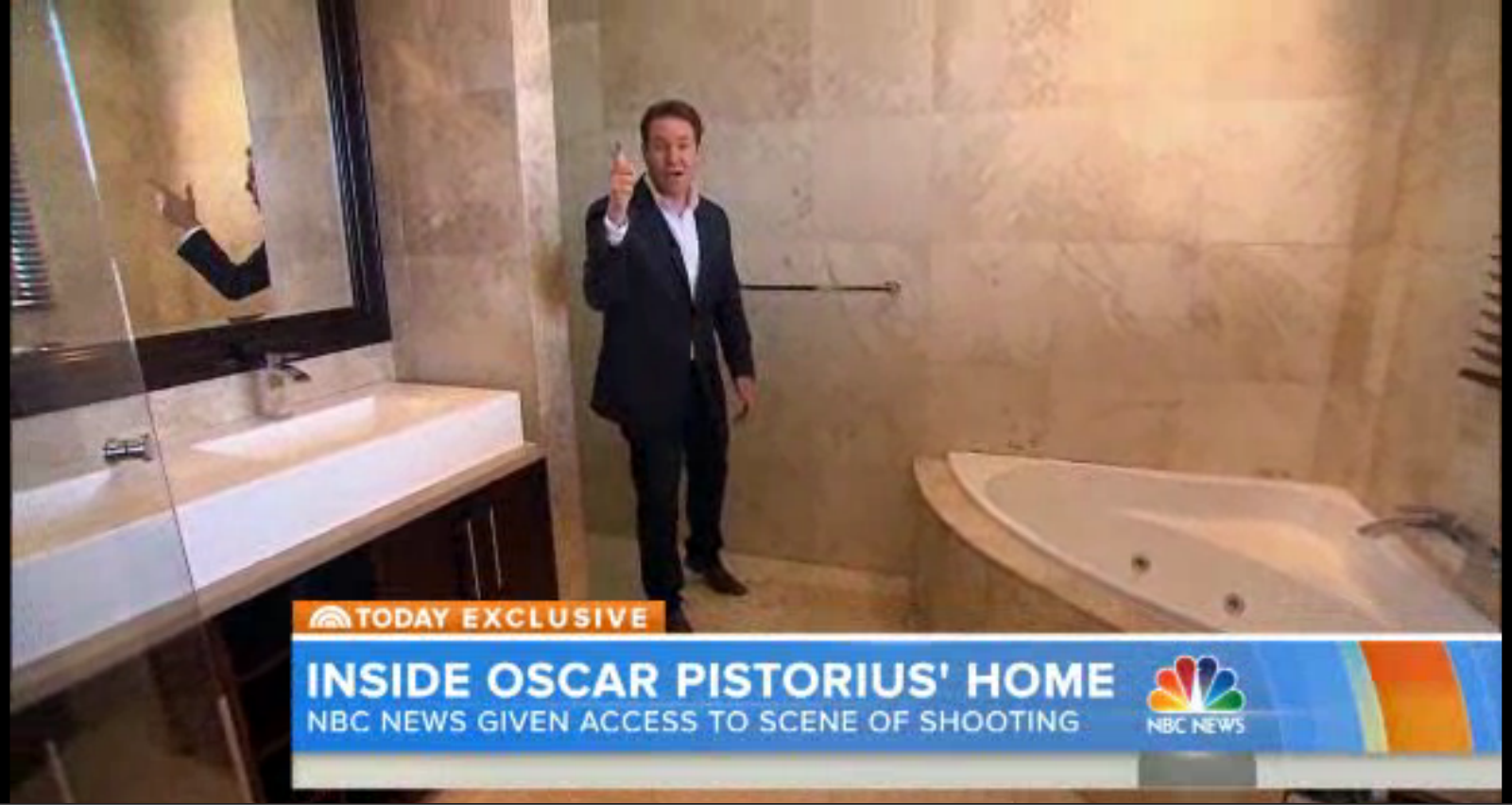
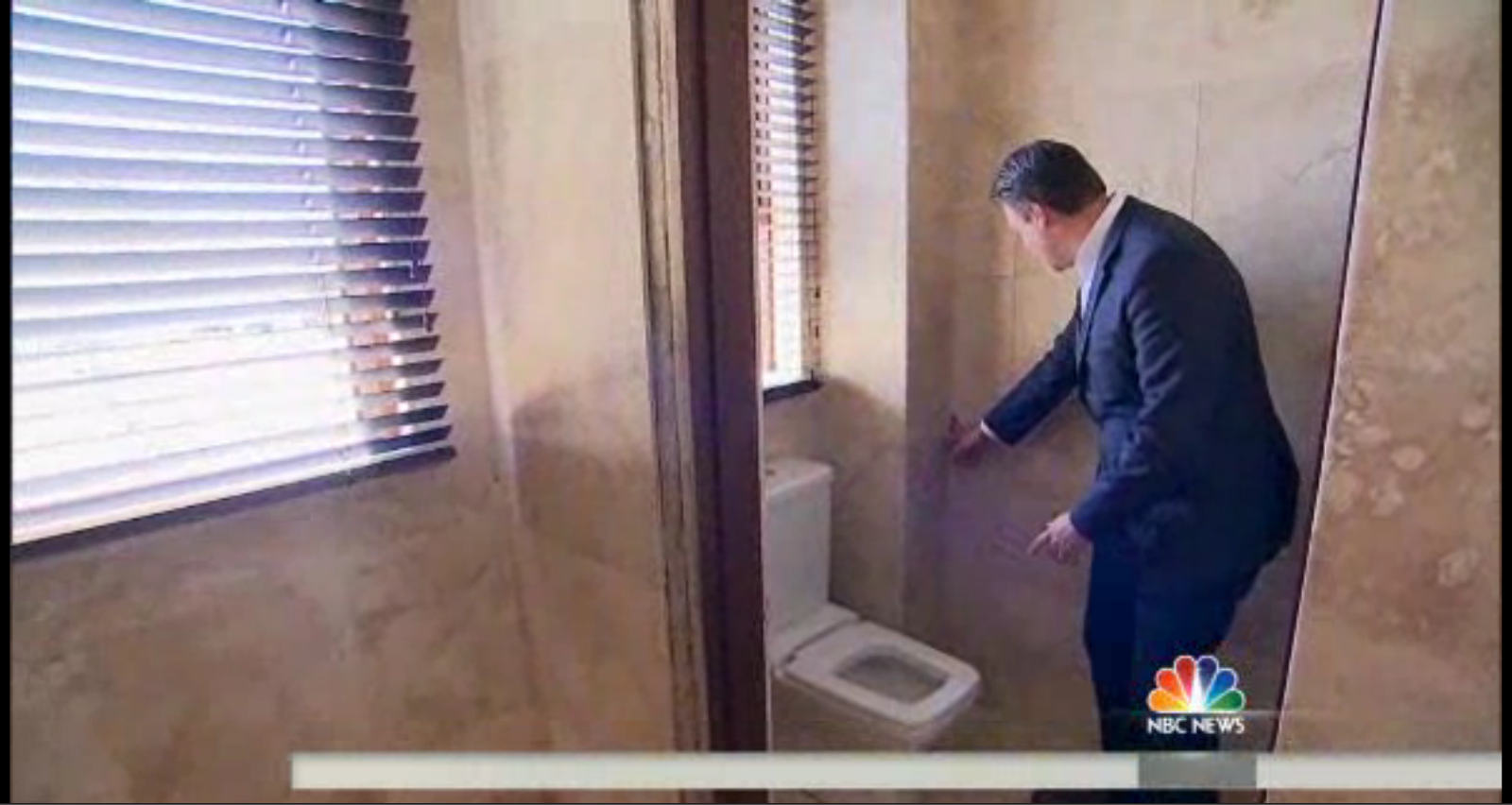
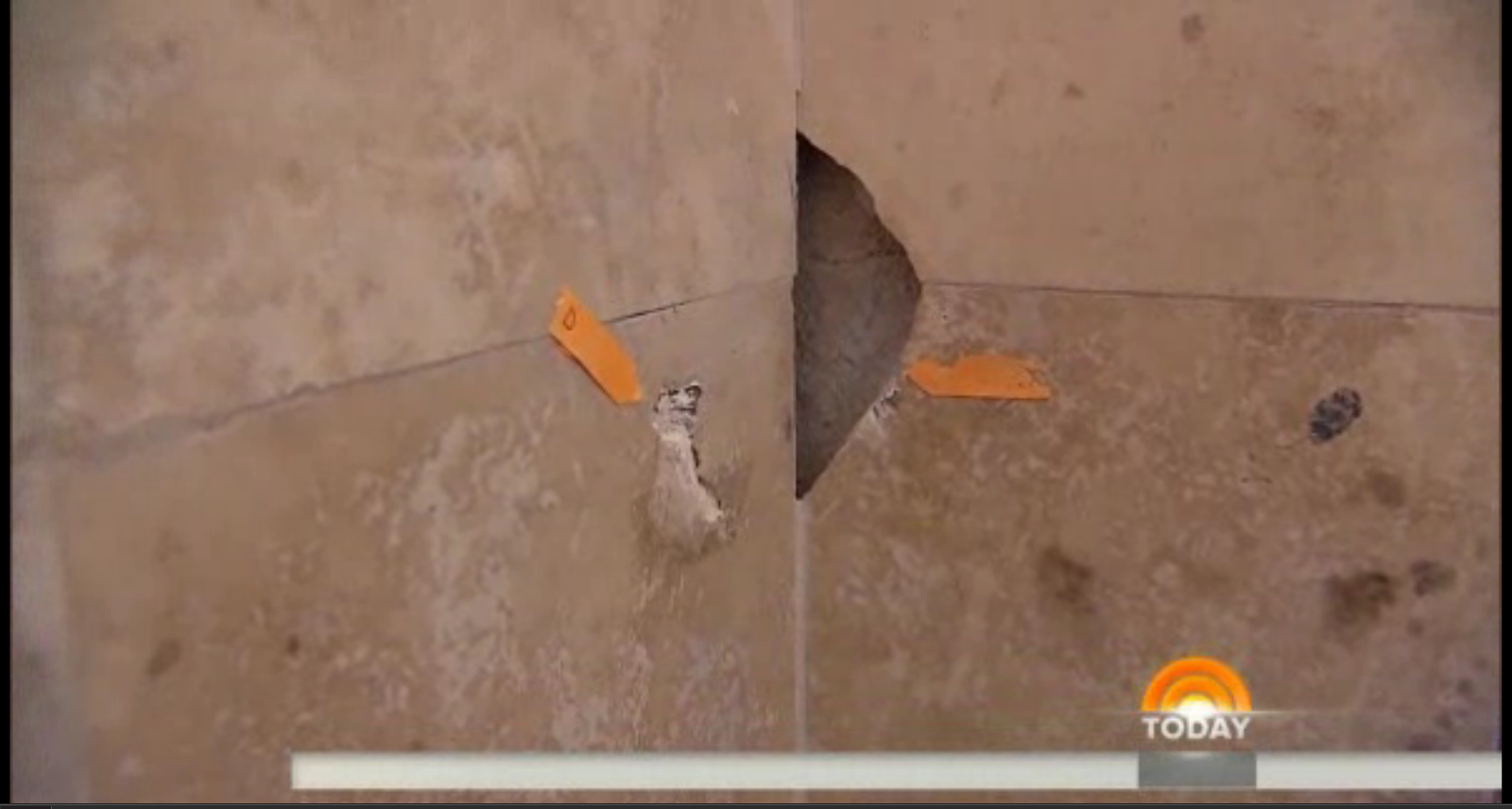
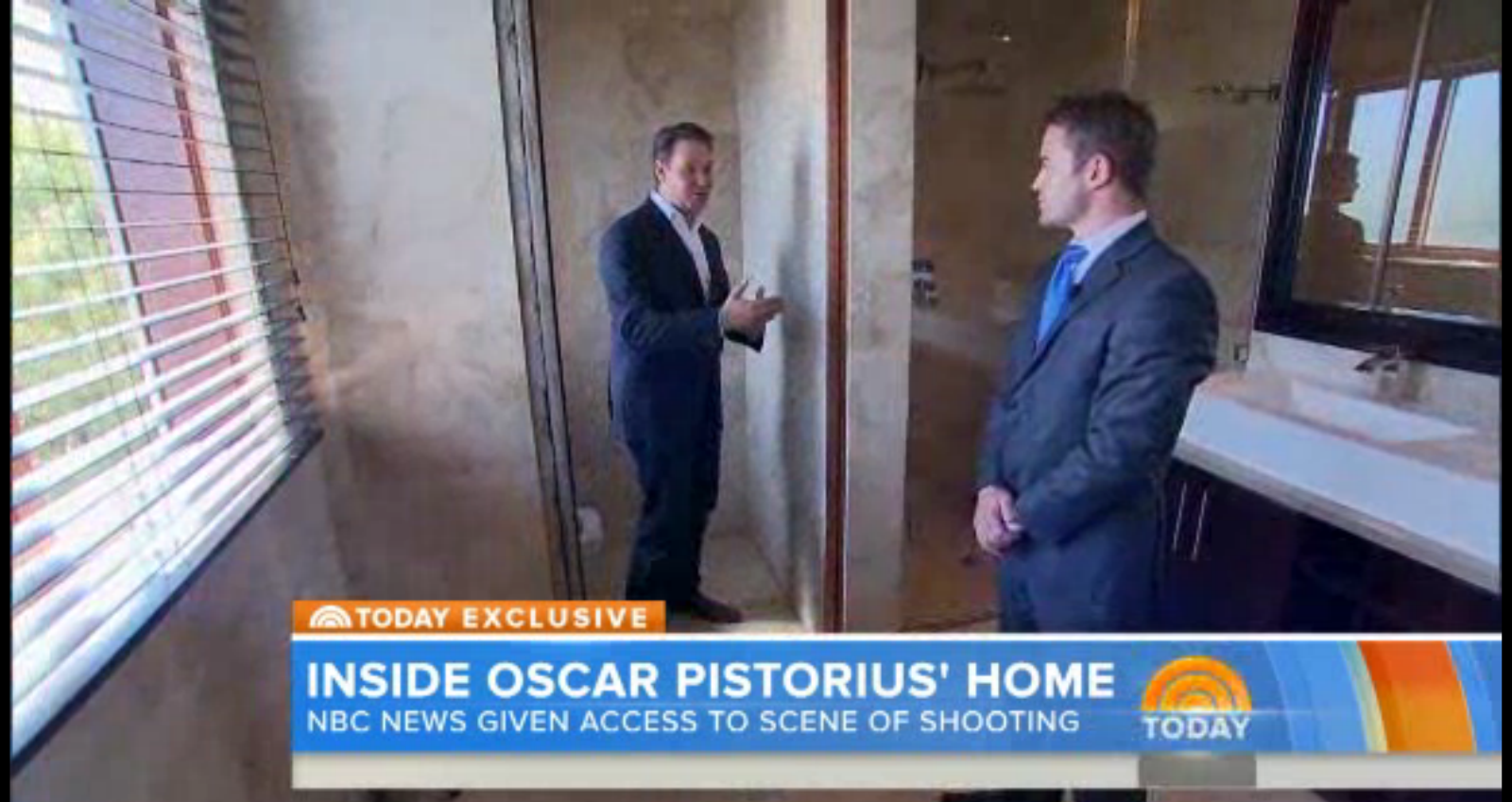
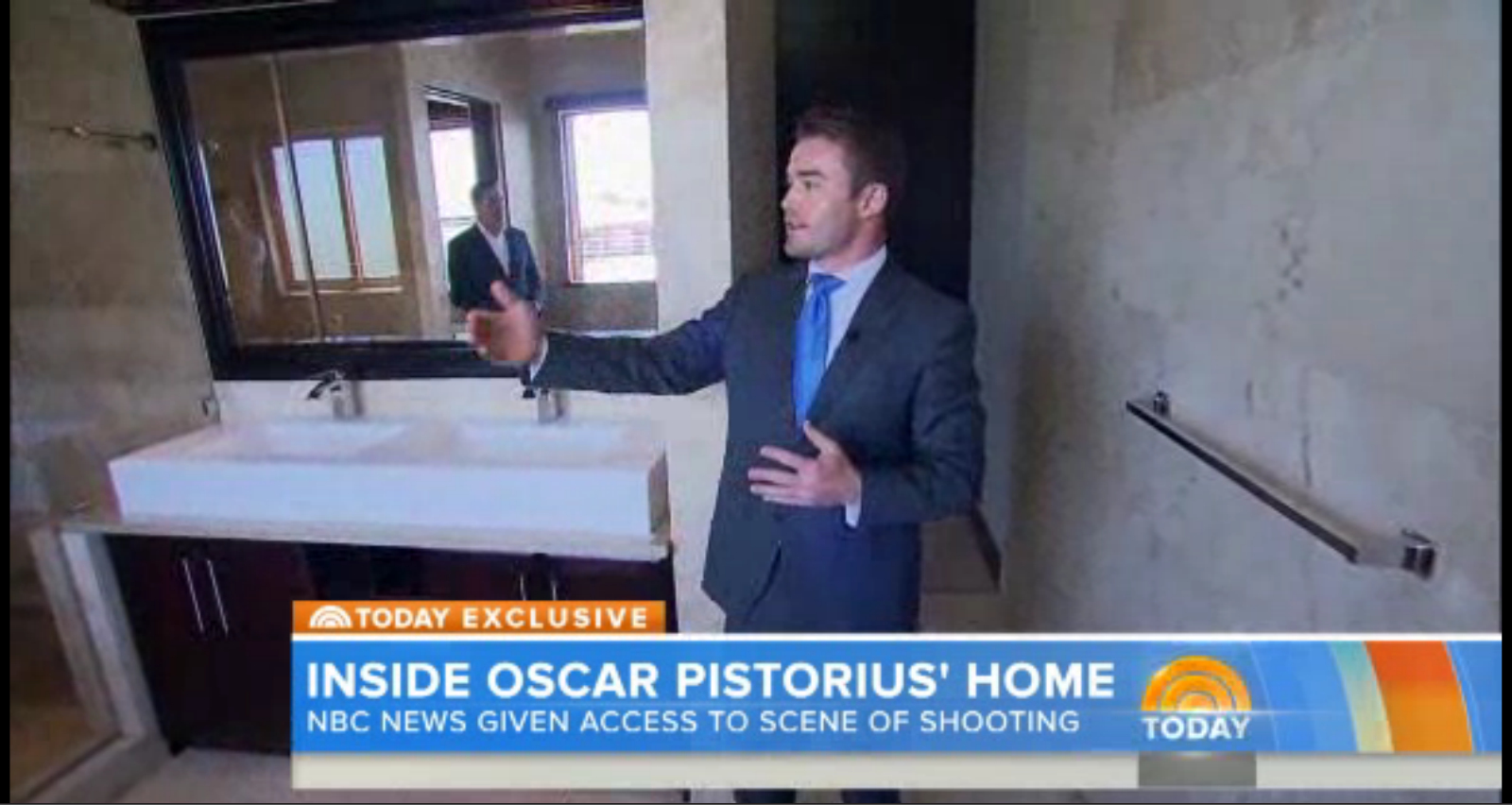
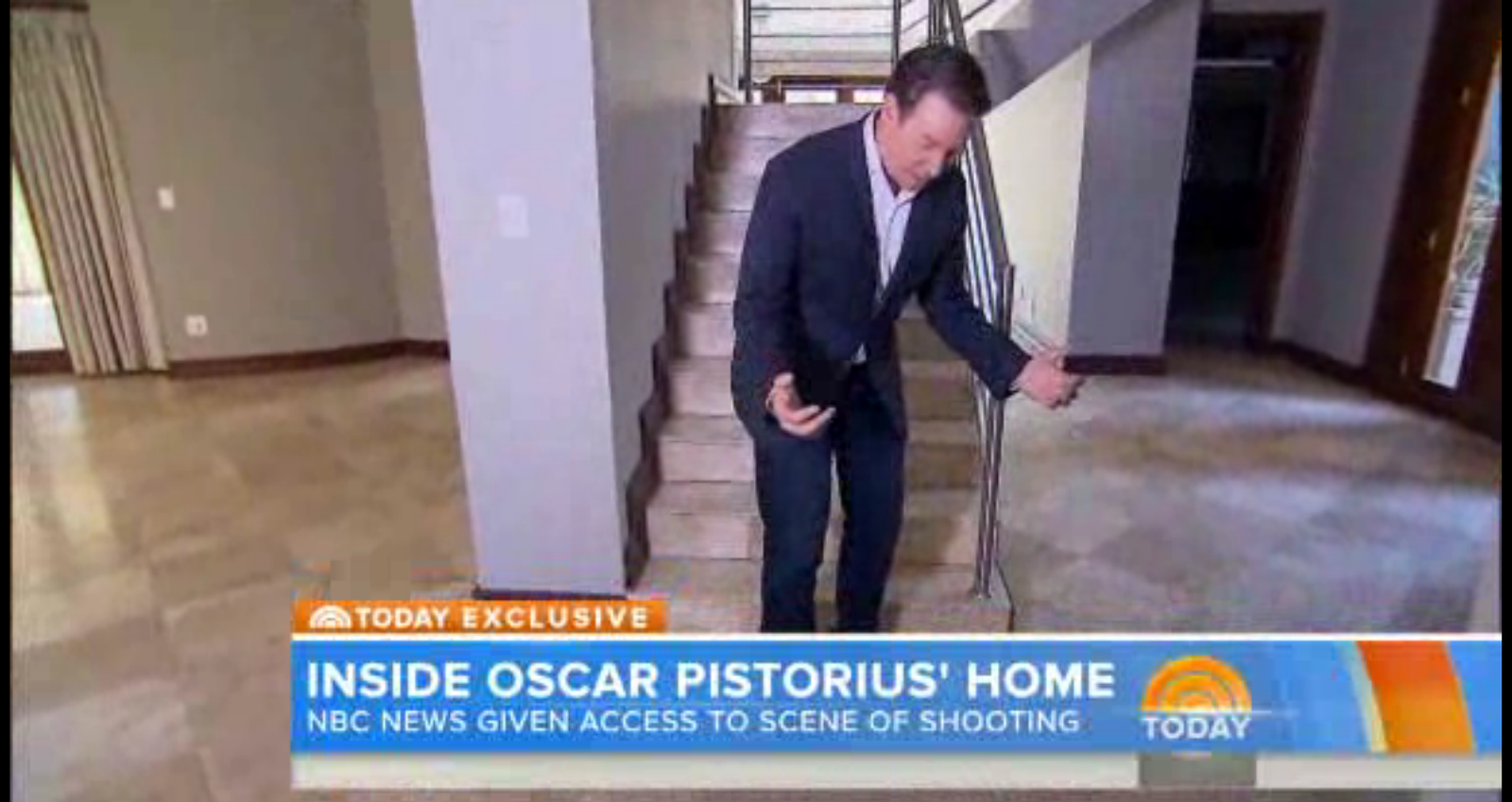
Jeff Rossen, accompanied by Ulrich Roux, walks us through Oscar’s version of events.














VIDEO HERE:


True crime and trial analysis
Jeff Rossen, accompanied by Ulrich Roux, walks us through Oscar’s version of events.
VIDEO HERE:

Peet Van Zyl is back on the stand.
Nel asks Van Zyl if he ever traveled overseas with Samantha Taylor and he answers, no he has not. He also wants to know if Van Zyl ever had to arrange for a visa for Samantha. Van Zyl does not recall. Nel states that an email was sent to him (Van Zyl) by Oscar on September 12, 2012, with a copy of Samantha’s passport. He hands him the document for him to review. He still does not recall the email but acknowledges that this is his email address so he must have received it.
The message in that email reads:
“Here is Sam’s passport, please keep it on file. I think we are sorting shit out. Oz”
Nel says, let’s deal with sorting shit out. (love that!) Van Zyl, acting clueless, assumes that they must have had a quarrel and this means they were working it out. Nel makes a great point – if Oscar is writing this to him, then it implies that Van Zyl is aware that they are having issues. There would be no other reason to make that statement unless Van Zyl knew what Oscar was talking about.
That would be like me texting a friend and saying my car will be ready on Monday. Unless I had specifically told that friend that my car needed repair and was in the shop, why the heck would they care or even know what I was referring to.
Van Zyl states that he did not interfere in his clients’ personal lives. He still claims that he was not aware what was going on between them. So Nel wants to know, what was the purpose of him sending the copy of the passport? Van Zyl says that he kept the passport on file for a television production that was happening in the Seychelles later in the year. So obviously he does recall getting this passport. He is clearly being evasive. He admits that he gave all of the information to the TV production company and they were the ones who arranged the flights.
Nel brings up the roommate situation at the Olympics again and refers Van Zyl to an article by David O’Sullivan.
Nel points him to paragraph four of that article. It reads:
“Still I was aware this poster boy for the Paralympic games could have flashes of a darker side. I experienced his anger shortly before the Beijing Paralympic games. Oscar was at the pre-games training camp and phoned me (David O’Sullivan) raging about what he perceived to be an inadequate training kit. His fury at the South African Management caught me by surprise. Oscar knew he couldn’t be ignored and his anger would ensure his demands were met. I hadn’t expected Oscar to be a prima donna.”
Nel asks Van Zyl if he was aware of this. He answers that he was aware of Oscar being upset with the training kit, but doesn’t seem to acknowledge the tantrum that he supposedly had thrown. Once again, he tries to explain that he was not there and the South African Management team on-site was responsible for handling the situation.
For somebody who is a manager, he sure does pass the buck. It is HIS client who I am sure is paying him a hefty commission. Of course he was involved in Oscar’s life and Oscar’s issues. That’s what managers do. His testimony is coming across very insincere.
Nel then reads part of paragraph five:
“He told me he had been forced to move out because Oscar was constantly screaming in anger at people on the phone. I thought he (Arnu Forie) was joking and waited for a smile but he was serious.”
Nel wants to know if Van Zyl ever heard this story? Van Zyl says he received a phone call from Ampie Louw informing him that there was an issue with one of the athletes that Oscar was rooming with and that team management would take care of it. He didn’t take further notice of this.
Van Zyl does want to point out though that Arnu Forie did post a statement on his Twitter page last night (see my post for Day 34) and Nel says, good, I’m glad you mentioned that! That brings up two questions:
1. Did anybody discuss your evidence with you since you left court yesterday?
He answers no, but he did receive emails from some of his friends overseas that follow all of these athletes and they pointed out to him that this statement was on Arnu’s Twitter page.
2. Isn’t it true that Arnu did not deny the phone calls in his statement from last night? Van Zyl has to concede that Arnu did not deny them.
And once again, Oscar thinks this is funny.
Nel then asks Van Zyl if he would be surprised if he told him that Oscar wrote the following letter to Samantha Taylor:
“I invited you to London because I knew that you have had my heart in your hands for months and never once let it go.”

Van Zyl says he was never informed of this as far as he can recall. Nel asks, did you not call Samantha’s mother to try to get them to London? Van Zyl says that he honestly can’t remember trying to get Samantha to the London games.
Nel says this is important because yesterday he was trying to tell the court that Reeva was the first girl that Oscar ever invited to travel with him and yet here we have a letter that proves otherwise.
Nel has him read another letter from Oscar to Samantha:
“That was not fair of you as you have never given me a reason to mistrust you. You have only been everything I could ever want. This is so hard to write because I don’t deserve you, Sam. When I invited you, I was so excited to tell you because I knew we had some hard days behind us. I had asked Peet to do everything he could last week to find you a ticket.”
Nel wants to know if this is not true. Van Zyl again says he honestly can’t remember.
Nel asks, if Oscar asked you to do this, you would remember, right? He hesitantly says, probably, but I cannot recall.
The next paragraph reads:
“I don’t even feel like going to London now that you won’t be there with me. I don’t know how I let it go this far but I will never forgive myself for not looking after your heart that you placed in my hands.”
Ok, seriously? He’s an Olympic athlete and he doesn’t want to go to London now because his girlfriend is not going? This to me illustrates just how immature and insecure he really is.
And still, Van Zyl claims that he can’t remember any of this. That is just not believable at all.
And another paragraph reads:
“It took me a long time to be honest with myself and truly fall in love with you, Sam. At least I know it wasn’t forced. It wasn’t a figment of my imagination.”
Nel is really pushing Van Zyl on why he didn’t know about this invitation to London. Van Zyl just simply keeps repeating that he cannot remember.
Then Van Zyl voluntarily offers up that one time with Oscar’s other ex-girlfriend, Jenna Edkins, they had to arrange for travel so she could do a photo shoot with him in Italy. Nel says you are right.
He reads from the last paragraph:
“I invited Jenna over last year for a week to Gemona but after the night she went out with her friends, I cancelled the trip because I didn’t want to be emotionally vulnerable…”
Van Zyl states that Ms. Edkins did travel with them to Milan for the photo shoot but he doesn’t know anything about this planned trip to Gemona.
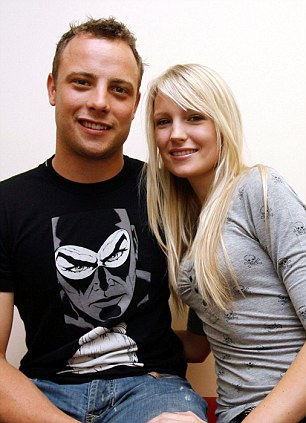
On the Sunday after the shooting, Van Zyl visited Oscar at the Brooklyn police cells. Nel mentions that he did a TV interview afterwards and followed it up with a formal statement. Van Zyl agrees. The statement was circulated to a media list and he also posted it on his own website. He then did an interview on a radio station called Ballz on February 18, 2013. Nel wants to know if he can still recall what he said in his interviews and in his statement.
He says he can’t recall everything but believes it was in relation to the sponsorship and endorsement deals that they had to suspend, terminate or cancel, and also that Oscar had to cancel all of his scheduled competitions. Nel asserts, you said more than that. Van Zyl agrees. He publically supported Oscar as a manager and as a friend in his interviews with the media.
Nel asks him if he ever sent condolences to the Steenkamp family. Van Zyl answers that he made mention of them (not sure where) and he sent them flowers. Nel says to him that he had an opportunity to send his condolences to the Steenkamp family while giving interviews and statements but he didn’t. Van Zyl concedes that he did not publically give condolences to them when interviewed on the 17th and 18th. He goes on to say that he was told not to make any contact with the family. The family doesn’t seem too impressed by that.

Nel asks, what about as a friend of Reeva’s? Why did you not do that? Van Zyl answers that he doesn’t want the court to think that he was a friend of Reeva’s. He met her on a few occasions but he never became friends with any of Oscar’s previous girlfriends.
Nel revisits the story about the flight attendant helping Oscar with his prosthetics. He wants to know what point Van Zyl was trying to make with that story on direct examination. Van Zyl says the point was that Oscar is uncomfortable in public without his prosthetics. Nel says that he has information that once while on holiday, Oscar left his legs on the beach and that was not a problem. Nel says that by him making those statements, he is forcing Nel to “go there” with him. Van Zyl says that he can only testify to the experiences that he shared with Oscar. Nel shows him the photograph of the legs on the beach.
Van Zyl now tries to say that this incident (the shooting) was traumatic for him and he has avoided looking at the media. But Nel pushes back at him that he finds that odd. He was still Oscar’s manager and needed to manage the situation, yet he wants to tell the court that he did not follow what was going on in the media. Van Zyl says he no longer has future contracts to manage so he has no need to follow it now.
Nel asks Van Zyl if he was aware of the pet names that Oscar had for Samantha. Specifically, had he heard the name Little Butterfly? Van Zyl says no, he has not. That prompts more laughter from Oscar in the dock.
All of these things… the love letters, the trips, the pet names… are indicators that Reeva was not the only woman who ever existed in Oscar’s life. This is important because it contradicts what Oscar and his Defense team have been trying to portray – that Reeva was a very special love for Oscar. And he never would have done anything as horrific as killing the love of his life. Who knows, maybe she was the best love of his life. But the fact remains that he has loved before and using “love” to say that no way would he have hurt her is not really sincere. Nel points out to Van Zyl that on numerous occasions Oscar expressed that Samantha Taylor was the one girl for him. Look what he did to her… cheated on her, yelled at her and broke her heart. And in his book, Blade Runner, he refers to Vicky Miles as the love of his life. He admits that their relationship was “fiery”. Clearly women, love, passion and intensity are a theme in his life. All of them have the ability to combust.
Nel next addresses the time when Oscar was left out of the final for the 4 x 4 meter relay. He was very upset by that and he was reportedly kicking chairs at a team meeting. Van Zyl is aware that he was left out of this final in 2011, and that he was unhappy. He was not in any of these meetings; these were again team South Africa meetings. Nel wants to know if he at least heard about it and he agrees that he did hear about it but wasn’t aware of chairs being kicked. But he did know that he was unhappy. Nel wants to know how Oscar expressed his unhappiness. Van Zyl says Oscar was more disheartened than angry, and was almost in tears.
This sounds pretty emotionally unstable to me. I’m not saying the guy can’t have feelings or be upset or sad. I’m just saying that this man is an Olympic athlete. They are trained to handle failure and disappointment. It’s not just a concept to be strong, but they are literally trained to be strong… both physically and mentally. The fact that he crumbles so easily at every difficult moment is a big indicator to me that he has some pretty deep-seeded issues.
Nel has no further questions for Van Zyl.
Roux addresses the Twitter message from Arnu Fourie and has Van Zyl read it out loud. And with that, Van Zyl is excused. It appears that Roux wanted to quickly close the can of worms that he opened with Van Zyl. He couldn’t get out of dodge fast enough.
Now it’s time for a little house-keeping.
Roux hands a photograph up to the court documenting the time that the Netcare ambulance arrived at the Estate on February 14. The time of arrival at the gate was 3:41:50am. He states that since none of the paramedics or ambulance people testified, he wanted to have their arrival time on record via the photograph.
Roux then reads the psychologist report from Oscar’s evaluation, and Nel reads the psychiatrist portion, each focusing on the respective highlights that benefit their teams.
Roux pointing out that Oscar did not display any signs of abnormal aggression, psychopathy or narcissism, and also that he is suffering PTSD and depression and without proper treatment could be suicidal.
Nel points out that Oscar does not have a mental illness, nor does he have Generalized Anxiety Disorder. He had the ability to act appropriately on the night in question. This should squash the Defense’s hope of pinning his actions on exaggerated anxiety.
You can read both reports here on the blog:
https://juror13lw.wordpress.com/2014/07/08/oscar-pistorius-mental-evaluation-documents/
The next witness is Professor Wayne Derman… being questioned by Oldwage. This should be fun.
Derman is a registered medical practitioner with the Health Professionals Counsel of South Africa. He has been registered since 1988. He practices as a sports and exercise medicine physician. Derman reviews his CV details. He gives lectures, co-leads a research program and has published over 100 peer-reviewed papers. He has also authored or co-authored over 25 book chapters.
His areas of specialty are illness or injury in athletes with disability, and neuroscience as it relates to stress response and chronic illness prevention.
He has also written 6 original research papers in international journals on medical aspects of Paralympic athletes and other athletes with impairment or disability. He was an invited speaker at Vista, the Paralympic Medicine and Science World Conference in 2011 and 2013. The topic was the medical challenges of the traveling Paralympic athlete. He was also invited to give a Seminole lecture on stump/socket interface problems in athletes with amputation.
Derman was appointed to the medical commission of the International Paralympic Committee to lead a research team as a medical expert with reference to a longitudinal injury and illness surveillance study. This appointment was to last from 2012 to 2016. Derman then explains what the term longitudinal impairment means. He states that we don’t know what happens to athletes with disability over the course of their career. Things within their body change over time as they compensate with other areas of their bodies, and we don’t know what the long term consequences may be at this point.
Derman also mentions that his thesis for his PhD dealt with aspects of the sympathetic nervous system and its modulations through the ingestion of beta blockers. He has co-authored 4 international publications on the neurophysiology of the stress response.
Derman describes that the body has certain automatic functions; heart rate, breathing, etc. This is driven by the nervous system which has two components: the parasympathetic and the sympathetic. Parasympathetic governs the relaxation response in the body. The sympathetic system regulates your heart rate and blood pressure, and works off of stress hormones that interact with receptors in the body. This system controls a person’s ability to perform.
Derman has also studied the neurophysiology of how the brain governs the sympathetic response.
In addition to his academic work with the International Paralympic Committee, he also has a private practice as a sports and exercise medicine physician. He has done this for the past 20 years in South Africa. He has also completed the necessary training to prepare him for the role of team physician in San Diego, CA, and Orlando, FL, in the United States.
The role of the team physician is to accompany the athletes on any international travel and look after their health during a time of rigor. They are to establish a patient/doctor relationship of trust.
Derman has known Oscar for the last six years providing periodic health assessments, direct observations of him during medical consultations (both formal and informal) as well as his observations of him within the close confines of residing together in a team setting throughout the Beijing and London Paralympics events, and the Christ Church IPC World Championships.
During these events, it was necessary to accompany Oscar and other athletes for significant periods of time. And during this time, he has observed Oscar interacting with fellow athletes, people in positions of authority and members of the public in general, as well as having observed him within the extremely stressful environment of competing at the highest level.
He has also spent a good amount of time with Oscar in the anti-doping control environment which occurs as an automatic process when an athlete has achieved medal status. This process ensures that the athlete has competed free of substances. These tests can last for periods of 2 to 4 hours, and he has observed Oscar during these times.
From these observations, Derman concludes that Oscar is a highly professional, dedicated athlete who is disciplined and focused with reference to his sporting profession. He has always been very vigilant and cautious not to consume any prohibitive substances or derivatives of when being medicated for common illness or when consuming supplements. To his knowledge, he has never tested positive for prohibited substances.
Derman states that he has remained in contact with Oscar even after the events of February 14, 2013.
From a medical perspective, Oscar is prone to respiratory tract infections and is very sensitive to pollutants as he is quite allergic. At times over the years, Oscar’s stumps have proven to be significantly and chronically problematic, in particular the stump/socket problems that have culminated in the peeling of skin leading to secondary infection of soft tissue, irritation and swelling. These problems relate particularly to his left stump.
He then goes in to some of the same areas that Dr. Versveld covered in addressing Oscar’s left stump and the issues with his heel pad.
On one occasion, he was contacted by Oscar over Skype while he was in Belgium. A very distressed Oscar showed him his clearly bleeding stumps. He was attempting to qualify for the London Olympics at the time. He arranged for him to see a physician in London and instructed the team doctor to take special dressings and medications to Berlin, which was the next destination at which he would compete.
Derman makes his own assessment that Oscar is an anxious individual. He has a tremor of the hands and presents with a sleep disorder for which he has previously had to medicate him.
He next focuses his testimony on the Kessler scale. This is a 10 question quiz, also known as the K10. This is a clinical tool that you can rapidly administer to athletes to get an idea, based on their responses, how they are feeling and dealing with the stresses of competition.
Derman had the idea to use the K10 to identify changes in psychological distress; markers of anxiety and markers of depression, and see how the results would change over time from pre-competition to post-competition. He was interested in also applying this to a control group, a group of international level athletes competing at the iron man triathlon, and then he would compare the two.
The conclusions from their study showed that the markers of psychological distress (anxiety and depression) were higher in the athletes with disability compared to the control group who were able-bodied athletes. Also, they found that anxiety and depression changes over the course of a competition. The K10 score is sensitive to pick up these changes.
The following are the K10 questions. The recipient can answer on a scale of 1-5, with 1 being “none of the time” and 5 being “all of the time”:
1. In the past 4 weeks, about how often did you feel tired out for no good reason?
2. In the past 4 weeks, about how often did you feel nervous?
3. In the past 4 weeks, about how often did you feel so nervous that nothing would calm you down?
4. In the past 4 weeks, about how often did you feel hopeless?
5. In the past 4 weeks, about how often did you feel restless or fidgety?
6. In the past 4 weeks, about how often did you feel so restless you could not sit still?
7. In the past 4 weeks, about how often did you feel depressed?
8. In the past 4 weeks, about how often did you feel that everything was an effort?
9. In the past 4 weeks, about how often did you feel so sad that nothing could cheer you up?
10. In the past 4 weeks, about how often did you feel worthless?
Derman next discusses Oscar’s results from previous K10 tests in 2008 and 2011. The scores from the three tests were 28, 24 and 19. These numbers show that his scores have decreased after competition. Oscar’s psychological distress markers are higher than the mean value of scores that he recorded for the entire group of athletes.
I can’t help but think as I sit here watching the Steenkamp family in the gallery, that this is such a load of pathetic psycho-babble. Their daughter is dead because of Oscar and we now have to listen to how sad and stressed out he has been over the years because his job as an elite athlete, that has earned him millions of dollars and notoriety all over the world, is difficult. It’s insulting.
Derman goes on to say that he has observed Oscar being constantly hyper-vigilant, as well as having an exaggerated startle response which involves him covering his head and ears and cowering until the noise ends.
The last time, prior to February 14, 2013, that Derman spoke to Oscar was on February 2, 2013. Oscar phoned him and was suffering from an upper respiratory tract infection and sinusitis. Derman advised him to go to the pharmacy and he called in a prescription. He then asked him how life had settled down after London to which he responded that at the moment he was lying next to the most wonderful girl that he had met. He also told him that he couldn’t wait for him to meet her. Reeva would be taking him to the pharmacy to pick up the prescription. Derman followed up with him on February 10, 2013, to get an update on his wellness and ability to return to fitness training.

It is Derman’s opinion that the startle response (fight or flight) is heightened in persons with disability. Derman reads from the book, Human Physiology from Cells to Systems, 4th Edition by Laura Lee Sherwood: “The sympathetic system promotes responses that prepare the body for strenuous physical activity in the face of emergency or stressful situations such as a physical threat from the outside environment. This response is typically referred to as a fight or flight response.” Derman explains more fully in layman’s terms what happens to the body under stress.
Derman has witnessed exaggerated fight or flight responses in some individuals, including those with disability. He explains that the brain governs these responses; I suppose suggesting that Oscar had no control over his actions that night.
Derman explains that a “startle” is the stimulus that begins the fight or flight response.
He also discusses a woman that he became acquainted with in September, 2012, at the London Paralympic games. She is a massage therapist who was born with a condition (from her mother ingesting thalidomide during pregnancy) that prevented her arms from developing. She utilizes her feet to perform her massage work. During their meetings, he mentioned to her his involvement with Oscar.
Following London, he remained in contact with her in relation to his academic work. After February 14, 2013, this woman reached out to him via email with the following communication:
“Dear Wayne, I hope that you are well. I’m writing with regard to Oscar. Please excuse me if you have already thought about this. In my dealings with English coaches, etc. of Paralympic sports people, I have become aware that the truth is easily hidden by the young disabled person from themselves and from others in order to get on in life. The acceptance of the brave face is often the easiest option for all concerned in order to achieve results. You may dismiss my concerns for justice, put me in the fan or nut category, but I feel I have to write to you on this matter. As a disabled woman who has over the years come under attack in many different situations, I am amazed at myself and my automatic responses. Having read Oscar fired his gun through a door, I am concerned that people without disability will not understand that the fight or flight response in people with a disability may be more highly developed. I cannot find clinical tests on this to support the statement but have not looked in detail. If Oscar did not know who was behind the door… ”
Nel stands up to object, stating that this is hearsay. He wants to know how this woman’s experience is relevant to this trial. Oldwage counters that this is not hearsay and cites case law to argue his point in a very long and drawn out explanation that I won’t even insult your intelligence with by summarizing.

Nel argues that these statements are from a non-witness that we cannot cross-examine; that is hearsay. He also points out that if the purpose of this evidence is to supplement the Professor’s findings as Oldwage asserts, then it would have to be something that is considered truth. However, the Professor will not rely on the email as truth; it is merely one woman’s own experience and is not relevant to Oscar’s experience, therefore the court should not allow it as truth.

Judge Masipa breaks for lunch to decide if she will allow the evidence.
Upon return, the Judge determines that the evidence is not relevant and it will not be admissible. The portion of the email that was already read in to the record will be expunged from the record.
Derman continues with the next part of his report. He goes on to say that adults with disability are at a higher risk for violent attacks against them compared to adults without disability. He reads off crime statistics from 2009-2012 to back up this statement.
Derman states: “It is of concern that since the advent of the Paralympic games in London in 2012, an event that was intended to raise positive awareness of disability, attacks on individuals with disability have increased. In fact, the recent survey shows that nearly 1 in 4 disabled individuals living in London have suffered some form of hostile or threatening behavior, or have been physically assaulted since the Paralympics.”
Oldwage asks Derman his opinion on why these aggressions have increased and Derman says it’s hard to say, but one of the logos that was used at the Paralympics was “We are the Superhumans” and perhaps people now want to put themselves up against the superhumans.
Ok, seriously? That is the most ridiculous thing I’ve ever heard. I’m not convinced that Judge Masipa is buying this bologna either.

Derman moves on to fight or flight and uses a mother fighting off a polar bear to protect her young children as an example. He relates this to Oscar having confronted perceived danger in very adverse circumstances. Ok, let me see if I have this straight… we have superhumans, polar bears and Oscar imagining that people are in his toilet… sounds like an episode of LOST.
Derman shows an image of the brain to the Judge and points out the important areas that relate to fight or flight – the amygdala structure, the hippocampus and the cerebral cortex. He explains how they all work together. He goes in to a long explanation and points out the amygdala, which ultimately has free reign over fight or flight responses. Research shows that individual differences in the structural integrity of the amygdala (subconscious brain) and pre-frontal (conscious brain) were inversely correlated with trait anxiety. And he lost me after that. The one important thing to note though is that he stated that the more heightened the anxiety, the more the amygdala is uninterrupted in its fight or flight response. But we know now that Oscar doesn’t have an anxiety issue so all of this is really just irrelevant. But nice try, blaming it on his brain function.
He states, “the initial physiological reaction to trigger the amygdala is called the startle, also known as the fear-potentiated startle. This can be elicited in the face of any threatening stimulus. The stimulus is usually auditory, as in a sound, or is visual.” He explains how individuals are tested for different levels of startle response.
Before concluding for the day, Oldwage requests that the psychology report by Scholtz be redacted before being sent out to public domain. The Judge grants this request. They adjourn for the night and Derman will be back on the stand tomorrow.

Peet Van Zyl, Oscar’s Manager
Ivan Lin, the acoustic engineer, is back on the stand.
Nel points out to him that the last sentence of his report states that the process that he followed excludes the possibility of a 100% reproduction of the original sound source and the perception of the sound from the listener’s perspective. He used a model and used averages to convey his findings.
Nel wants to know when he completed this report and Lin responds that he just completed it the week prior.
Nel wants to know what materials were used for him to create the scenarios in his report. He says the three possible sound sources were in the toilet, in the bathroom and on the balcony. He studied the actual location of the listeners’ positions, and where their window and door locations were. Nel asks him if he read the record, and Lin responds no. Nel asks him if he understands that there has been a lot of new development since the time of the incident. He is aware of that. He could visually see the changes. He did have assistance from the Defense team while he was there. The Defense provided the scenarios to him.
Nel wants to know if it was ever put to him that at the site that was 177 meters away, the bedroom window was closed. Lin answers, no. Nel asks, nobody told you that the window was wide open? Lin answers, that information was not available to him. He also did not have access to the premises at 177 meters; he only viewed a photograph of it.
Nel is making the point to the court that it was not a complete investigation and he only used the scenarios that were put to him by the Defense. He is making findings and assumptions based off of the version that they want to tell. And all of this was done within the last two weeks prior to court.
Nel puts to him, that if the window at the source which is 177 meters away was open, we can exclude all the portions of his model where he listed the window as closed. He agrees that yes they could do that if the window was indeed open.
Nel wants to know, even though his report states that one can ever say with 100% certainty whether a voice is male or female based on just hearing it, would he concede that more often than not, we are able to differentiate them. Lin says its all perception and perception can’t be completely reliable. He does concede though that it is common sense that we can identify them, just not scientific certainty.
Nel moves on and says that from his report, paragraph 5.9, Lin has identified that the typical human scream is 100-120db. On the State’s version, the deceased screamed because she feared for her life. Nel wants to know, in considering that; wouldn’t he put the db closer to 120 than 110? Lin says that 120db is extremely loud, almost the same as a jet engine taking off. Lin says that it’s a very slight possibility, but it is a possibility. It’s hard for him to say yes or no, just that it’s possible.
Increasing the decibels would affect the charts that are included in his report. We do not see the charts shown in court, but Nel is opening up the possibility for the Judge to consider that things were heard beyond what he has written in his report, especially when you keep in mind that he only based his report on variables that the Defense gave him.
Nel moves on to the sound of the gun being fired. An average db level of a gun being fired is somewhere around 160, according to Nel. Lin can’t say for sure but he will accept that it is significantly higher than the db of the human voice. Nel asks, if there is hypothetically a 20% difference in db between the sound of a human voice and a gun firing, wouldn’t the listener hear those sounds at a 20% difference as well? Lin agrees.
Nel asks, if a woman screams, will there be a certain pitch in her voice? He answers yes; it does have a certain tonal character.
Nel also asks, if a normal background noise is taking place, and then you hear sounds of a woman or man screaming, would the screams be more noticeable because they have a different type of tonal character. Lin agrees, yes.
Nel next references the South African National Standard – The Measurement and Rating of Environmental Noise with Respect to Annoyance and Speech Communication, and says in terms of this standard and dealing with tonal character (voices), you should add 5db. Lin says this is based on continuous noise source and he’s not certain that it’s applicable in this context. He says that typically this is applied to things like a loud machine or loud disco and it’s occurring over a certain amount of time, it’s not necessarily something with tonal character like a voice. A voice is an impulse noise that you cannot average over time. He doesn’t agree with Nel on this point that 5db should be added. Nel says, but this is the standard so in following it, you should have added 5db in your report. It would have made a significant difference in his graph if he had applied it.
Nel shows the court a photograph, which Lin has seen. The red arrow on the photos depicts Oscar’s house as seen from the patio which has direct line of sight. This view is 177 meters away (the Johnson/Burger home)


We next look at the photo which depicts the view from 80 meters away (the Stipp home)
Their balconies
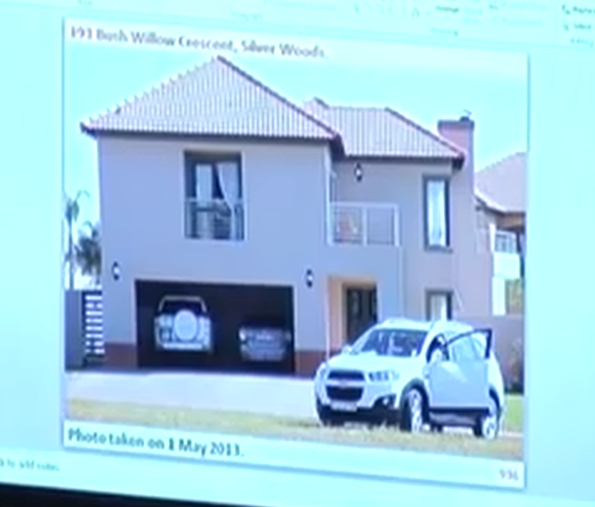
View from the bedroom/balcony looking over to Oscar’s bathroom windows
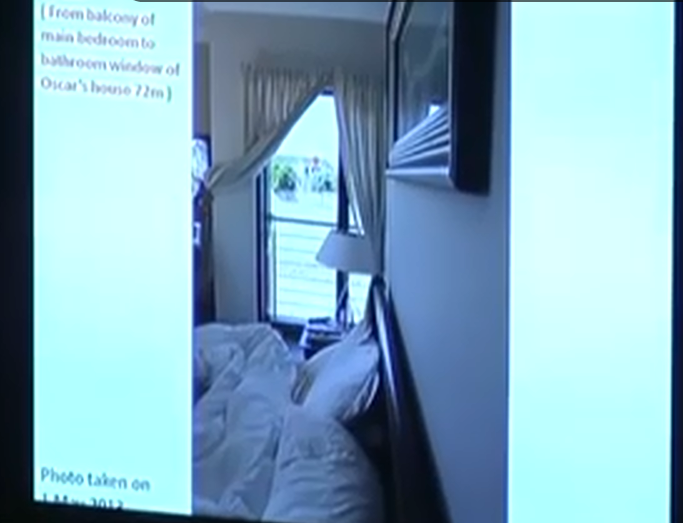
Nel illustrates that there is direct line of sight through the open balcony door to the back of Oscar’s house.
Nel points out that in Lin’s report, the db levels that were used were the same as you would use for a solid window that is sealed. Again, he is pointing out the fact that you cannot fully rely on the db levels that he has chosen to use for this report as they do not accurately depict the exact variables of that evening.
Nel proceeds to go through the report and from each vantage point, create some doubt about the levels that were used to make findings. And Lin concedes that his levels are not exact. The Judge will have to keep that in mind when considering his report.
Nel wraps up by stating to Lin that four state witnesses all testified that they heard screams, not cries, from a woman. That must be reliable, correct? Lin asks from what distance. Nel says two from 80 meters away and two from 177 meters away. They don’t know each other, nor have they spoken to each other. Lin says he believes that they heard a sound but it’s not up to him to interpret if what they heard was correct. Nel says, but they did hear it. Lin will not make a comment about whether he thinks they were right or not.
Nel next looks at a page from Lin’s report and addresses the source at 80 meters away. He says that if the source of the sound was in the toilet and the listener was standing on the balcony, the sound would be audible and intelligible. With intelligible he does not exclude the capability to distinguish between male and female voices. Lin explains that intelligible means that it describes the level at which something can be understood but it involves human interpretation.
So it brings us back to four witnesses using their interpretation that what they heard that night were female screams and then both a male and female voice shouting at the same time. If the Judge finds these witnesses credible, there is no reason for her to not believe that what they interpreted was accurate, especially considering that all of their accounts match.
Nel gets Lin to concede that the ranges in his report are what is possible from a scientific perspective, but do not rule out all other possibilities, and with that he nor anybody else can tell the court that the witnesses were lying or are wrong about what they heard.
Nel concludes and Roux does a very brief re-examination to point out to the court that the new homes that were built in the community do not affect the calculations that Lin used for his findings.
Lin is excused.
The next witness is Peet Van Zyl.
Van Zyl is Oscar’s manager/agent, also known as an athlete representative. He met him in 2004, and they have worked together since 2006.
Their business relationship entails him securing competitions, negotiating and acquiring sponsorships and managing financial affairs. They had daily contact while he was fulfilling this role.
Through all of the interaction that he has had with Oscar over the years, it was evident to him that Oscar had a heightened sense of awareness. He would often drive excessively fast to the airport because he wanted to make sure that they weren’t followed. Whenever he had to park somewhere public, he always parked in an open space with easy access and good lighting. He did this as an extra security measure.
Roux also has him recount a few specific times where Oscar reacted in a panicky manor. In 2011, they were at an event in New York. While walking down the street there was a loud bang noise which scared Oscar and in response, he grabbed Van Zyl’s arm. Van Zyl found it odd for a grown man to grab his arm.
Also, while abroad and in hotel rooms, Oscar would be very cautious about who was at his door. He would always have the extra security latches on the door fastened.
All of this is pretty silly, in my opinion. I always use the extra security latches on my hotel door and would also probably grab somebody’s arm if I were startled. Granted, I am female, but it’s not the craziest thing in the world to have a physical reaction when startled. (And for the record, shooting 4 shots through a door is not an acceptable physical reaction when startled) Those are pretty basic responses, not what I would consider to be excessively paranoid. The Defense is really reaching here.
They next focus on how Van Zyl and Oscar would often meet at Oscar’s house to discuss schedules and contracts. He could never keep Oscar focused for long as he was frequently fidgeting and asking his house assistant (Frank) where the dogs were, if the doors were locked, etc.
At restaurants and coffee houses, he always wanted a clear view of the entrance/exit of the establishment.
Typically when flying, he would always keep his prosthetics on. There was one instance where he had bad blisters on his stumps and he removed his stumps during the flight. He used a blanket to cover his legs. He fell asleep during the flight and one of his legs fell over in to the aisle. The flight attendant picked up the leg to put it back in place. Oscar became startled and jumped up, grabbed it out of her hands and was trying to avoid anybody seeing that he had prosthetics.
My interpretation of this is not that it was a startle. It sounds to me like an insecure man who had the ability to be rude when somebody did something that he didn’t like. I think Van Zyl is just trying to use this example as a poor Oscar gets scared sometimes scenario, but in actuality it sounds like he acted like a jerk towards the flight attendant who was just trying to help him.
Roux asks how long in total time he spent with Oscar. Van Zyl says that they would be together throughout the whole athletics season (May – August). Their training base was in Italy. They also traveled to competitions and events.
Roux wants to know if he displayed any aggression during these times. He can only recall two incidents were Oscar lost his temper. He would not consider it aggression. Van Zyl says that he personally lost his temper more than Oscar did, usually because of abusive questioning from the media. One occasion was when they landed in Barcelona for a competition. As they arrived, a camera crew stuck a camera in his face and called him a cheat because he wanted to compete against able-bodied athletes. Both Oscar and Van Zyl lost their temper in that instance.
Next was in London. Oscar had an interview scheduled at the BBC. They were there at the studio and a journalist asked the question, don’t you think you’re an embarrassment to your country for trying to compete at the Olympic games? Again, both lost their temper and were asked to leave the studio.
Van Zyl did have the chance to meet Reeva on a number of occasions at different venues. He viewed their relationship as loving and caring. They were always calling each other pet names. Oscar did involve her in his career.
Van Zyl states that he and Oscar had a meeting at Oscar’s house on February 7, 2013. They laid out all of his contracts and calendar for the year on his large dining room table and they were planning his season. They started with a big event in Moscow and then worked backwards from there, looking at specific dates. They identified an event in Brazil on March 31st and another in Manchester on May 25th where he wanted to invite Reeva to come along. He asked Van Zyl to contact the organizers to get permission. Van Zyl states that this is the first time that Oscar has ever asked him for anything like that. He’s never asked in the past for his girlfriends to come on any trips with him.
Van Zyl asked Oscar why he wanted to bring her. Oscar’s response was that he wanted Reeva to see what his world was about and the pressure that he was under. He wanted her to see how he needs to perform and also why he sometimes can’t go to functions with her; because he needs to have enough sleep to train and perform at the levels he’s required to perform at. Also, he wanted her to understand that there may be certain events that he cannot go to with her due to his own sponsor commitments. Since his diet was so strict, there were often times that he had to decline going out to restaurants.
Well, thanks Peet, for solidifying that Oscar Pistorius is every bit as selfish as Nel has asserted during this trial. Not once did he say that he wanted to bring her with him on these trips because he loved her and wanted to share his time with her. It was all about him needing her to understand HIS life.
If you want to read a narrative on how Oscar’s career and contracts may have played a role in the incident on February 14th, I would suggest reading Resurrection and Revelations by Nick van der Leek. He is a photojournalist and editor of the South African Man website who has written some really thought-provoking e-books about the trial, Oscar, Reeva and society in general. There are actually four books in total, with the fifth one coming out this week. You can find them on Amazon.
Next, Roux turns in some documents that were provided by Van Zyl. The first is an email between Van Zyl and Andy Cain, who is the meeting director of the Manchester event. This communication took place at 7:29pm on February 13, 2013. The night of the incident, right around the time that Oscar claims he and Reeva were having dinner at the large dining room table and discussing HER contracts. Van Zyl was finalizing the terms and conditions for Oscar competing at this event. The terms that still needed to be clarified were the request for an additional business class flight for Reeva to join Oscar on this trip.

Van Zyl states that he wants to add that there was also a contract in place for Oscar to compete in Brazil. He says that Reeva’s ticket for this event had already been secured but he then goes on to say that they had secured tickets for five people in total which would consist of Oscar, Ampie Louw, Van Zyl, the physiotherapist and Reeva.
He is trying to make it sound like Reeva agreed to these trips, implying that she was committed to Oscar and wanted to be with him. But it’s possible that he had five tickets for Manchester without any specific names on them just yet. Had Reeva really agreed to go with him and put her own life and career on hold? Maybe she did, maybe she didn’t. We can only speculate. It’s feasible that this was the source of Oscar and Reeva’s issue that night, particularly in light of the fact that Van Zyl was emailing the Manchester director only a few short hours before Oscar killed Reeva. Is that a coincidence?
Roux asks Van Zyl what the financial position was of Oscar at that time. Van Zyl responds that due to Oscar’s outstanding performances at the London Olympic and Paralympic games, his profile was raised to global sports icon status. Based on this, he had a number of opportunities to partner with corporations. The financial implications were substantial; five to six times more than what it was prior to the Olympics. He had contracts in place that would run until the end of 2017, when he would announce his retirement from athletics. Some current sponsors were negotiating with him for brand ambassador roles post-retirement as well. The contracts that he had involved significant monetary gain, as well as the opportunity for shares and royalties. Roux asks Van Zyl if Oscar was aware of the bright financial future he had ahead of him and Van Zyl says yes, he was well aware. He is an astute businessman who understood what he was about to gain.
Roux then brings up another event that Oscar wanted to share with Reeva; an Andrea Bocelli concert in Tuscany, Italy, on July 13th. Van Zyl was the one who made the suggestion to Oscar to take her to that, and Oscar was excited about the idea. He asked Van Zyl to look in to it.
Roux wants to know if Van Zyl ever discussed these plans with Reeva directly and he says yes he did. Oscar phoned Reeva on his iPhone to do a video call, and passed the phone to Van Zyl. Van Zyl told her the good news about Brazil and that he was working on another trip to Manchester. He states that she was excited about the possibility of traveling to these competitions with them. Is it possible that she was being polite at the time but perhaps had a change of heart later?
Roux concludes and Nel is up to cross-examine.
Nel starts by saying that he was not expecting so much character evidence to be presented today so he needs a little more time to prepare. But he will get in as much as possible for the remainder of the day.
Nel confirms with Van Zyl that one of his main duties is to look after his client. He has to deal with negative media and press as part of his job, as well as look after his well-being in general.
Nel wants to address the fact that Oscar drives at high speeds and wants to know how Van Zyl was aware that he was doing that. Van Zyl squirms a little on this but finally states that it was another athlete that used to drive with him who told him about his driving habits. Plus, Van Zyl witnessed this himself when they drove together to the airport. Nel asks him if he ever discussed this habit with Oscar. He says that he did not and Nel wants to know why. Van Zyl says that the time that he drove fast with him, he was not driving recklessly. He had not received complaints per se so he didn’t address it.
I understand where Nel is going with this. It is a manager’s duty to make sure their lucrative client is behaving properly and safely, especially in light of the amount of money they stood to gain. He absolutely should have been counseling Oscar about his poor and unsafe behavior. But if in fact he did not, then it’s just a further example of how the people in his life enabled him.
Nel next addresses how Van Zyl testified that there were only two times when Oscar lost his temper. He wants to know if Van Zyl forgot about the time when Oscar lost a race and called his competitor a cheat. Van Zyl says he did not forget about that but he was not in London during that time. He is aware of the situation, but didn’t include it in his testimony because he only spoke about times that he witnessed himself.
Regardless, Nel wants to know if he addressed this with Oscar. Van Zyl says, yes, there was a PR company that he used while in London for the games. He delegated this situation to them and they handled it. Van Zyl then goes in to an explanation of how this competitor had switched his legs for various events and there was a general feeling amongst the athletes that he was cheating. Oscar took it up with the IPC and requested better guidelines on what is allowed and not allowed. Van Zyl seemingly makes an excuse here saying that the incident was a long time in the making. Sounds like major sour grapes to me. Van Zyl does concede that Oscar lost his temper on that day as well.
Nel wants to know if Van Zyl ever met Oscar’s other girlfriends. He states yes, he had met Jenna Edkins and Samantha Taylor. Nel states that they’ll have to make a correction to Van Zyl’s testimony because Oscar did take Samantha overseas with him. Van Zyl says not for competition, it was for a television program. Oscar worked out the details with the production company directly.
Oscar and Samantha in the Seychelles
Van Zyl says the relationship between he and Oscar is one of a professional nature, but he was indeed introduced to these three women as his girlfriends. As to what Oscar does in his private life, he wasn’t always aware of. Personally, I find it highly odd and not really believable that he was supposedly so distanced from Oscar’s personal life. Nel wants to know if he ever discussed any details about his relationship with Samantha Taylor. Van Zyl says no, he did not discuss the relationship with him.
It’s always interesting to me when there are difficult topics being discussed, or topics that Oscar is likely lying about; Oscar keeps his head down and won’t make eye contact with anybody.
Van Zyl says that all he knew was that Samantha was his girlfriend. Oscar never asked Van Zyl to arrange for her to accompany him on trips or attend events.
Nel says there was an incident that he read about where Oscar’s roommate asked to be put in a different room. Does he know anything about this? Van Zyl says that he was made aware of it by the team management. Nel says that the reason the roommate wanted to move out was because Oscar was constantly arguing on the phone and he couldn’t take it anymore, according to what he read.
Van Zyl says he can’t comment on that because he wasn’t there. Van Zyl is clearly trying to dodge this question, while Oscar continues to hang his head down, and Nel says to him that he is asking him directly… did he know why this athlete wanted to change rooms. Van Zyl says that if this man made the statement that it was due to Oscar being on the phone, then I guess we’ll have to accept that. Nel tells him that he doesn’t have to accept anything; he just has to answer questions. Let’s try this again… why did the man want to leave the room, based on what he heard? Van Zyl said it was because of problems he had with Oscar. Nel asks, what problems? He answers that he doesn’t have specifics. Nel hammers him some more and Van Zyl finally answers that it was because Oscar was on the phone.
Nel says, now I’m worried. I specifically asked you this question 3 or 4 questions ago, and you didn’t know, but now you want to give an answer. Oscar is fidgeting pretty well in the dock and passing notes to his team.


Nel asks him if it’s difficult for him to say negative things about Oscar. He answers, no. He again tries to explain it away by saying that he wasn’t there at the time and it was dealt with. The only person who contacted him afterwards was Ampie Louw, Oscar’s coach, who informed him that they had moved Oscar to a different room. It was only put to Van Zyl that there were issues with this athlete. Nothing more specific. Nel phrases the question differently; have you heard this version about the athlete being upset because of Oscar being constantly on the phone? He then says no, he has not heard that specific version which actually contradicts what he just said two minutes ago. It’s obvious he’s being evasive.
Nel moves on to February 14, 2013. He wants to know if Van Zyl discussed the incident with Oscar. He says he only discussed his condolences with him. He goes on to state that he has not discussed the specifics of the incident at all with him. He has not asked him what happened. How is that possible? He has been his manager and friend for 8 years. I do not find that believable.
Nel asks if he is familiar with Oscar’s love for guns. Van Zyl says he only learned of it recently. The first time he ever saw Oscar carrying a gun was in November of 2012. He was not aware that he was taking part in shooting activities at the range. When he did see the gun that time, it was at his residence, and he asked Oscar why he was carrying a gun. Oscar told him it was because he feared for his own safety.
Nel wants to know if Van Zyl ever read an article from a British journalist who said that Oscar would go out at night to the range to practice shooting if he couldn’t sleep. Van Zyl says that he did read this article. Nel wants to know if he discussed this with Oscar. Van Zyl said he didn’t. Nel asks him if the article was positive or negative. Van Zyl says he didn’t see it as negative. Nel points out that in that same article is a picture of the 9mm in Oscar’s bedroom.
Nel wants to know if Van Zyl believed that Oscar was paranoid. He cannot call it paranoia or vigilance; he doesn’t feel qualified to make that judgement.
Nel says he’s jumping around a bit, but will be better prepared tomorrow. He moves on to Samantha Taylor and wants to know if Van Zyl was aware that he didn’t treat her very well. Van Zyl says that he never experienced him treating her badly. Oscar was always kind and courteous. And furthermore, he’s never seen Oscar treat any other person in an aggressive or undignified way.
Nel says he has carefully noted Oscar’s calculated reasons for wanting to take Reeva to Manchester. He points out how it is all about Oscar. Oscar got a good laugh out of that.

Van Zyl felt it was really a case of Oscar wanting to show his girlfriend what the world of a professional athlete is about. He goes on to say that most of his other top athletes do the same thing.
Nel asks Van Zyl about Oscar wanting to take Samantha to the Olympics with him. He answers that he was never asked at any stage about taking her specifically. There were friends and family members that he did organize tickets for but not for Samantha.
Nel asks for an early adjournment and the Judge grants it so he can prepare for further cross-examination tomorrow.
After the completion of trial today, Arnu Fourie, the athlete in London who requested to move rooms, posted a tweet explaining why he made that request. This account does not match up with what he originally told to the reporter at the time. We know that Van Zyl testified today that there were issues, but those issues are not mentioned anywhere in Arnu’s statement. Is Arnu telling the truth or not?
http://ewn.co.za/2014/07/02/Oscar-Pistorius-Arnu-Fourie-releases-statement
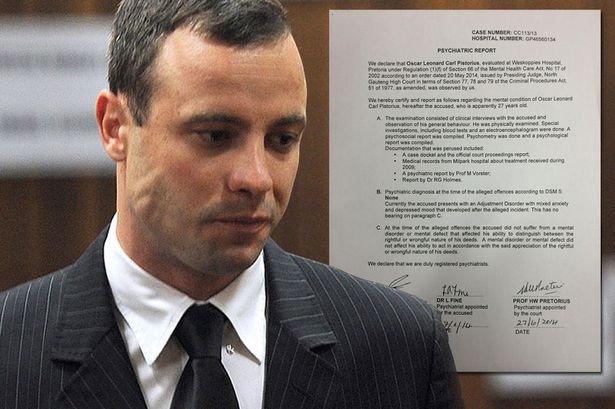
This first day back after a month break in trial begins with the results of the psychiatric evaluation. It has been determined that Oscar did not suffer from a mental defect at the time of the offense. He was able to act in accordance with an appreciation for right and wrong. It was also determined that he does not suffer from Generalized Anxiety Disorder (GAD), therefore the testimony of Dr. Vorster, in my opinion, will not be considered relevant in this trial. The evaluation did state that Oscar is believed to be suffering from Post Traumatic Stress Disorder (PTSD) and depression. The trial went on to proceed.
Dr. Versveld is the orthopedic surgeon who performed the original amputation operation on Oscar as a baby. He is still his doctor to this day.
On May 7, 2014, Oscar gave the following report detailing the current condition of his stumps to Dr. Versveld. The details are as follows:
• He can stand with his knees straight and put weight on his stump on the right side
• On the left side, he has to move the pad around to stand on it (the pad rolls with the end of the stump). If he’s not concentrating, it can click and it’s extremely painful.
• If he is able to put his left stump in the right position, he can stand on his left leg and put the right leg forward, but there is discomfort and insecurity. I have to bend the left knee to put weight on it.
• When he is standing, he can’t stand still, he has to move the stumps around.
• He can’t stand for long (1-2 minutes). Then the weight starts hurting.
• It is better on a soft surface, and worse on a hard surface.
• His balance is better in the light. In the dark, he really struggles.
• At night, if he gets out of bed, he holds on to things.
• If he is standing and is pushed, he will tend to fall over.
• If he puts sudden weight on the stump, the pad will move backwards. It clicks, and it is sore. It is sorer on the left side than the right.
• He struggles to carry something when he’s on his stumps because he struggles to balance. He needs his arms to balance.
• He falls often, mostly because of the left stump but sometimes because of the right too.
• If he clicks that stump (the left one), he falls to the floor. It’s like a shock of pain. It lasts for about 15 seconds.
• The pad goes back when the weight is off. When this happens, he grabs the stumps and squeezes it and it gets better.
• He falls about once a week or once every two weeks.
• If he gets out of bed, he can just fall down. If the bed is a different height, when I put the stump down, I can fall down.
• At night, I will go to the loo without prosthesis. But he doesn’t go in to the house without prosthesis.
• He can’t reach for things and he can’t move quickly.
• The dog can knock him over and has many times.
• He bathes rather than showers because he can’t stand long. He has a bench in the shower since he can’t stand and wish himself. He has slipped many times in the shower. If there is a small mosaic in the shower, he can’t stand on it.
• When he has no prosthesis on, he needs to bend the left knee and put the left stump down so that the outside of the stump is in contact with the floor.
• He has to bend his left leg and walk with his back bent.
• If he walks without prosthesis on a small stone or a crease in the carpet, it is painful.
• He can’t stand on pavement. Even a small inequality of stone, and he is in trouble.
• If he turns around, he shuffles.
• He has to be careful as the bone moves, as the stump could click out.
• He gets back pain when he stands on his artificial legs. If he stands for about an hour, his lower back gets sore and shortly after that, his stumps become sore.
• If he races, and has to do an interview on those prosthesis (the blades), and he’s on them for more than an hour, they feel constricted, tight, and throbbing.
• If he is standing with his prosthesis on, he has some balance if he is pushed from the side. If he is pushed from the back or the front, he doesn’t have much resistance.
And the following are Dr. Versveld’s findings:
• Stumps measured 28cm long from medial joint line in the knee to the tip of the soft tissue.
• With the patella pointing forward, the stump was rotated inward by 20 degrees on both sides. (When he walks with his prosthesis, his knees are turned out by 20 degrees on both sides.
• Above heel pad circumference on right side measured 16.5cm.
• Above heel pad circumference on left side measured 18.5cm.
• The heel pad circumference on right side measured 18.5cm and 19.5cm on left side.
• The heel pads exhibited considerable mobility on both sides.
• On the left side, it was possible to move the heel pad from the anteromedial (front inside) to the posterolateral (back outside) and this resulted in a snapping/clicking of the soft tissue which resulted in pain.
• Pressure over the distal end of the lateral side of the tibia resulted in pain on the left stump.
• There was a scar measuring 9.5cm over the back of his right calf above the heel pad posterially, and one measuring 6cm over the back of his calf on the left side posterially.
• There was anterior bowing at the right distal stump measuring 12 degrees, and on the left distal stump measuring 12 degrees.
• He walked with his left knee bent, his hip externally rotated and the stump tipped inwards (to get the weight on the outside of the stump).
• When he put weight on the left stump, the knee buckled.
• Because of the bent left knee, his left leg was shortly than the right.
• He walked with difficulty, without holding on.
• He could not walk on the industrial carpeting.
• When trying to stand without holding on, he had difficulty standing and was moving all the time.
• The biggest stride he could take, bearing weight on the left stump while holding on to something measured 23cm.
• While holding on to something, and bearing weight on his right stump, the maximum stride was 33cm.
• The left leg actually buckled when he put weight on it.
• When standing or walking, he was bending his back forwards.
• Standing on his stumps, he measured 1.56 meters tall.
• In walking standing, he measured 1.44 meters tall.
• When standing in his prosthesis and shoes, he measured 1.86 meters tall.
• He weighed 73kg when not wearing his prosthesis. (it was difficult to weight him because he could not stand still on the scale)
• He weighed 79kg wearing his prosthesis, fully clothed and in shoes.
• He had a bruise measuring 4.4cm x 3cm over the lateral aspect of his right mid-thigh.
• At this time he said that if he stands on the grout between tiles, this hurts his stumps.
Versveld shows Oscar’s x-rays to the Judge and then has him conduct a demonstration on his stumps. Both are done off camera.
Next, Roux tells Versveld that it’s common cause evidence that Oscar struck the door with the cricket bat but there are differing versions as to whether or not he was wearing his prosthetics at the time. Oscar’s version is that he had his prosthetics on. Vermeulen’s evidence was that Oscar was on his stumps at the time.
Versveld says that Oscar has a severe problem balancing on his stumps if he is holding something with both hands. He doesn’t believe that Oscar would have been able to strike anything using both hands, especially with force, otherwise he would fall down.
Versveld goes on to say that he did see some evidence of Oscar falling from time to time. There were bruises on his right mid-thigh which had been sustained a few days earlier.
Nel gets up to cross-examine. He starts by pointing out that Oscar met with Dr. Versveld in May of 2014, which was after Oscar had already testified. Versveld says he did not follow the court evidence but did see a few clips on the news. He denies having in-depth knowledge of Oscar’s version.
Nel further points out that when Oscar went to see Dr. Versveld, he was supposedly suffering from depression and PTSD (per the psychiatric findings). Oscar told Dr. Versveld about all of his physical limitations and challenges, and then Dr. Versveld made a determination based on what Oscar told him. Dr. Versveld says he did not solely rely on what he was told; he also did an examination to try to verify the details. Nel tells him that he is trying to link Oscar’s vulnerability to a dangerous situation, and Nel does not believe that he is qualified to do that as an orthopedic surgeon. Versveld says that he has produced medical, x-ray, and clinical findings and has made a deduction on Oscar’s vulnerability, which is the same deduction that the court can make. Nel agrees, the court will make its own deductions.
Nel asks Versveld very directly, “would it be possible for the accused to, instead of firing shots in the bathroom, run away?” Versfeld answers, “yes, it would be possible”. But he goes on to say, he would not run as we run. And for him to turn around is quite a process. Nel fires back that Oscar did in fact run from the bathroom back to the bedroom and yet he never fell. Versveld states that he never said he falls every time. Nel tells Versveld that Oscar never fell at all the night of the incident. In all of the back and forth running that he included in his version, Oscar never once fell. Versveld says that he is not aware of that. He did not ask Oscar what happened the night of the incident nor did Oscar tell him.
Versveld is yet another uninformed defense witness with no supposed clue about the incident, being hired by the defense in the fourth quarter of the game, after Oscar has testified and desperately needs saving.
Nel challenges him on whether or not Oscar would have been able to fire the gun with both arms stretched out, and after an objection by Roux and some interjection by the Judge, Nel is able to get Versveld to answer that with both hands stretched out he would have less of a chance to balance and would likely be affected by the recoil.
Nel then poses, what if the accused could foresee that the recoil would be a problem and deliberately stood with his back against the wall to be able to fire better? Versveld says that if Oscar is leaning against something than it would have a big beneficial value to his balance. This constitutes a conscious decision on Oscar’s behalf, an important point to make.
Nel points out to Versveld that on Oscar’s version, he was searching the room looking for Reeva with the firearm in one hand and he never fell. He was also walking around the tile on the bathroom floor, pulling on the toilet door trying to open it. And then he walked back to the bedroom and opened the curtains and the balcony doors, all still on his stumps. He was also able to move two fans that were on at the time from the door to the front of the bed while on his stumps. Versveld says that it’s possible that the tripod fan could have been used as a balancing agent as he is walking with it.
Nel goes back to the part about Oscar opening the curtains and going out on to the balcony. He reiterates that Oscar has just come from the tiled bathroom floor, and then he is walking on the carpet and next goes out on to the balcony. He wants to know if this is all possible while Oscar is on his stumps. Versveld says yes it is, which does seem quite contrary to what he was trying to imply with his report about Oscar’s disabilities earlier. Nel asks him, “so nothing in your report would say that that’s impossible to do?” Versveld answers, no.
Nel now wants to know if everything that he has recounted from Oscar’s evidence (how he moved from room to room, etc) is possible. Versveld feels it’s unacceptable to make a blanket statement like that.
Nel asks him, as the treating physician of Oscar, is he an objective witness? Versveld answers that “the evidence” that he has produced for court is objective. He did not answer that he is objective. Interesting answer.
Nel points out that everything that Oscar did, he did in the dark. Versveld says it depends on how dark it was. If it was very dark, he would have needed to hold on to things otherwise he would have been falling down. Nel informs Versveld that his answer assists the State because Oscar’s version was that it was pitch dark.
Versveld back peddles a little bit and says that it may be possible if that’s what happened, but Nel points out to him that it is only Oscar’s version, it’s not what the State believes happened so he needs to know from him if he thinks it’s possible for the accused to “walk from a pitch dark room, on your clinical findings, without falling”. Versveld says he would find it improbable and he would suggest that he would have to hold on to something along the way to do that.
Versveld goes on even further to say that it would be difficult to run in the pitch dark holding on to a weapon and he would be at high risk for falling. Nel asks him, if the lights were on and he could see, would the probability of him falling be less? Versveld says, yes.
Nel then asks Versveld why he made the statements in his report that Oscar has a severely impaired ability to ward off danger without a weapon. He answers, because this trial is about using a weapon. He tried to make his report relevant to the trial.
Nel also ponders whether items on the floor would cause an issue for the accused, especially in the dark, such as a duvet on the floor and electrical cords. Versveld agrees with him that those things would likely be a problem.
Nel wants to know if when Oscar first went to meet with the doctor in preparation for this trial report, did he arrive with a completed document? Versveld answers no, he asked him what he is like on his stumps, as well as other individual questions, to which Oscar responded. His intention was to try to establish the type of disability that he had for the benefit of the court.
Nel wraps up and Roux asks a few more questions. He is taking the doctor through Oscar’s motions that night and is trying to point out that with the assistance of his hands holding on to things, he would not necessarily have fallen on some of the items that were in the room.
One thing that I found interesting was Roux asking Versveld if Oscar stepped on the duvet and the duvet was right next to the bed (where he could hold on), would he have definitely fallen. When Oscar was on the stand, he of course testified pretty adamantly that the duvet was always on the bed and the police were the ones to put it on the floor. As the cross-examination with Nel progressed, he then moved to a position of “I can’t remember” where the duvet was. Now Roux is asking Versveld about whether or not Oscar would have fallen if the duvet was on the floor. It looks like they have come full circle with that piece of evidence. They must be banking on My Lady having a pretty poor memory. Versveld answers that he may have fallen but he can’t say that he would have fallen as a fact.
Versveld is excused.
Roux brings up a few unresolved matters to address.
He first discusses the missing electrical cord from the bedroom.
The first image of it was taken on February 14 at 5:58am, during the initial crime scene investigation and it can clearly be seen in the photo. And then another image was taken of that same area of the bedroom on February 15 at 6:34pm, but the extension cord is now absent from the photo. Roux is making the argument that if the house was sealed by police at that time, where is that cord? Mike Van Aardt’s response was that they do not have the cord. The Defense wants to show the court that the cord is 5 meters long and they need the cord in order to do that.
Nel explains to the Judge that the Defense cannot order that the State produce an item that was not seized as evidence. And he is correct about that. The Judge inquires whether or not there was an inventory list and Nel answers yes, but again states that the cord was not seized evidence therefore it would not be on the list.
Nel states that yes it is common cause that the cord was in the house on February 14. The Defense is indicating that per their photograph, the cord is no longer in the same position as it was on the 14th. That is the most that anybody can say. As to where it was that day, whether it was somewhere else in the house, nobody can say. And adding my own thoughts here, the Defense took possession of the house 3 days later and had access to it for the remainder of the year. That cord could have simply been placed in another location inside the house while they were investigating and has since been removed considering his house has been sold. This is a ridiculous argument by the Defense but unfortunately the Judge seemed concerned about it.
Nel tells the Judge that when the police were done with their investigation, the key was handed over to Mr. Stander and Mr. Stander handed it over to the Defense team. There was not an inventory made of every single item left in the house. How could there be? That would be ridiculous and just doesn’t happen in any investigation. Hopefully when the Judge thinks more about this she will realize that Nel is quite correct in his argument and Roux is yet again just grasping at straws.
Roux continues his housekeeping and hands in the security guard track report from the evening/morning of February 13/14.
The next witness up is Ivan Lin. He is an electrical engineer and has practiced as an acoustic engineer since 1992.
They read from his report and address a number of questions that were posed to him. The primary focus being whether or not one can reliably differentiate between a male and female scream, and discern emotion, from about 80-177 meters away.
Lin talks about how the act of listening is different from person to person, and factors such as culture, language, etc can have relevance on how you interpret the noises. In other words, two people can hear the same noise from a distance and have different views about it. Nothing earth-shattering here that we don’t already know.
Then they address if it’s correct to assume that all male and all female screams sound the same. He states that although typically one can tell if a sound is male or female, one cannot reliably say with certainty if it was a male or female.
They also investigate the scientific possibilities of sounds traveling through a closed window and a closed door in the toilet cubicle, sound traveling out of the open bathroom window and sound traveling out of the open balcony door, and he reads off all of the respective numerical findings.
Nel states that yet again the State has received the witness’ report that same day before he took the stand so they have not yet had time to read it. They break for the day and will cross-examine tomorrow.
How did the State do?
For several months now, we have all pored over the evidence in this case and searched for answers to many nagging questions. Many of those questions still remain unanswered and were not addressed in the State’s closing arguments… much to the disappointment of some people expressing their opinions online, and likely to the delight of the Defense.
Does that mean the State has not proven their case? No, absolutely not.
I don’t want to get bogged down in dissecting every aspect of the evidence from trial, as I’ve already done that throughout the blog. I’d rather point out from a legal perspective why I believe that Gerrie Nel conducted a pretty brilliant case. Of course, the verdict will ultimately determine that, but here is my assessment as to why I believe they have succeeded…
Cases fail when the State does too much or does not have a narrow focus on what they are trying to achieve. The goal is not to spew out endless amounts of information in the hopes that more is better. It’s better to know what exactly you have to go after to prove that the accused/defendant is guilty per the letter of the law.
Nel set out on a very specific mission back in March to prove to the court that Oscar’s story could not be reasonably, possibly true. We heard that sentence numerous times. He was direct in stating that this was a circumstantial case. It’s circumstantial because only two people were in the house that night and only one of them can tell a story.
Circumstantial evidence requires an inference. It is an accumulation of details that reinforce each other and corroborate that inference. For instance… a woman is heard screaming in terror, several minutes later there is gunfire and a woman is subsequently found dead. You can circumstantially make the inference that the screams came from the woman who was killed and not from somebody else.
There is also direct evidence, which does not rely on inference (ballistics, blood spatter, etc) that can be added to the story to further strengthen it. The ballistics evidence from Mangena greatly supports that Reeva had time to scream. It also supports that there was a pause after the first shot, which equals conscious thought. That bolsters the circumstantial evidence of what the neighbors heard and also shatters the Defense assertion that Oscar acted out of an involuntary response.
Nel reaffirmed that this case is not about the pieces – it’s about the totality of the evidence and what you get when you put it all together. The mosaic. “It is necessary to step back a pace and consider the mosaic as a whole. If that is not done, one may fail to see the wood for the trees.”
I really started to fully grasp what he was trying to achieve when he concluded Oscar’s cross-examination on April 15th with the following:
Nel puts to Oscar that there were only two people in the house that night. He killed Reeva and is the only one who can give us a version of what happened. Oscar agrees.
Nel also puts to him that “his version is not only untruthful; it is so improbable that it cannot be reasonably, possibly true.” Oscar does not agree.
Nel continues, “the court WILL, on the objective facts and the circumstantial evidence, make the following findings”:
1) Reeva ate within 2 hours of being shot and killed.
(Oscar himself, via testimony, cannot confirm or deny that Reeva ate within 2 hours of her death, therefore the Medical Examiner’s evidence will be more credible than his even if it is subjective)
2) Whilst awake, there was an argument in which Mrs. van der Merwe heard Reeva’s voice.
(First, this bolsters the eating later in the night – if Reeva was eating, then she was awake. Second, if there was a fight starting around 1:56, and an arguing female voice was heard, and subsequently one hour later a woman is shot dead, then one can strongly infer that voice was from the victim. If the Judge finds Mrs. VDM to be credible, she will infer that voice was Reeva’s)
3) Johnson, Burger and both Stipps heard Reeva’s blood-curdling screams.
(Oscar cannot and did not prove in court that he screams like a woman. That will forever remain only an assertion. If the Judge finds Johnson, Burger and the Stipps to be credible, then the Judge will accept that Reeva did scream.)
4) Oscar shot 4 shots through the door while knowing that she was behind the door.
(Using the logic from above, the Judge, accepting that the voice and screams were Reeva’s, will then accept that Oscar knew it was her when he shot her through the door)
5) Oscar knew that she was talking to him.
(Reeva was inside of the toilet room, standing up, fully clothed and facing the door. We know this from the hip shot. The neighbors heard screaming from a woman and voices inter-mingled. Based on this, again, if the Judge has already found those witnesses credible, she will infer that Oscar and Reeva were communicating through that door.)
6) She was locked in the toilet room.
(The State nor Oscar disputes that the door was locked. The Judge will accept that the door was locked.)
7) Oscar armed himself with the sole purpose of shooting and killing her.
(In logical procession, with the Judge accepting the ear witnesses as credible – a woman is awake, arguing and screaming, voices-intermingled, there is communication going on from behind a closed door, Oscar retrieves his loaded gun, shoots Reeva 4 times through that door – there is no other way for the Judge to see this but an intentional killing)
After this day in court concluded, I had read some debates online about Nel’s use of the words “The court WILL find…” Some people seemed to think that it was a pretty arrogant thing to say considering the Defense had not yet given their full presentation; there were several more witnesses to call. Nel’s intention here was not to be arrogant. He was pointing out his laser-focus on this case, which he remained true to throughout:
IN THE ABSENCE OF A SUBSTANTIATED, TRUTHFUL STORY FROM OSCAR, THE COURT WILL THEN HAVE TO RELY ON THE OBJECTIVE FACTS AND THE CIRCUMSTANTIAL EVIDENCE. This is the most important sentence to understand in this case.
Point 218 from the Conclusion in Heads of Argument:
If the court rejects the accused’s version of events and relies on the objective (common cause) facts and the circumstantial evidence a conviction on murder with dolus directus is inevitable.
(Dolus directus is murder with intention – the equivalent of first degree murder in the United States)
In the matter State versus Montsho (Case No: CC31/13), Judge Thulare defined premeditated as “to think out or plan beforehand”. The Judge went on to explain that this concept “suggests a deliberate weighing-up of the proposed criminal conduct as opposed to the commission of the crime on the spur of the moment or in unexpected circumstances”
At page 9 of the judgment the court deals with the concepts of planned or premeditated murder and found: “ … the period of time between the accused forming the intent to commit murder and carrying out this intention is obviously of cardinal importance but, equally, does not provide a ready-made answer to the question of whether the murder was planned or premeditated …”
The common cause facts include:
• The accused thinking of and remembering where he concealed his firearm
• The accused moving towards the place of concealment, uncovering and then extricating the firearm
• Un-holstering the firearm
• Getting the firearm ready to fire, by at least disengaging the safety mechanism
• Walking/running more than 5 metres with the firearm at the ready
• Taking up a position
• Firing four shots into the toilet cubicle
• Maintaining a good grouping while firing
We respectfully argue that the actions of the accused demonstrate pre-planning in that he armed himself, moved towards the toilet and killed the person in the toilet.
I believe strongly that Murder was proven and that dolus directus will be the finding. I believe that Judge Masipa will find the ear witnesses to be credible, therefore she will infer the screaming female voice was Reeva’s. The only inference left is that Oscar’s story is not reasonably, possibly true.
The Judge will render her decision on September 11.
In my next blog post, I will share my opinions on the Defense Heads of Argument.

There are only two questions at the core of this trial. Did Oscar intend to kill a person and did he know that person was Reeva.
All of us collectively have spent over a year pontificating about the “whys” and “hows” of this case but at the end of the day, why he did it or what they may or may not have fought about, is actually not important to the verdict.
It’s very easy to get bogged down in those details, and that almost always plays in favor of the defense predominantly in a jury trial. However, a Judge knows that many questions in these types of cases are almost never resolved. Judges rely on the facts of the case, not the possible scenarios.
Does it feel more comfortable to know “why” when these murders happen? Of course it does. As humans, it’s our nature to want to know why. But the reality is that it is an extremely rare circumstance that we ever truly know why anybody kills.
For those who believe that there’s too much doubt to convict OP because there’s no evidence of a fight, or because OP was a good and kind person who would never do something like this, or because he seemed genuinely upset afterwards… perhaps consider this…
Oscar was a gun owner and gun enthusiast, by his own admission. Based on evidence presented at trial, his gun was partially for protection and partially for bravado. He admittedly carried it around wherever he went and acted carelessly with it on more than one occasion. Is this important to the case? Yes it is. It shows that it’s “possible” for something to go wrong.
Is it a reality that people who own guns versus people who don’t own guns have a higher risk of injury or death? Yes. This is not a PSA on gun dangers; it is simply an acknowledgement that somebody in possession of a deadly weapon is capable of causing death.
And then add in Oscar’s penchant, and again his own admission, for becoming frustrated easily, having a short fuse and often being stressed out. The two are a dangerous combination. You don’t need to be a monster, a sociopath or even a terrible person for a killing to happen in a bad moment under these conditions. It happens every day to very average people.
But back to my original point for this post… does any of that really matter to the verdict? I say, no, it does not.
DID OSCAR INTEND TO KILL A PERSON – MURDER? I adamantly say YES. Here are the facts of the case:
1. When presented with a moment that OP perceived to be dangerous, he consciously chose to retrieve his weapon. Whether you believe his story that the window opening startled him, or believe the State that he and Reeva were in a fight, it is common cause that he retrieved his weapon for a purpose.
2. OP was adequately trained on this weapon.
3. OP consciously chose to keep this weapon loaded and one up at all times.
4. OP consciously removed the holster and safety from the weapon during the incident.
5. According to OP, he consciously chose to keep the lights off so as not to give away his position.
6. According to OP, he consciously yelled at THE PERSON to get out of his house.
7. According to OP, hearing the toilet door slam and seeing it closed solidified for him that A PERSON was inside of the toilet room.
8. OP was aware that he was not the only person in the house that night – he knew Reeva was there in the very same bedroom suite with him.
9. He never asked/didn’t try to identify who was in the bathroom. He just knew it was A PERSON.
10. According to OP, his finger was consciously on the trigger of his loaded, one up, weapon.
11. Although not admitted by OP, his gun was aimed directly at the toilet door. Behind that door was A PERSON. The ballistics evidence proves that the shots were not wild – they were consciously pointed at the door. OP slipped up when he said he didn’t fire a warning shot in a different direction because the bullet could have bounced off of the shower door and hit him. He was aware and conscious of his own safety and in which direction he was shooting – pointing it towards THE PERSON.
12. Admitted by OP, a noise in the toilet room, which would have been caused by A PERSON, prompted him to shoot.
13. He shot four times.
14. He left the gun, with remaining bullets, cocked and ready to fire. This means, he consciously stopped shooting at some point. He didn’t empty the entire gun. He stopped after four. A conscious act.
15. THE PERSON in the toilet room never spoke a word, was never seen, never indicated that they had a weapon and never presented a threat. This is not putative self defense. Hearing a window open in the bathroom when you are sharing your bedroom with a person that you are aware is awake, is not sufficient cause to believe that you are under attack and you have no choice but to kill.
16. OP cannot logically claim that every single action he made that night was carefully thought out, except for one, the four shots that killed Reeva. It doesn’t work that way. No experienced Judge, or quite frankly, clearly thinking person, would ever believe that a person who has been deemed mentally competent by a team of psychiatrists and a psychologist “wasn’t thinking” when he pulled the trigger, considering all of his earlier actions during the incident.
THIS IS WHY I BELIEVE THAT HE HAS BEEN PROVEN GUILTY OF MURDER, NOT CULPABLE HOMICIDE. HE SHOT AND KILLED WITH INTENT.
DID OSCAR KNOW IT WAS REEVA? I say, yes. Here is an abbreviated list:
1. The fans and the balcony light. When the incident first happened, OP claimed that he had to go “out” on to his patio to retrieve his fan. Now on the stand, the fans were never outside, just halfway outside in the doorway. He never had to go “out” to move anything. In fact according to Oscar’s version, he was only standing a few feet away from where Reeva was in bed, she was awake AND the balcony light was on. The likelihood that he would be clueless that she moved is very slim. He had to add in the second fan, because two fans were found in the room and it takes longer to move two fans than one. He screwed up though when he told the court that both fans were left on the entire night. The police found one fan in the corner, unplugged, and the other fan was in front of the door (unmoved) and not on. His story does not match the physical evidence.
2. The right side of the bed. That area was cluttered with cords, iPad/iPad cover, shirt, clippers standing up on a charger. Yet, OP claims that he walked around that area on his stumps, and later sat there to put on his prosthetics which had been left in that same area. His account of walking around in that area during the incident cannot be possible with the items on the floor.
3. The duvet. It was found on the ground in front of the bed (blocking a clear entrance to the balcony). It also had blood spatter on it which was very likely caused when OP carried Reeva’s body out of the bedroom. If the duvet was lying in that area during the incident, it would have been impossible for OP to run to the balcony and open the doors, especially on his stumps, without falling. He did not testify to falling. Instead, he testified that the duvet was absolutely always on the bed and the police moved it. The physical evidence does not support these false claims.
4. Lack of bloody hand prints. OP was covered in blood after pulling Reeva out of the toilet room. We saw the photos of him that morning. He claims he had to deactivate his alarm (on a remote) to get out of his bedroom, then he had to unlock the bedroom door and open it, and then run downstairs to open the front door. There was no evidence presented of bloody hand prints on his alarm remote, bedroom door, front door or iPhones. Why? There are a few possible reasons: He either ran out of the bedroom and downstairs to open door and make calls BEFORE he pulled Reeva out of the bathroom (which would be inconsistent with his story) or he washed his hands immediately after he pulled her out of the bathroom before calling anybody or going downstairs. There is no dispute that he made some calls within minutes after the shooting. If there are no bloody prints on the 0020 phone that was used, then he either washed his hands first or he hadn’t pulled her out of the bathroom yet. Both scenarios do not match his story of desperately battling to get her out of the toilet room immediately upon thinking it was her in that room. Something doesn’t add up here.
5. The screams. OP claims that Reeva never uttered a single word during the entire event from the point that he got out of bed, even though she was awake (and he states that he knew she was awake). However, multiple witnesses distinctly heard a woman’s voice and a woman’s screams before and during the gunshots. Mrs. van der Mewre heard a woman’s voice arguing from 2am-3am, when OP and Reeva were supposedly asleep according to OP. Burger, Johnson, and both Stipps heard terrified female screams up until the last bangs. Then silence. The only way that the defense could try to explain this was to say that Oscar screams like a woman and every one of the witnesses was mistaken. They claimed they would prove in court that he screams like a woman, they even did audio tests prior to trial, yet nothing was ever played for the court. Obviously those tests failed as miserably as OP’s own testimony on the stand. The ear witnesses that the defense brought to trial, Nhlengethwas and Motshuane, ended up supporting the state’s case. They stated they heard a man crying after the bangs. The fact that they saw the security vehicle/Stander’s mini-cooper within minutes of hearing the cries, fits the timeline that the gunshots were at 3:15+ (not earlier as the Defense says). When trying to understand some of the differences in ear witness testimony, it is essential to identify who heard screams and who heard cries. The people who heard screams, heard them BEFORE THE BANGS. They all identified those screams as a woman. The people who heard cries, heard them AFTER THE BANGS. They identified those cries as a man. Reeva screaming before the shots. Then silence = death. Then Oscar crying afterwards. Use that equation when listening to the ear witness testimony, and it tells the story!
6. Stomach contents. I recognize these are highly subjective. But it is relevant circumstantial evidence in that it supports the van der Mewre evidence of hearing a woman around 2am that morning. It opens up the window of opportunity that Reeva was indeed awake and not asleep as OP states.
7. The bathroom light OP testified that the bathroom light was off during the gunshots. He didn’t turn it on until later, after running from room to room. Annette Stipp, who was awake at the time of the first bangs, around 3am, saw the bathroom light on immediately after hearing the bangs. Dr. Stipp also saw it on. That bathroom light was on during the event! This is a huge discrepancy in Oscar’s story.
8. The aim OP refused to admit that he aimed at the door during his testimony. He claims his gun was pointed in the general vicinity of the door (paraphrasing a bit here). But the trajectory of his shots not only support that he was aiming at the door, you take a look at this picture and decide for yourself if he was pointing at Reeva. Ballistics proved that there was time between the first shot (the hip) and the subsequent shots when she was down on the magazine rack. He shot once, and then continued to shoot three more times. Three of those bullets hit her.


9. The police/security. On one hand, OP states that he is extremely security conscious and has outfitted his home with all sorts of extra security measures. He states that when he initially heard a noise that he perceived as an intruder, he repeatedly yelled to Reeva to call the police. Yet, he never used his panic alarm and he never once asked the police for help. He claims he does “not remember” speaking to security guard Baba at all that night, yet Baba testifies that Oscar did speak to him and told him “everything is fine”. OP is able to remember other phone calls that he made just moments before, but does not remember the suspicious and incriminating “everything is fine” phone call. Selective memory, especially during crucial moments of a crime timeline, is a HUGE indication to me that the person is not being truthful. Circumstantially, you can absolutely surmise that OP did not want the police at his house. OP calling the Standers first before anybody else supports this. Then add to that OP moving the body and asking the Standers to take Reeva to the hospital themselves, even though she had a gaping hole in her head with brain matter coming out, indicates that he wanted Reeva’s body out of the house. I don’t know anybody who would move a body under those conditions.
There are SO many elements of OP’s own story that are not supported at all by ear witnesses, physical evidence, ballistics evidence, medical examiner evidence and his own defense witnesses. Those “expert” witnesses simply were not able to support his claims. They all came to court with reports that had been written within days and weeks before their testimony – after all of the crucial State’s witnesses, as well as OP, had already testified. You can absolutely add that to the pile of circumstantial evidence against OP.
There are many, many more items that I could list here but I wanted to highlight some of the crucial ones. Does it matter what they were fighting about, or even if there was a fight? Does it matter what the Stipps heard closer to 3am? Does it matter whether or not OP immediately felt regret after pulling the trigger? I say, no, it does not.
There is a mountain of evidence that points to OP’s story not being true. If you don’t believe Oscar’s story, then it’s simple. He knew it was Reeva in the toilet room and he killed her with intent (per my points above).
Since the video keeps getting cut from many of the sites, I wanted to post a bunch of screen shots to illustrate some of the content that was aired. Hopefully this is helpful for those who have not been able to view the video yet.
REPLICA OF OSCAR’S HOME – BUILT TO SCALE


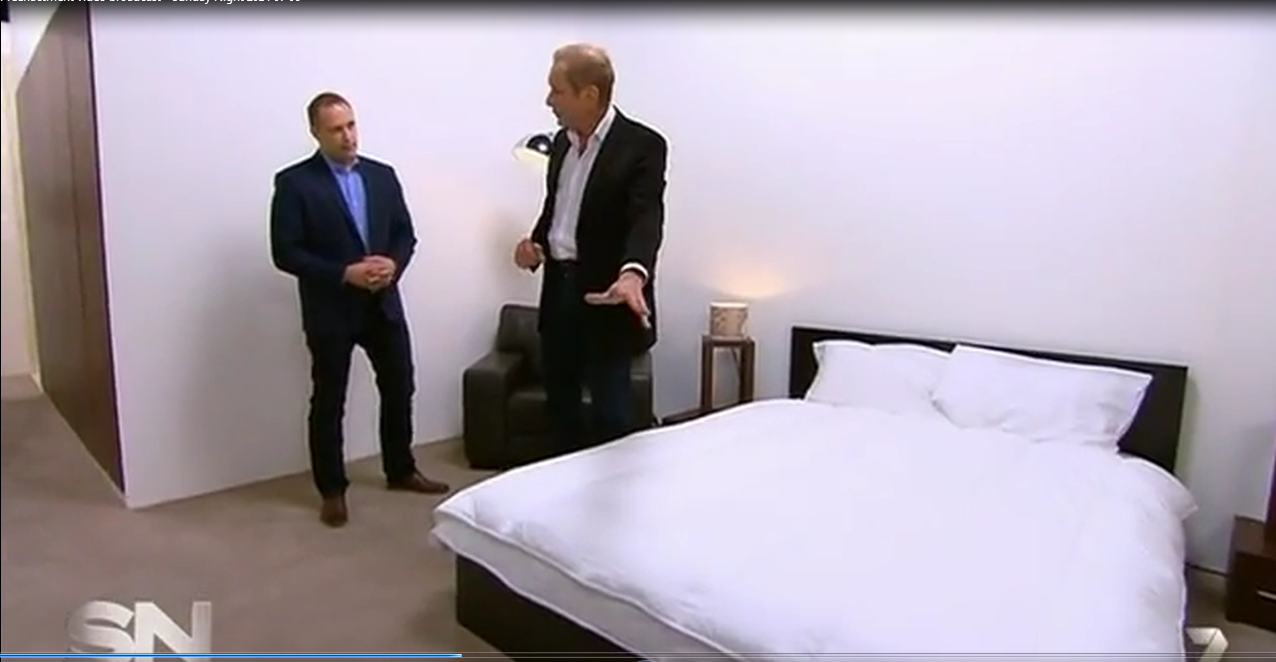

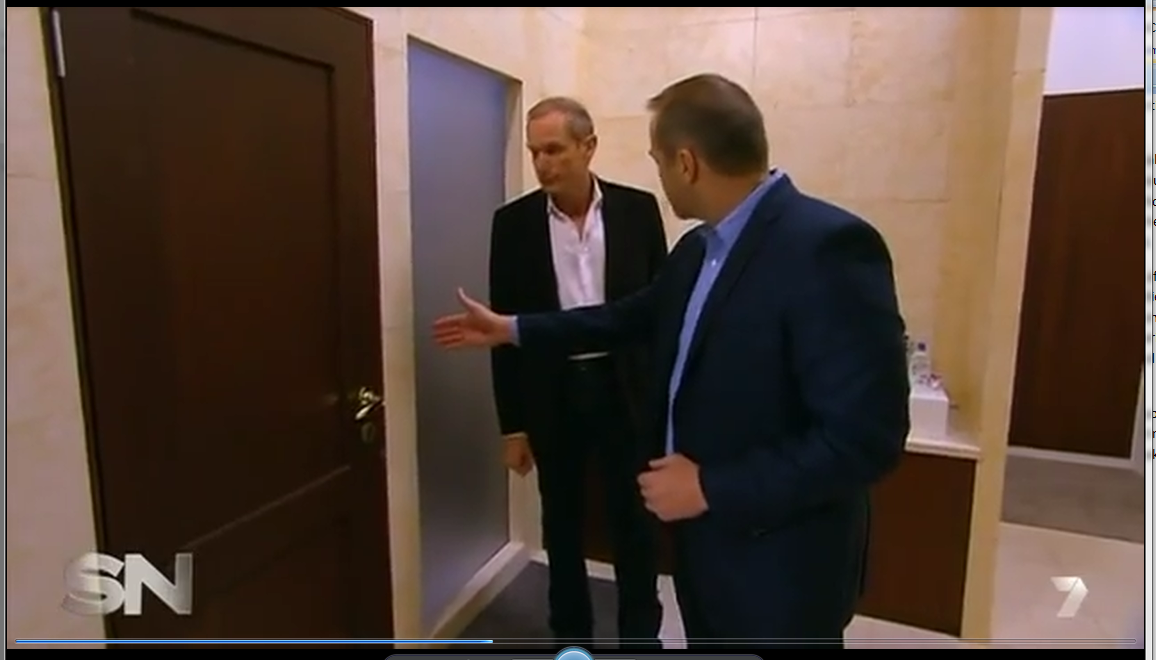
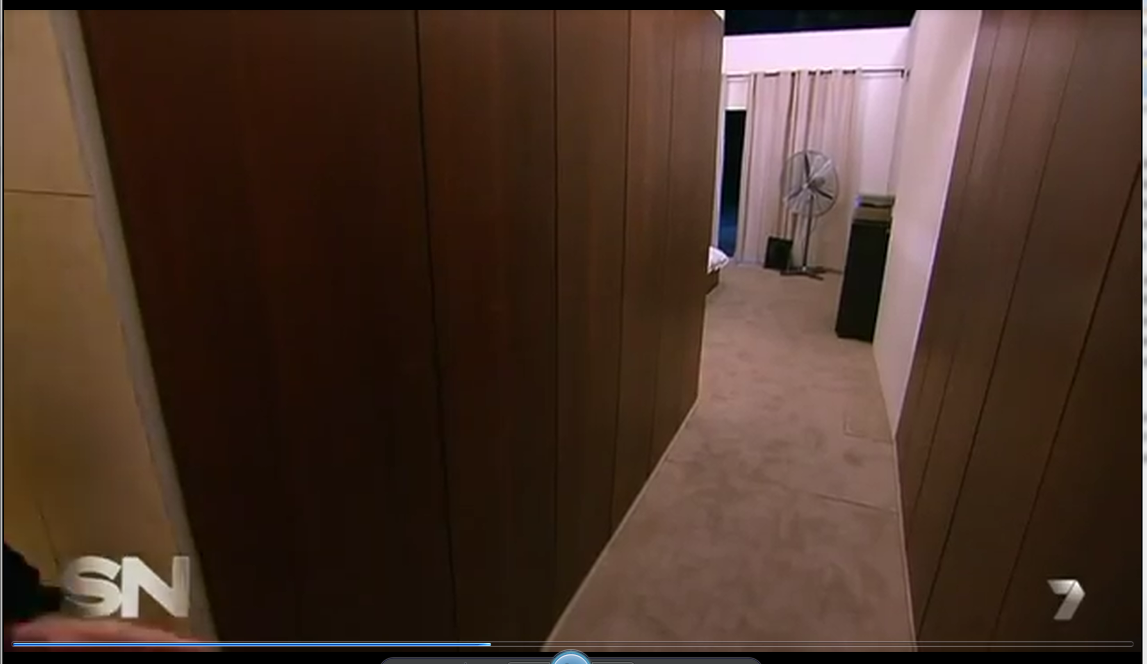
AND HERE IS AN IMAGE OF THE ACTUAL BEDROOM (NOT A RECONSTRUCTION)

VARIOUS PICTURES OF OSCAR WALKING/JOGGING/STANDING WHILE TALKING TO THE EVIDENCE ROOM TEAM AND RECREATING/DESCRIBING THE INCIDENT
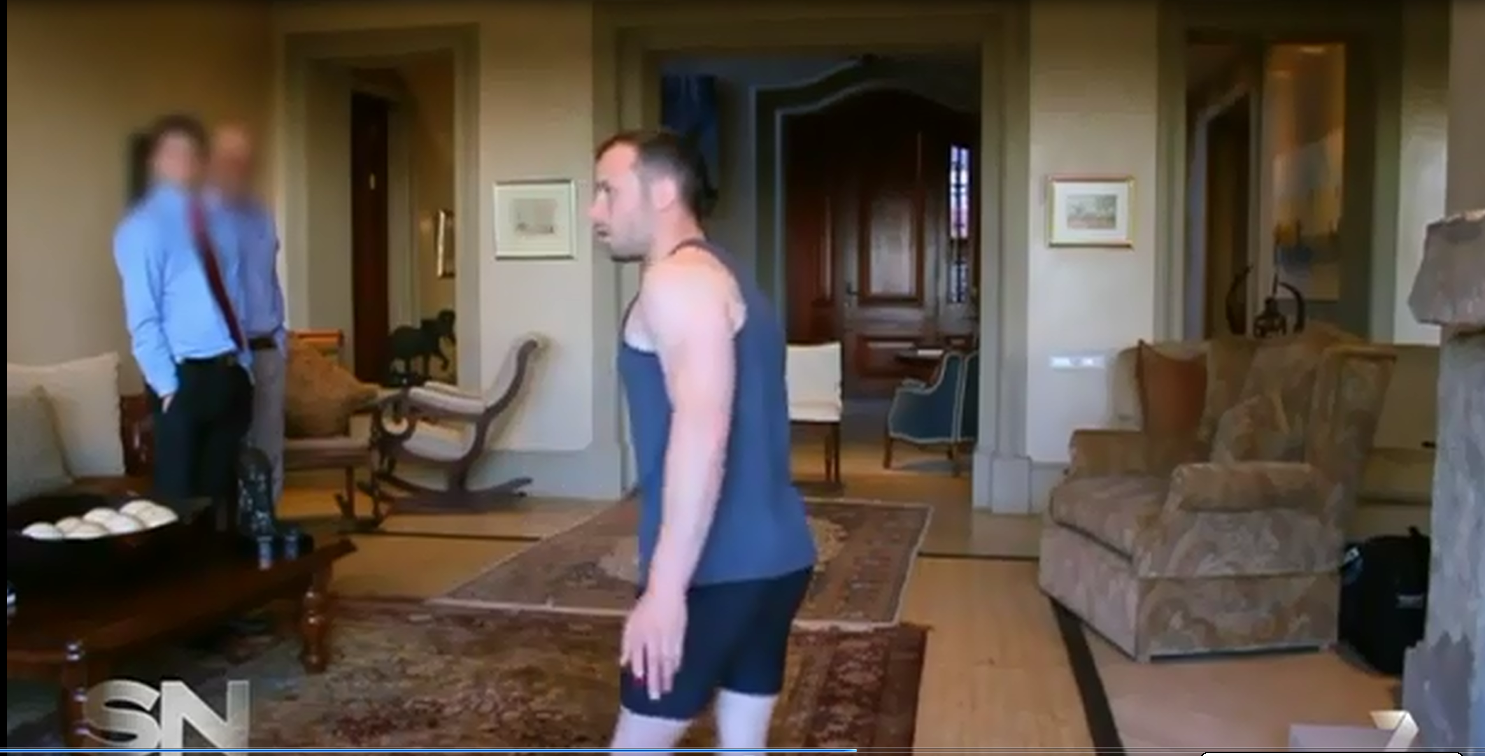


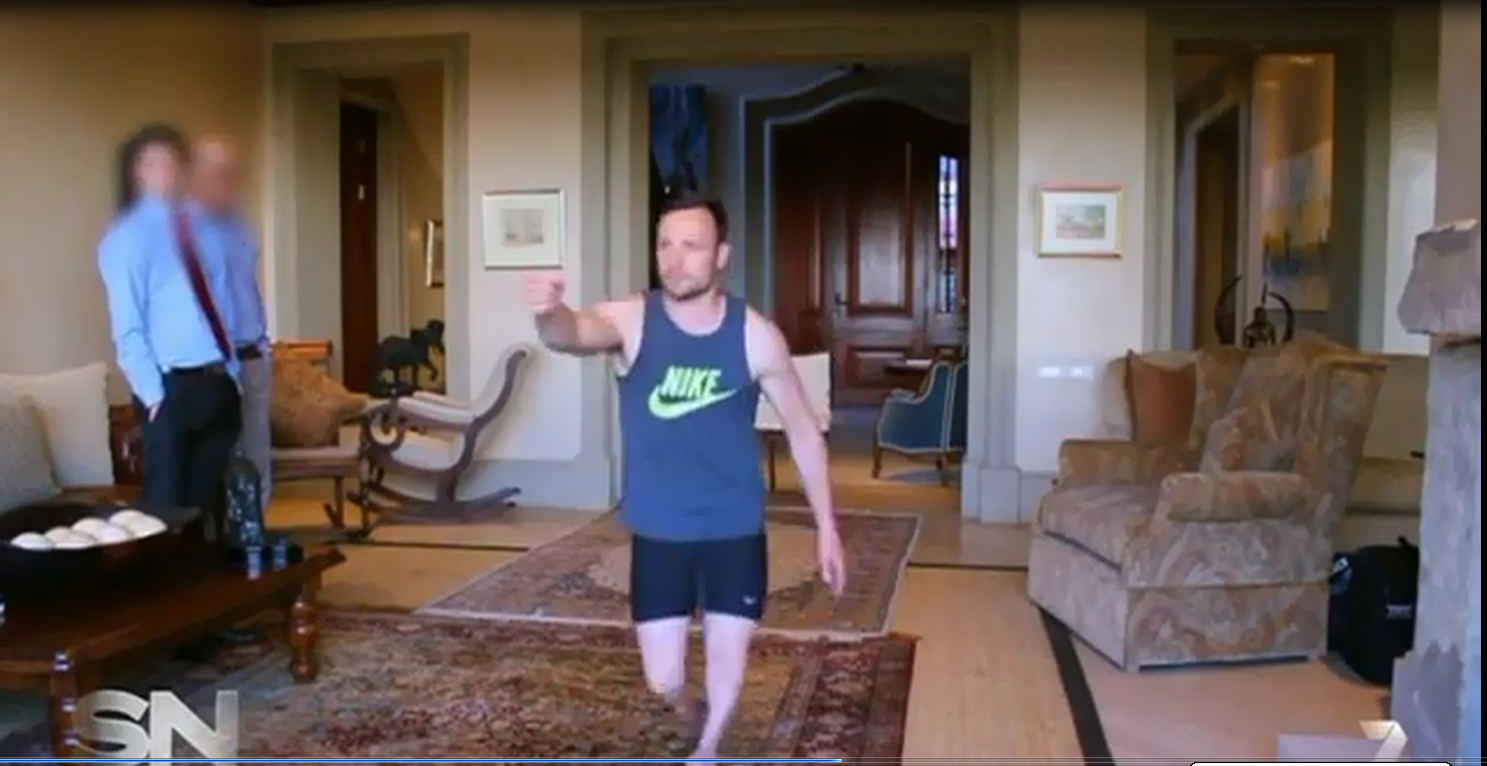
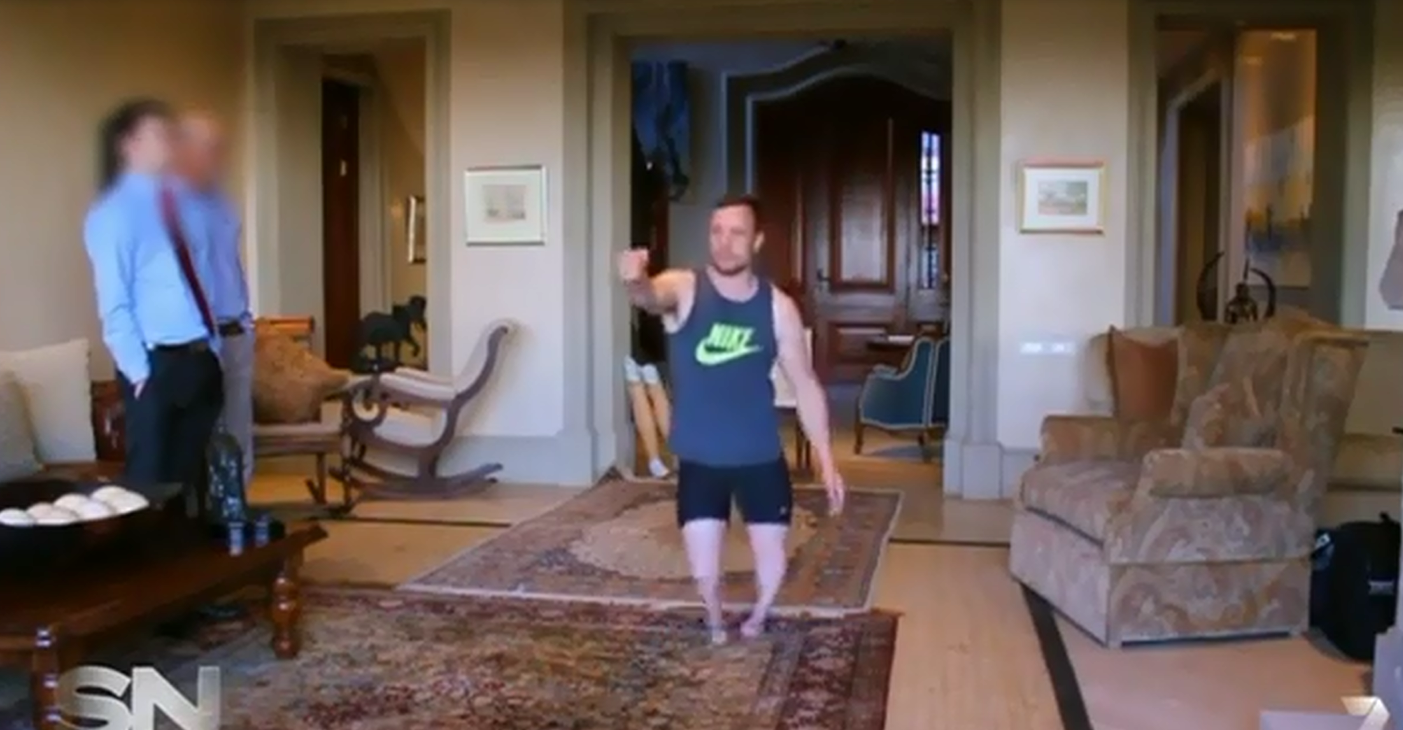
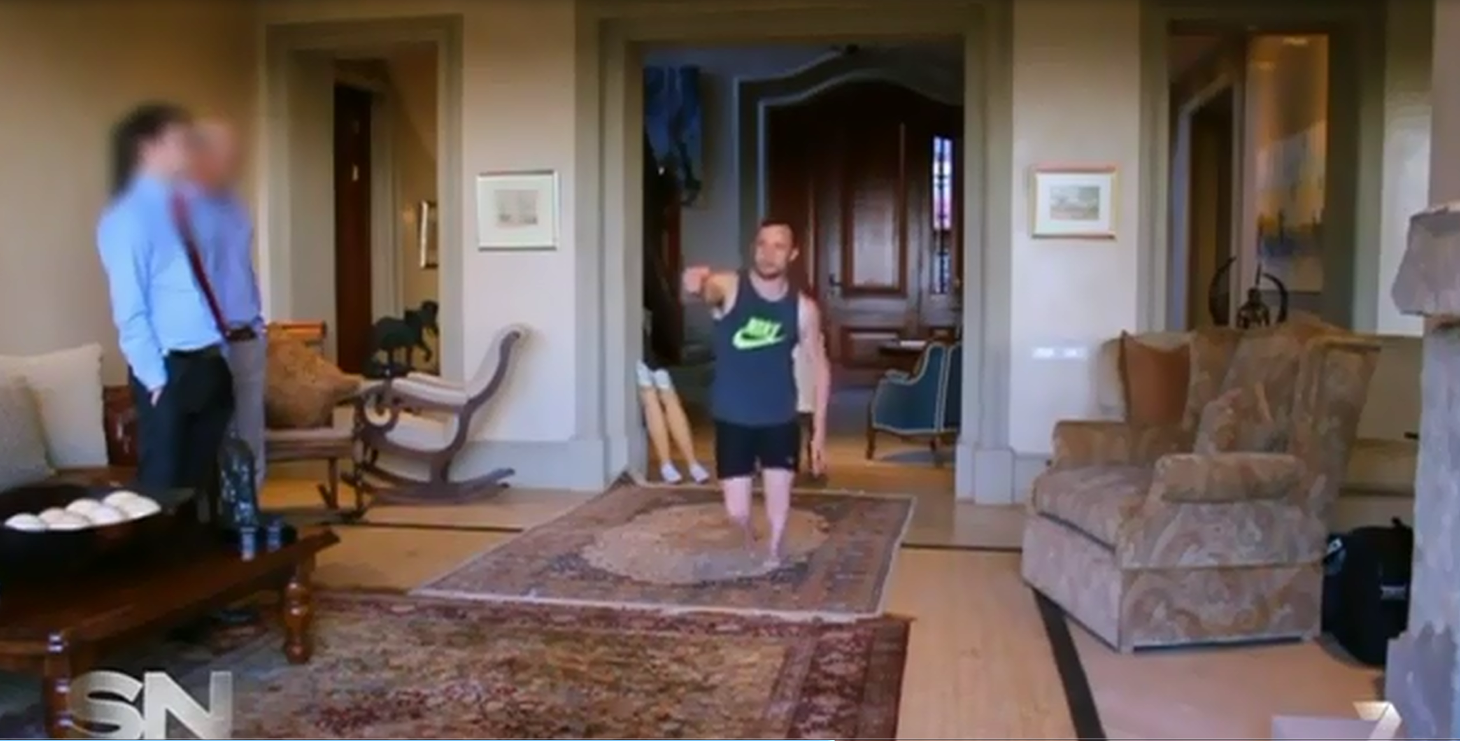
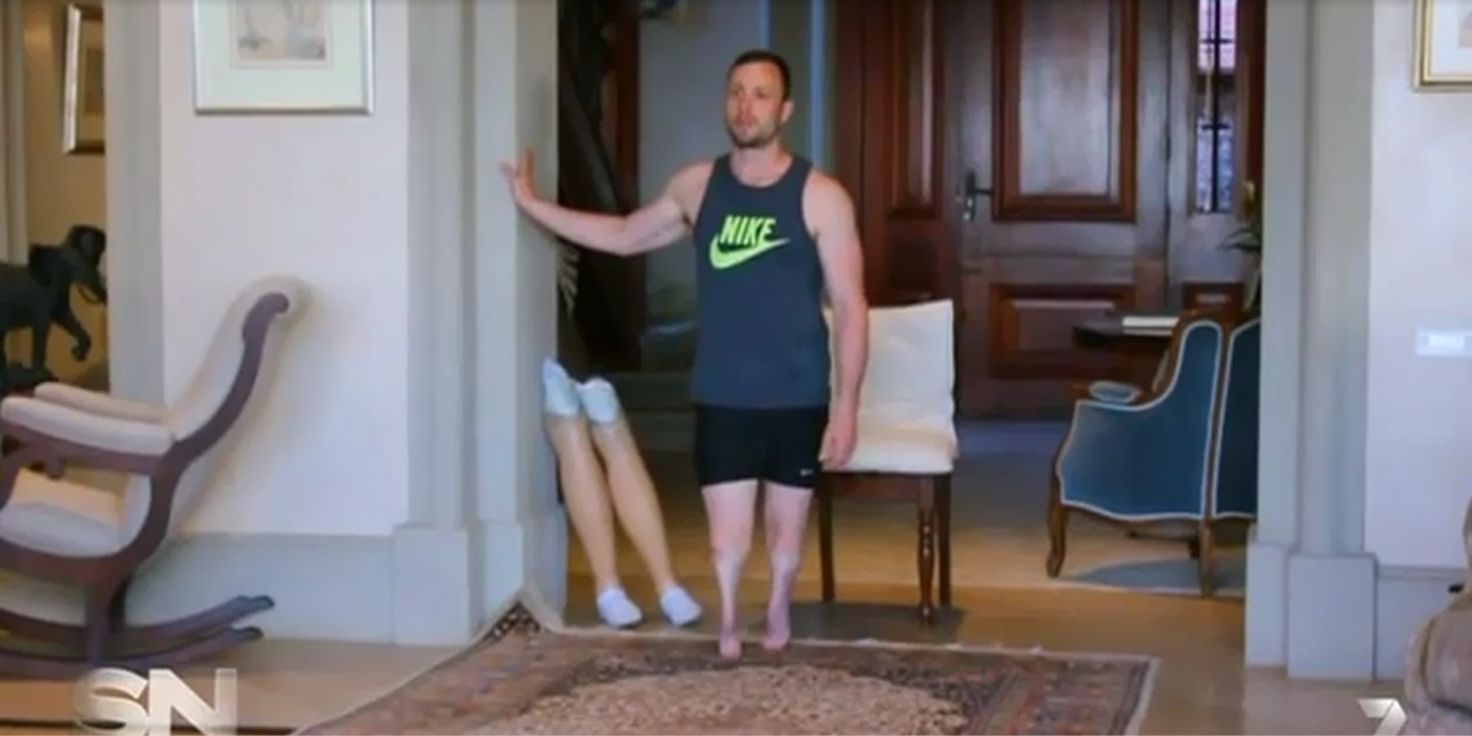
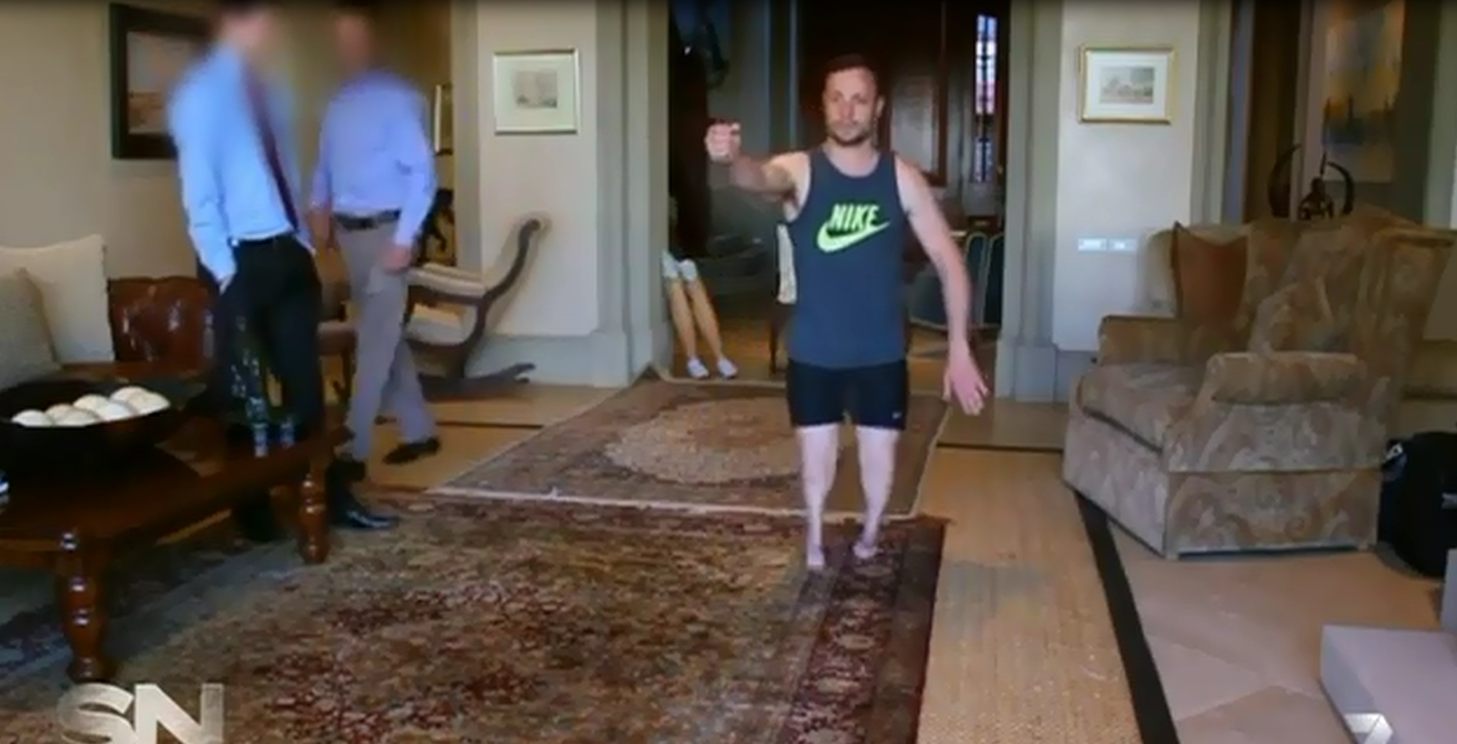
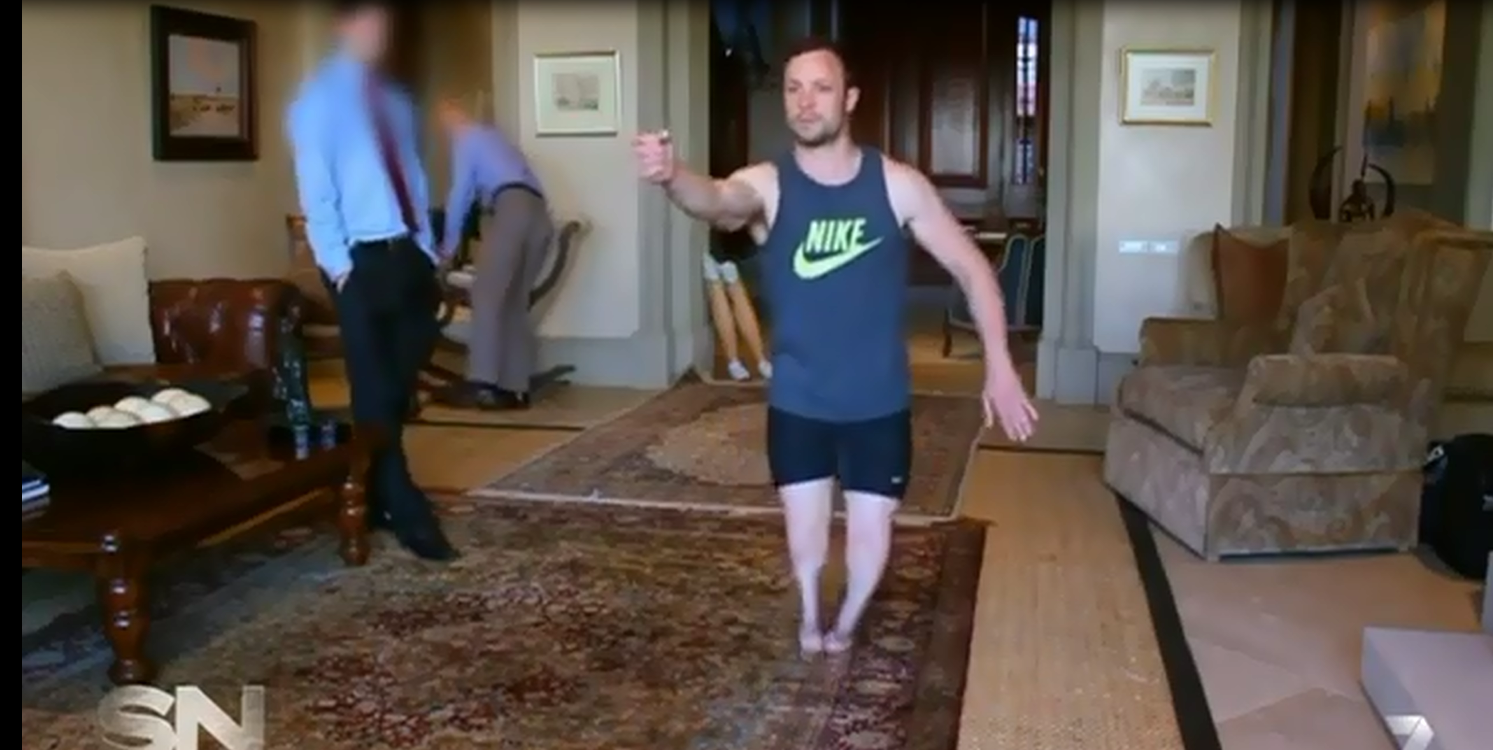
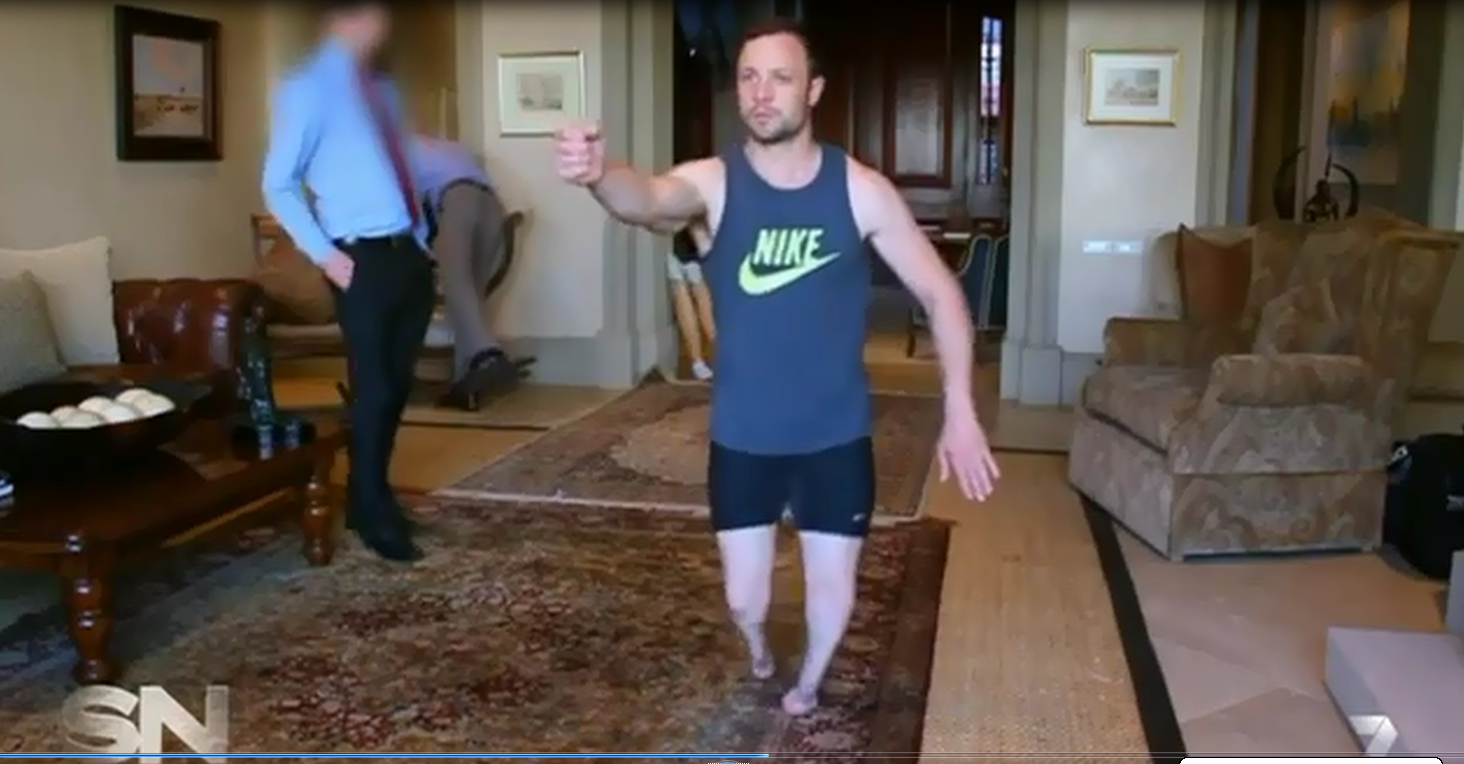
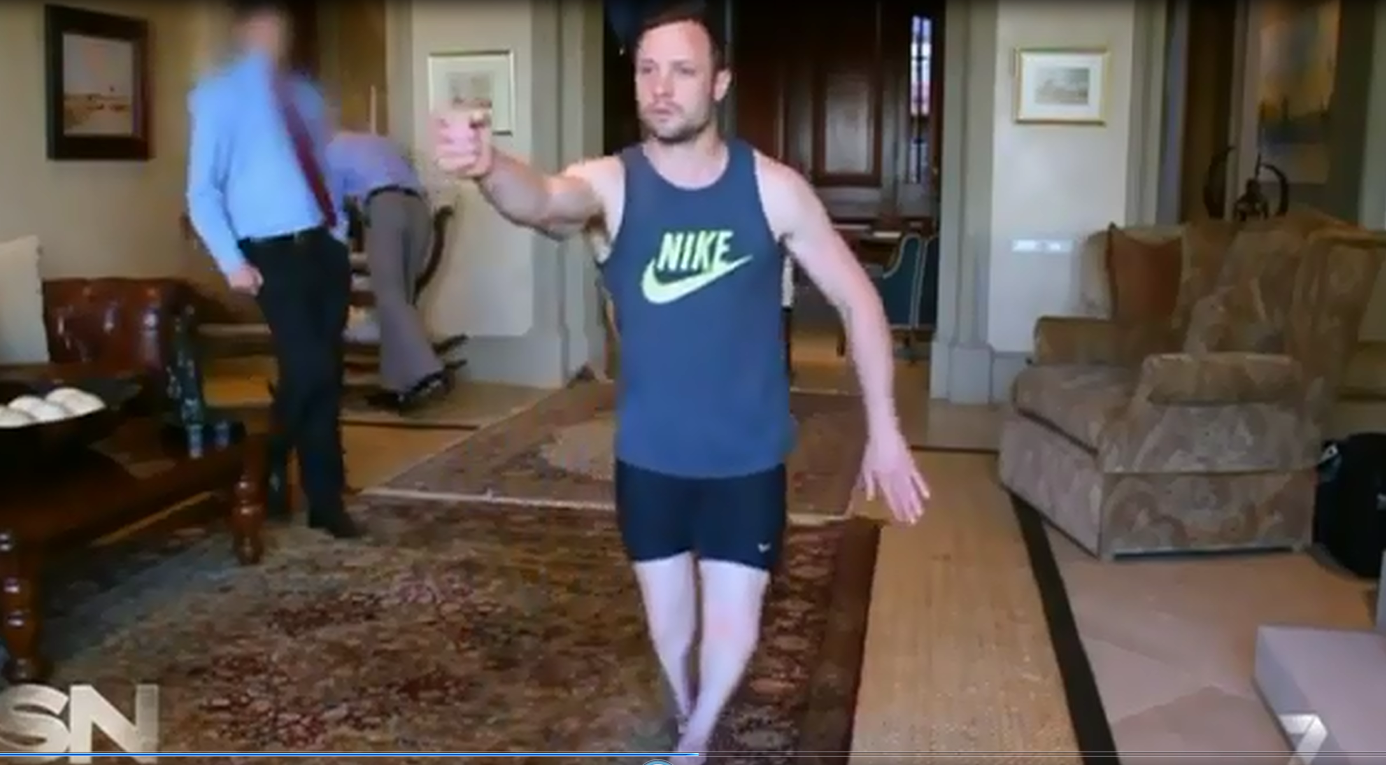
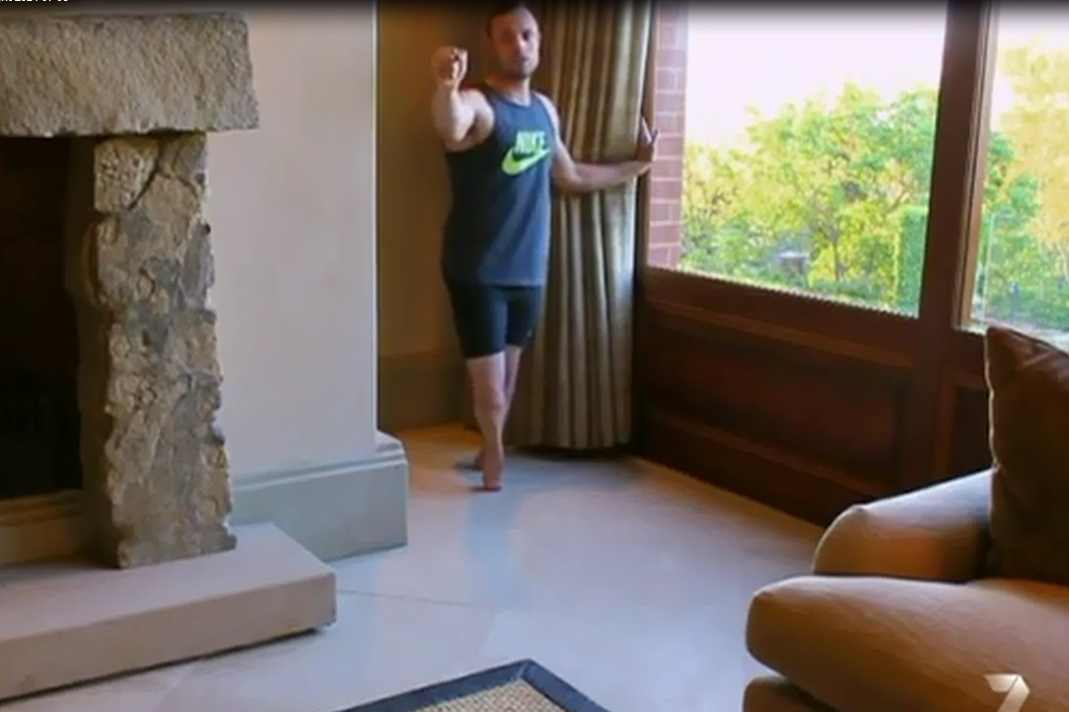
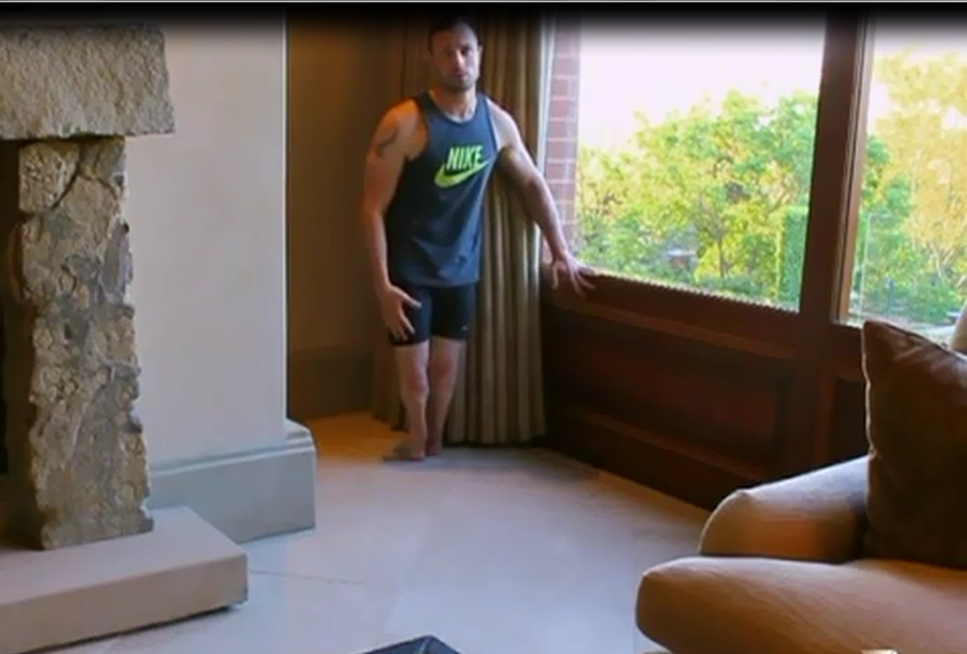
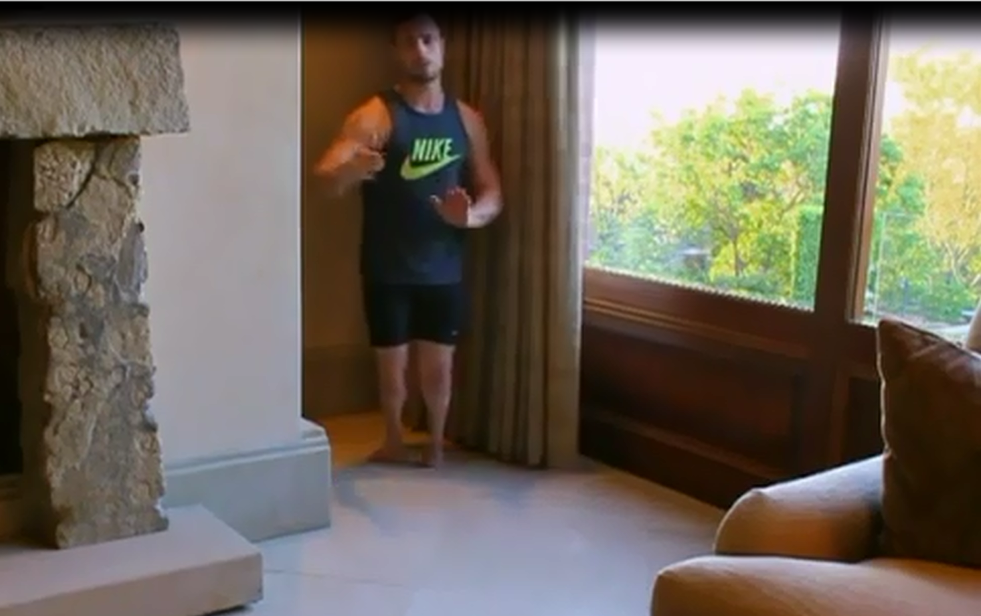
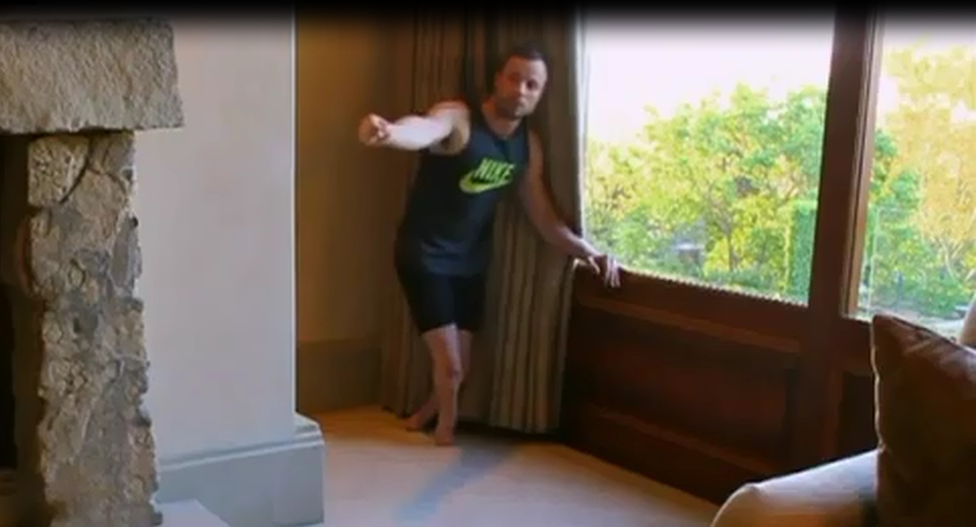

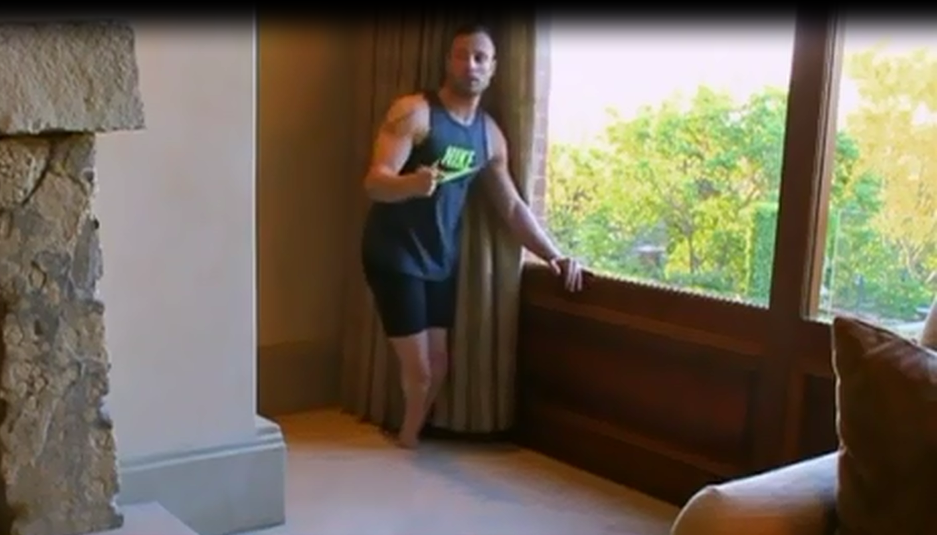


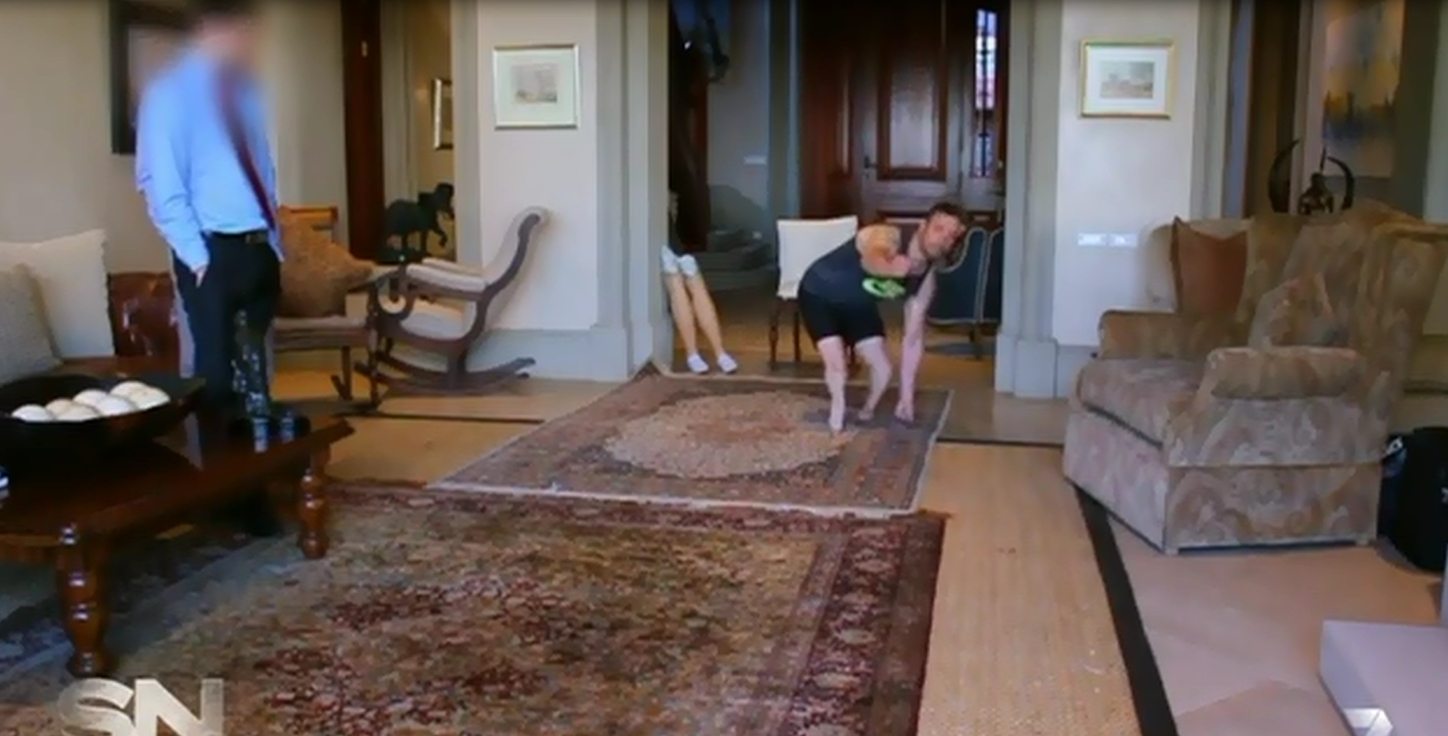
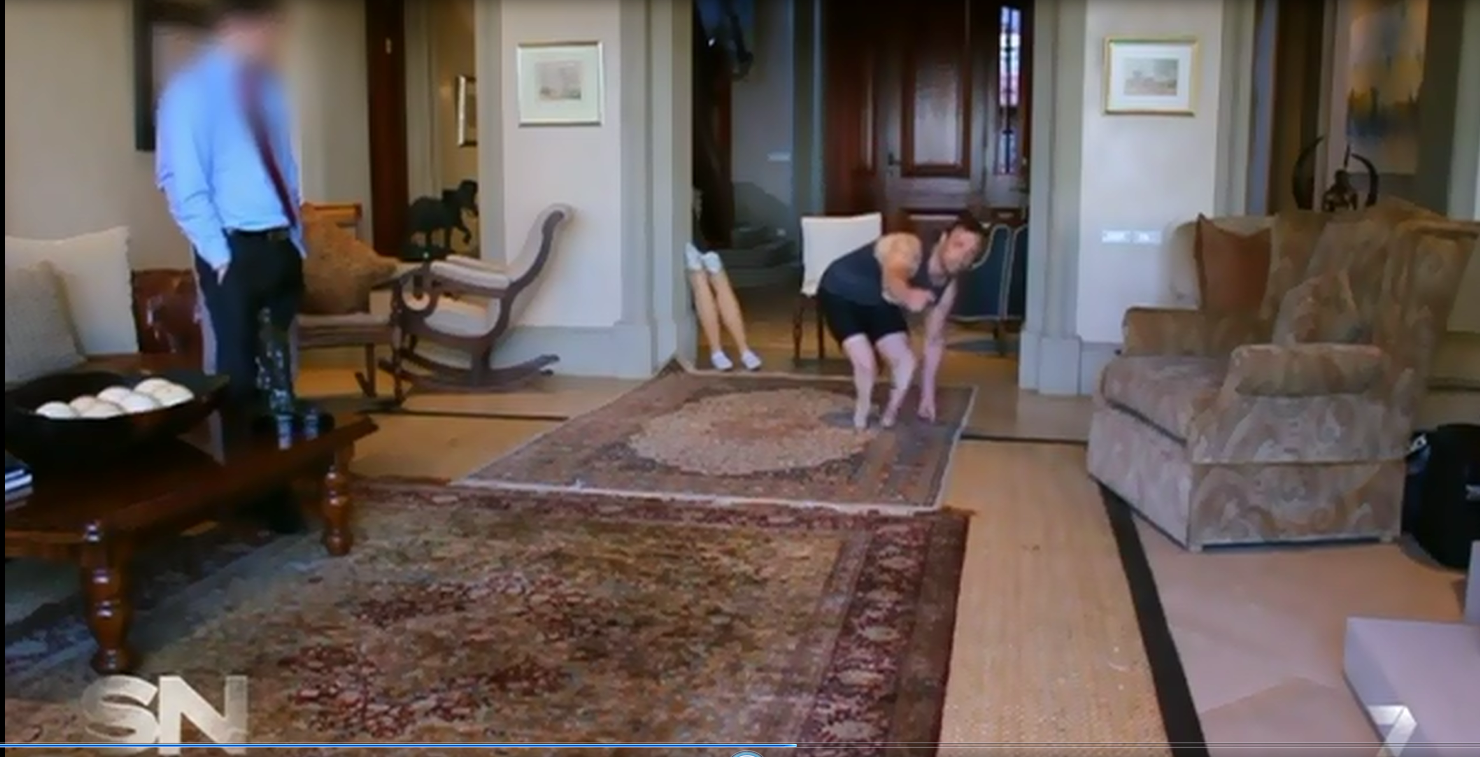
OSCAR PUTTING ON HIS PROSTHETICS – IT TOOK 25 SECONDS
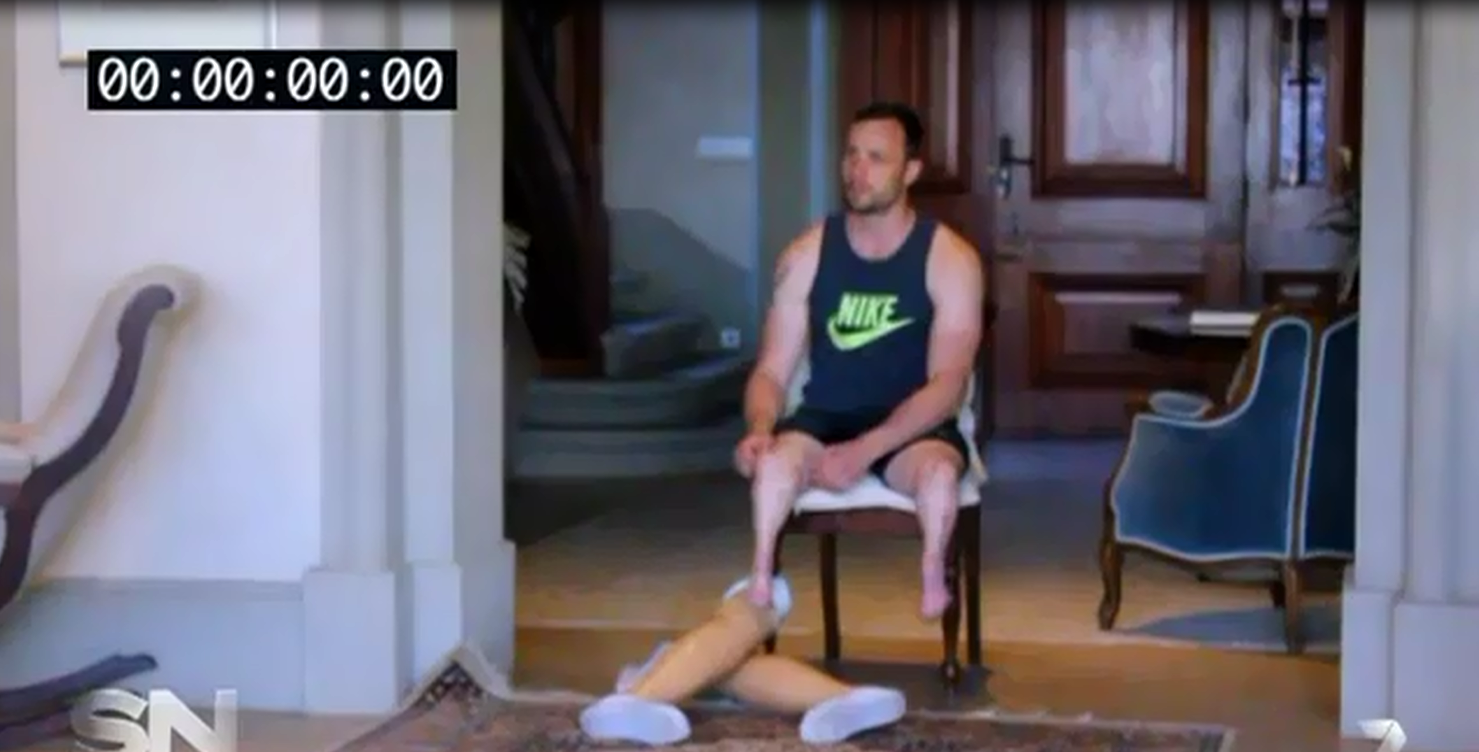

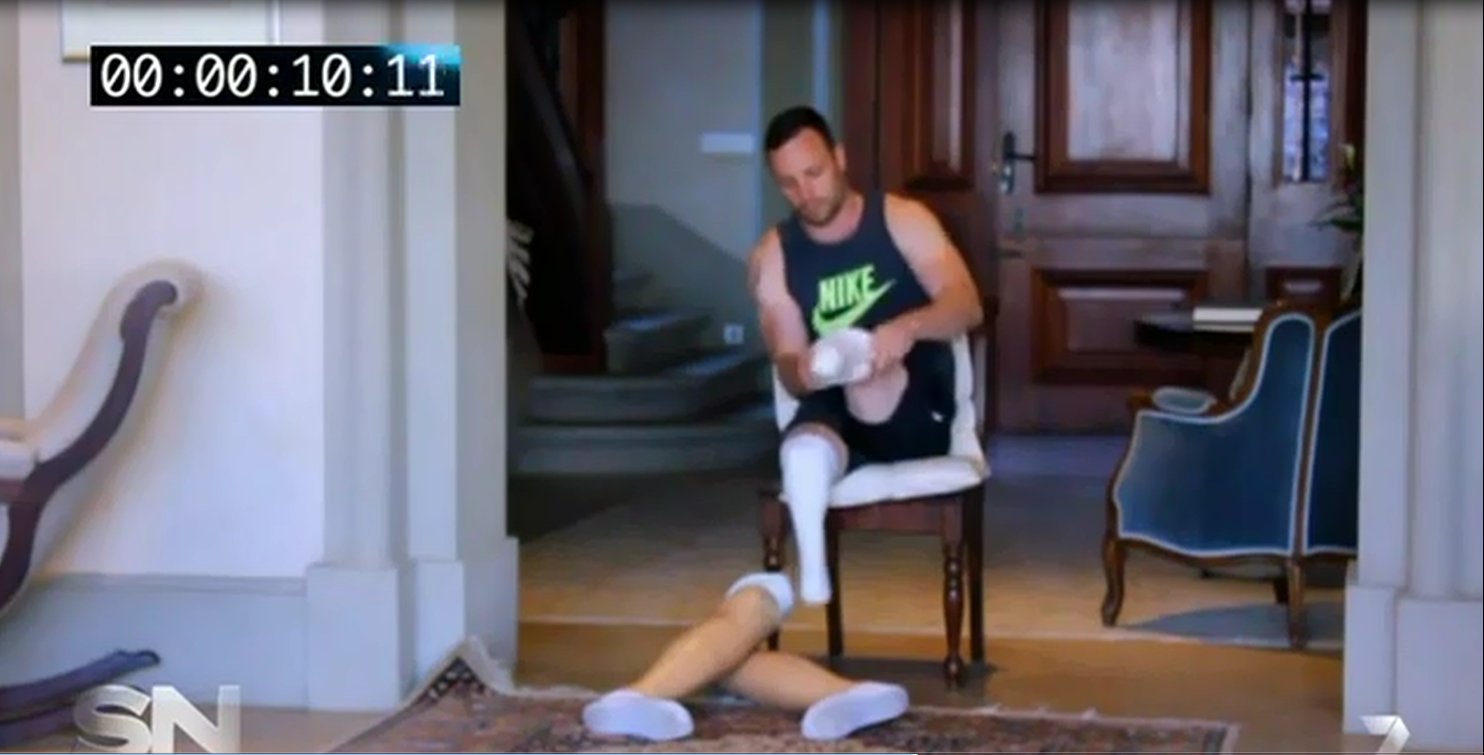


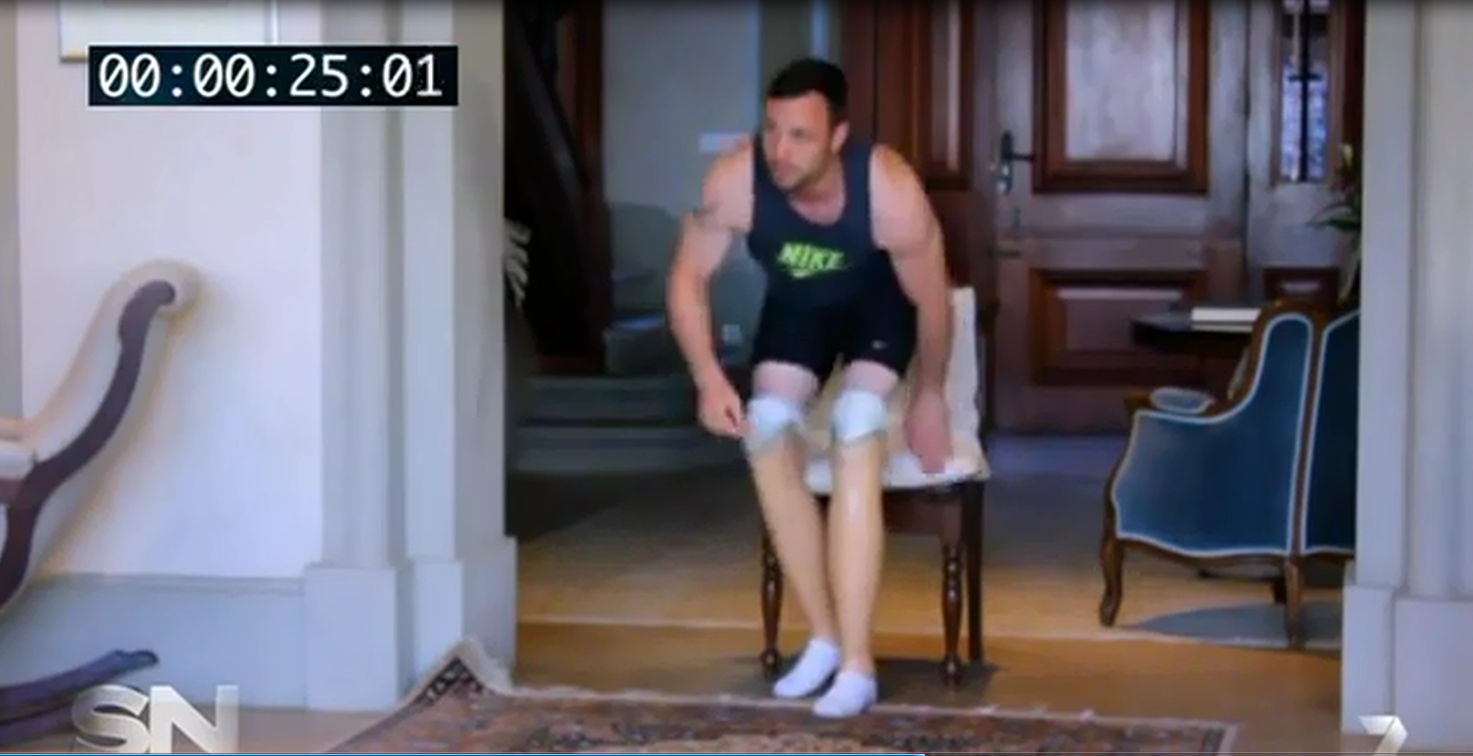
SCOTT RODER FROM THE EVIDENCE ROOM DEPICTS REEVA AS HIDING BEHIND THE TOILET IN THE TOILET ROOM (IN FEAR) WHILE OSCAR IS SCREAMING AT THE SUPPOSED INTRUDER. WE KNOW THAT THIS DID NOT HAPPEN SINCE SHE WAS STANDING IN FRONT OF THE DOOR WHEN SHOT IN THE HIP. RODER STATED IN THE REENACTMENT THAT THE SOUND OF THE MAGAZINE RACK MOVING WAS WHAT PROMPTED OSCAR TO SHOOT – HE SAYS THAT REEVA KICKED THE MAGAZINE RACK OUT OF THE WAY IN ORDER TO CROUCH DOWN BEHIND THE TOILET, AND THAT’S WHEN THE SHOTS WERE FIRED.
REMEMBER, OSCAR TESTIFIED ON THE STAND THAT WHEN HE GAINED ENTRY TO THE TOILET ROOM, REEVA WAS LYING DIRECTLY ON THE GROUND NEXT TO THE TOILET, SLUMPED ON THE TOILET BOWL AND THE MAGAZINE RACK WAS PUSHED ALL THE WAY TO THE RIGHT AGAINST THE WALL. WE KNOW THIS IS NOT TRUE BECAUSE OF BALLISTICS EVIDENCE PRESENTED BY MANGENA, AND NEL PROVING THAT THE BLOOD POOL AROUND THE MAGAZINE RACK WAS NEVER DISTURBED.
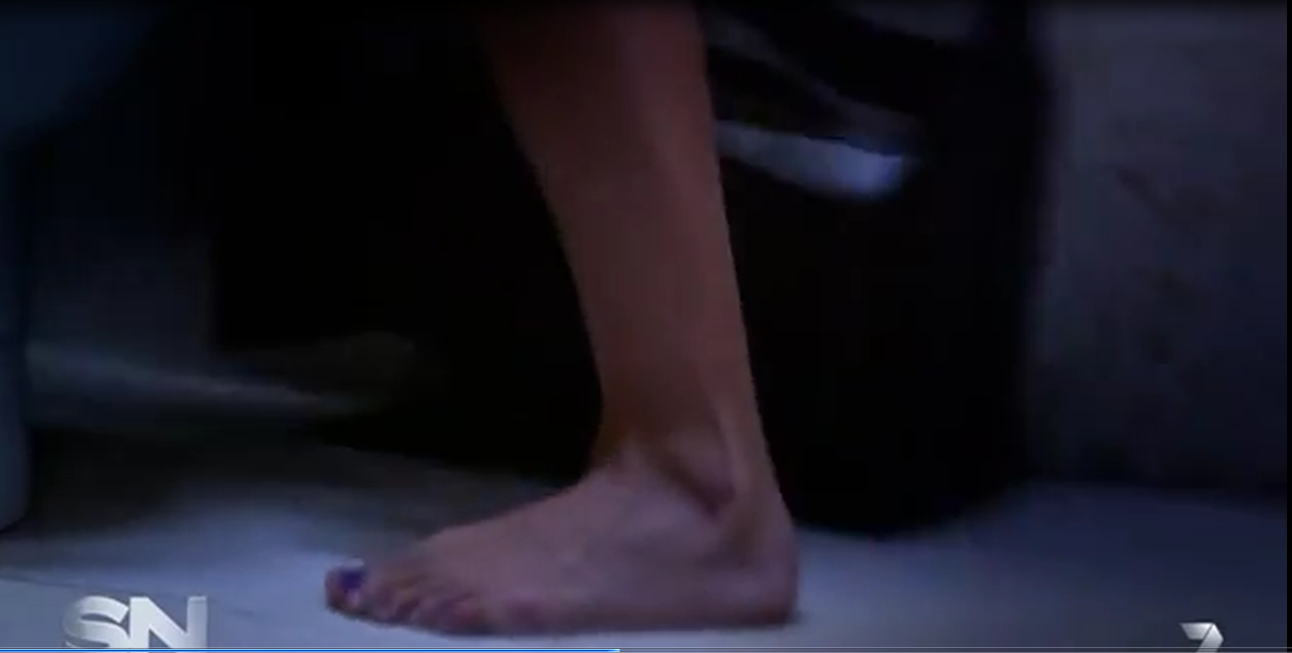
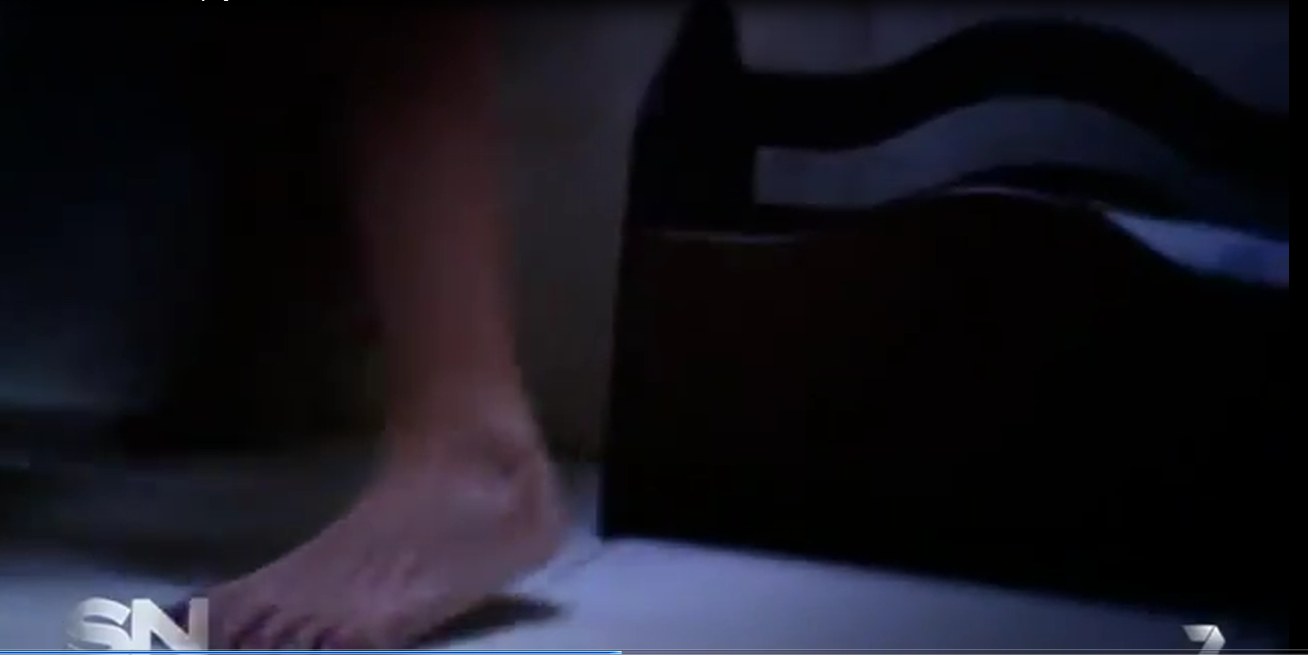

THE ANIMATION
THE FIRST PICTURE IS PRETTY CHILLING – SEEING THE AERIAL VIEW OF THE TRAJECTORY OF BULLETS FROM WHERE OSCAR STOOD WHILE SHOOTING
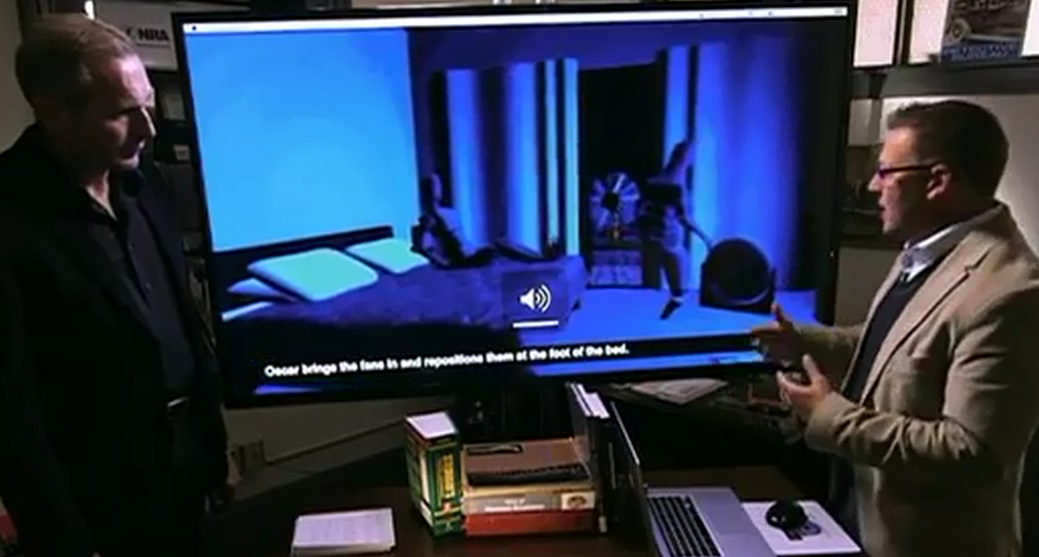
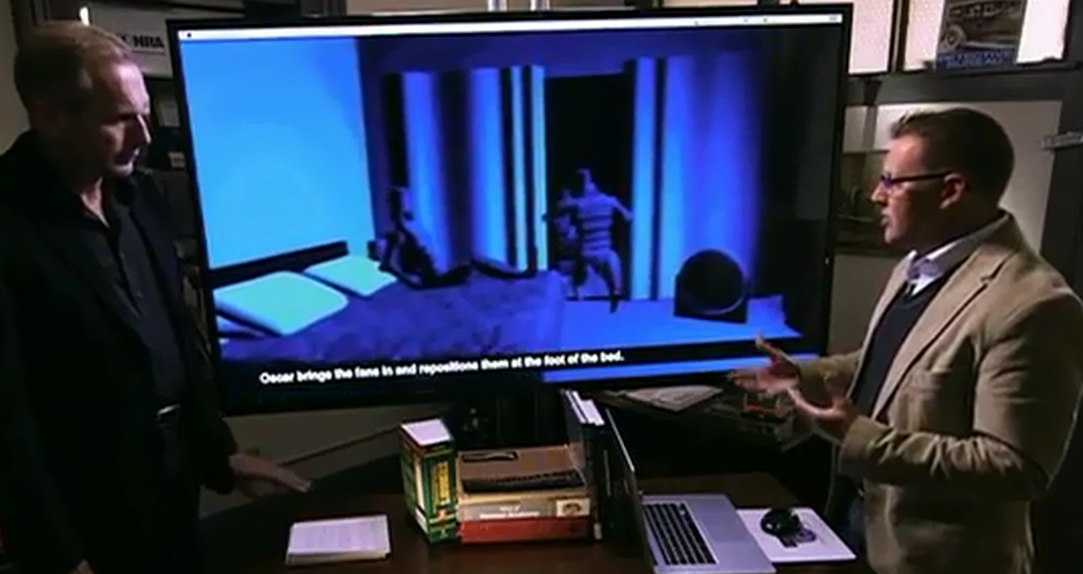
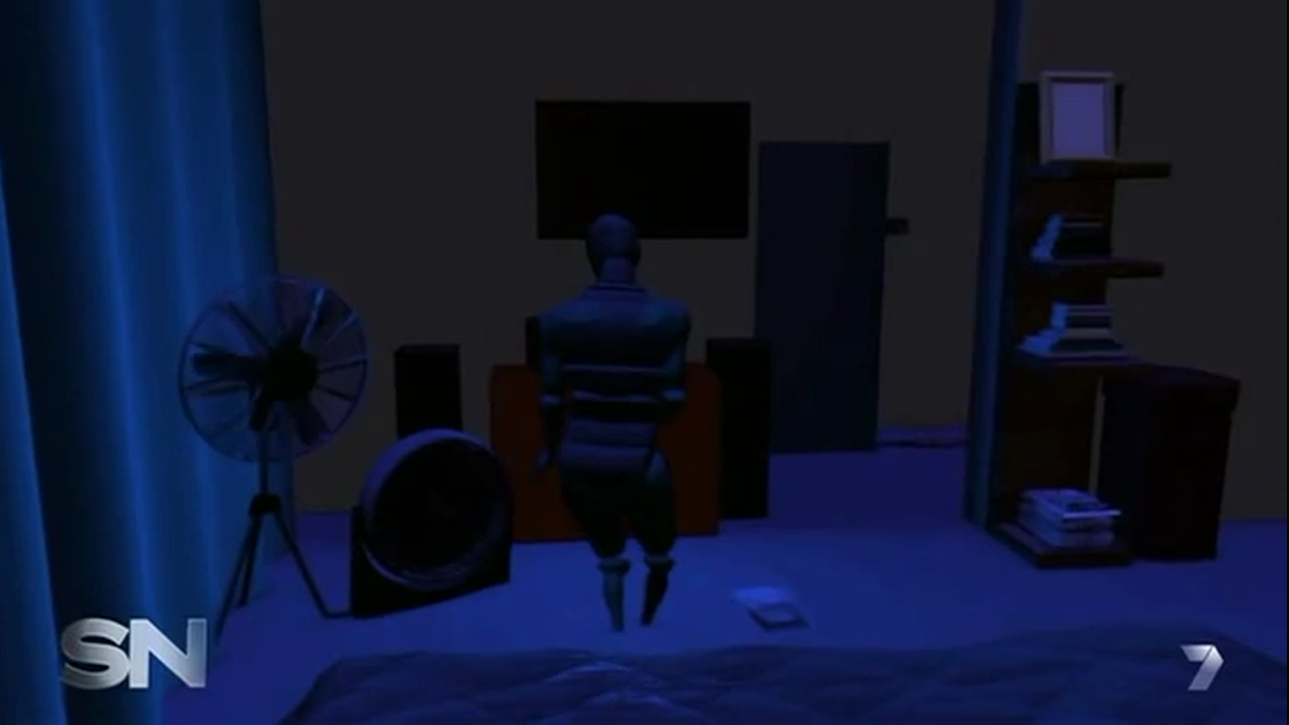

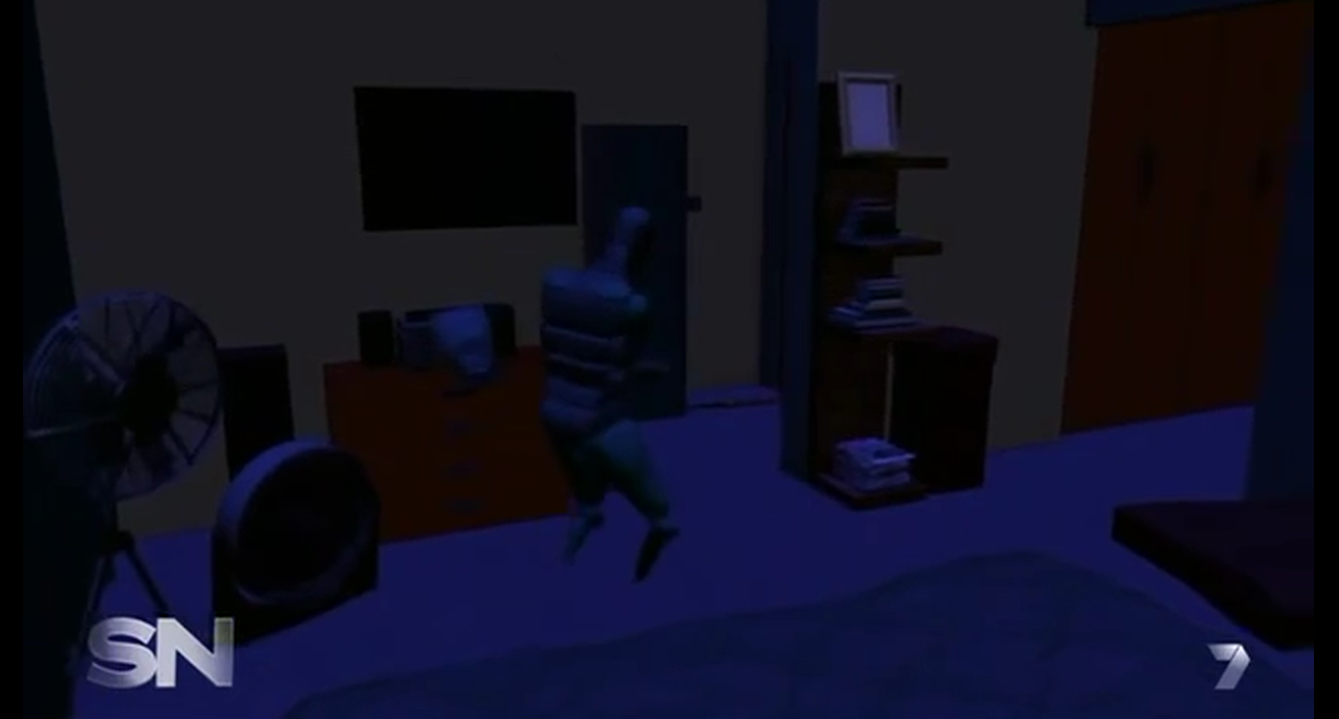
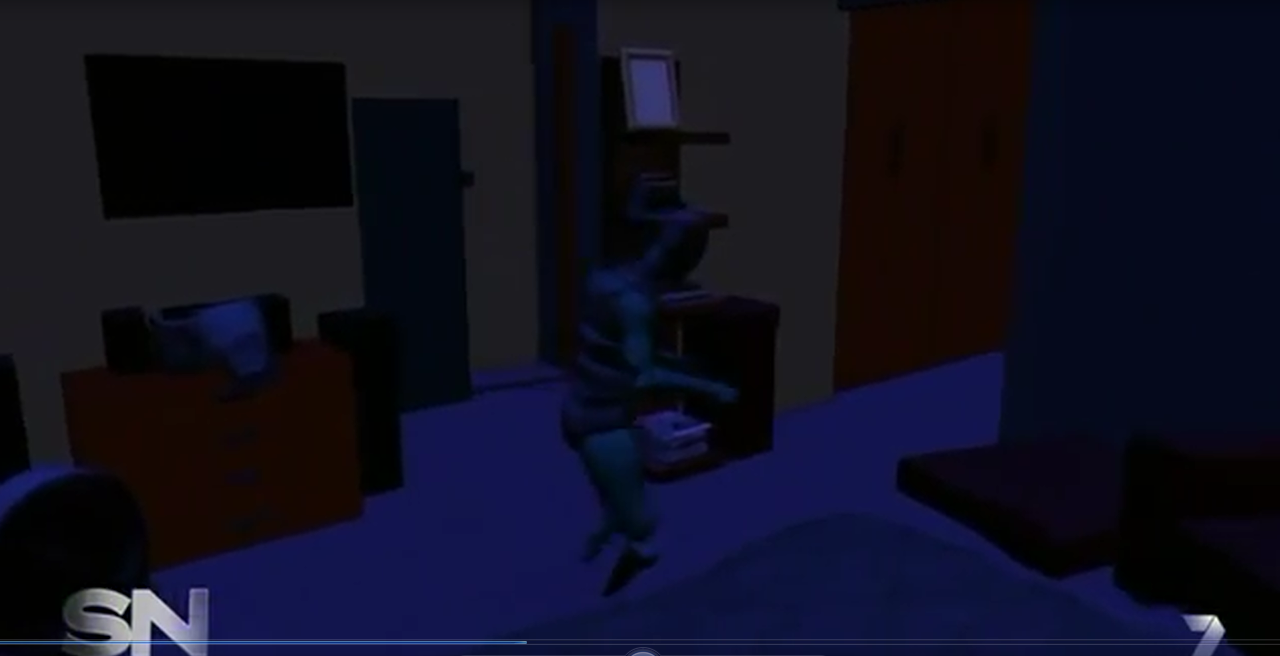
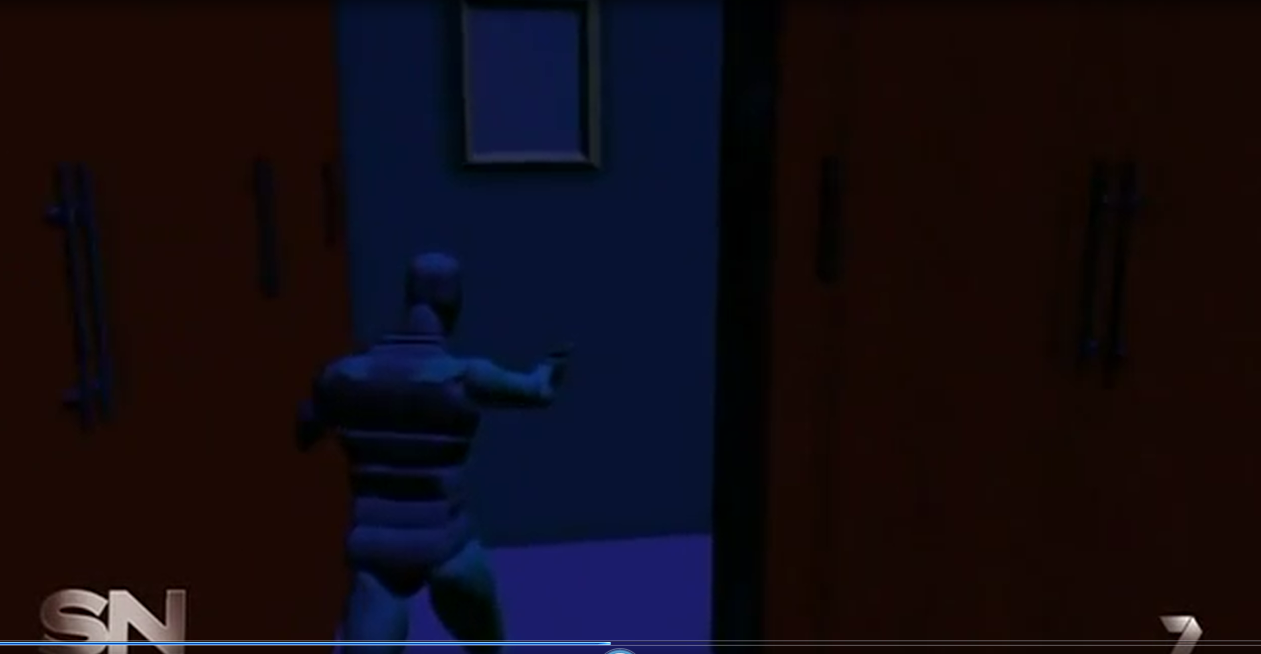
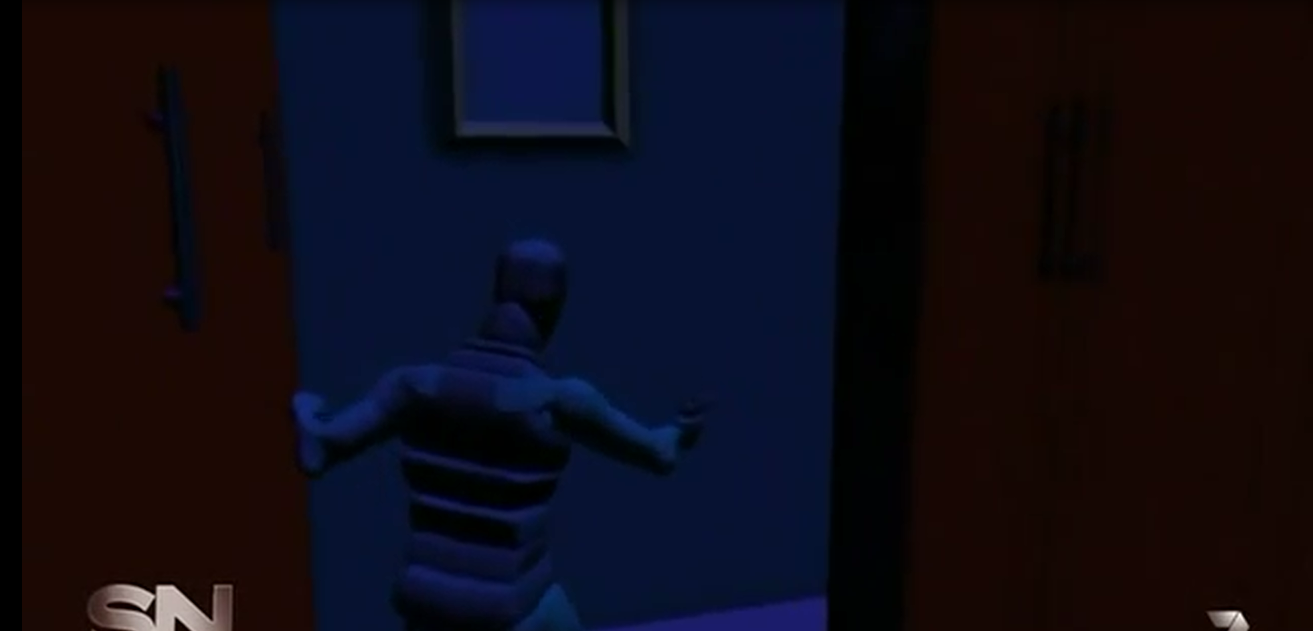
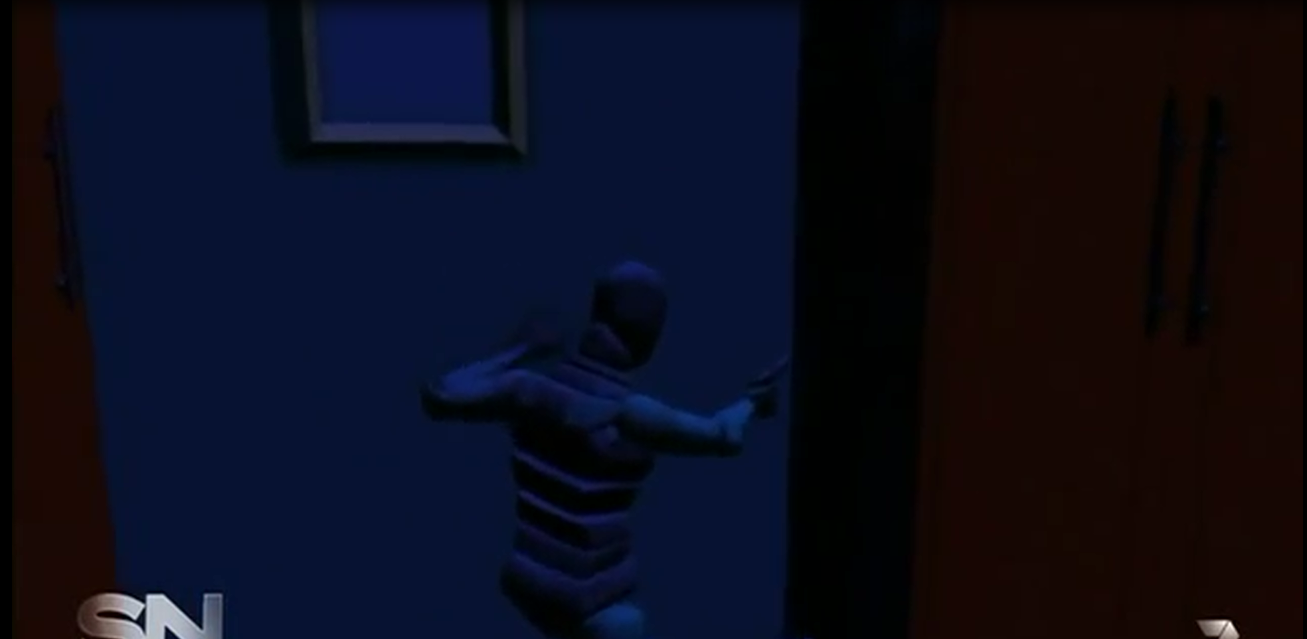
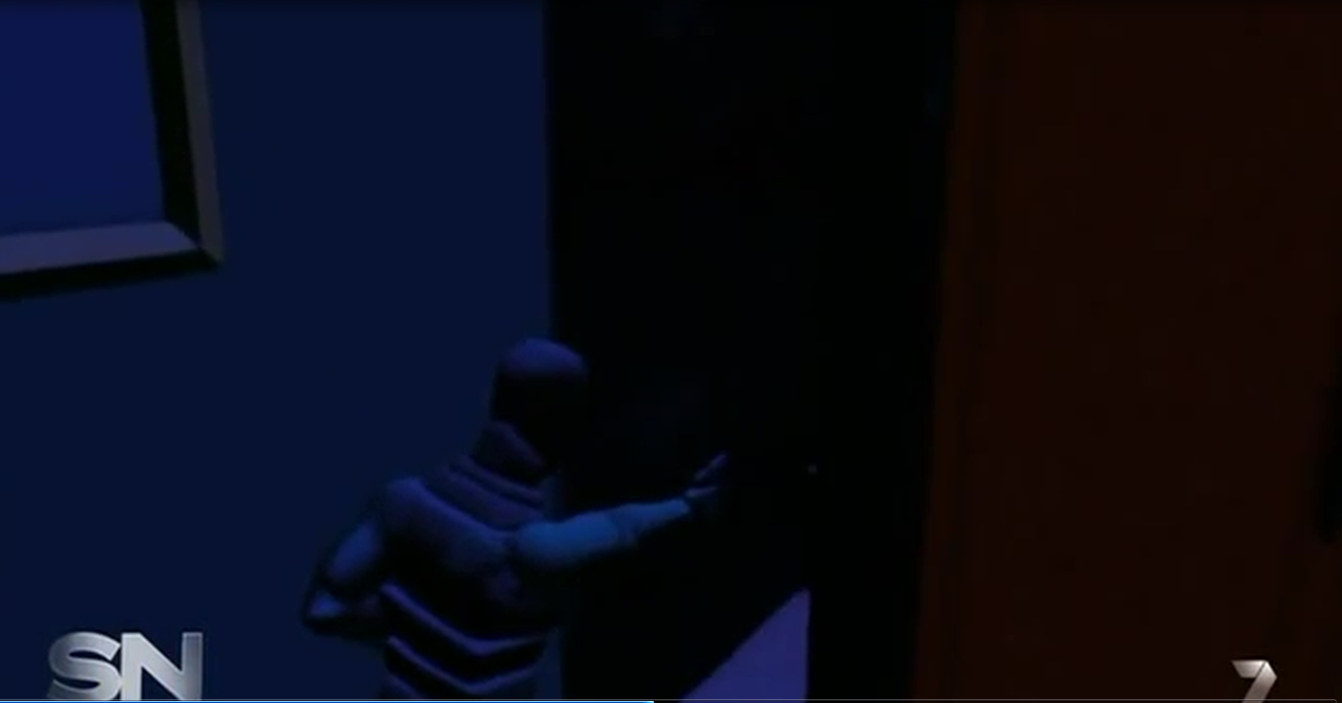
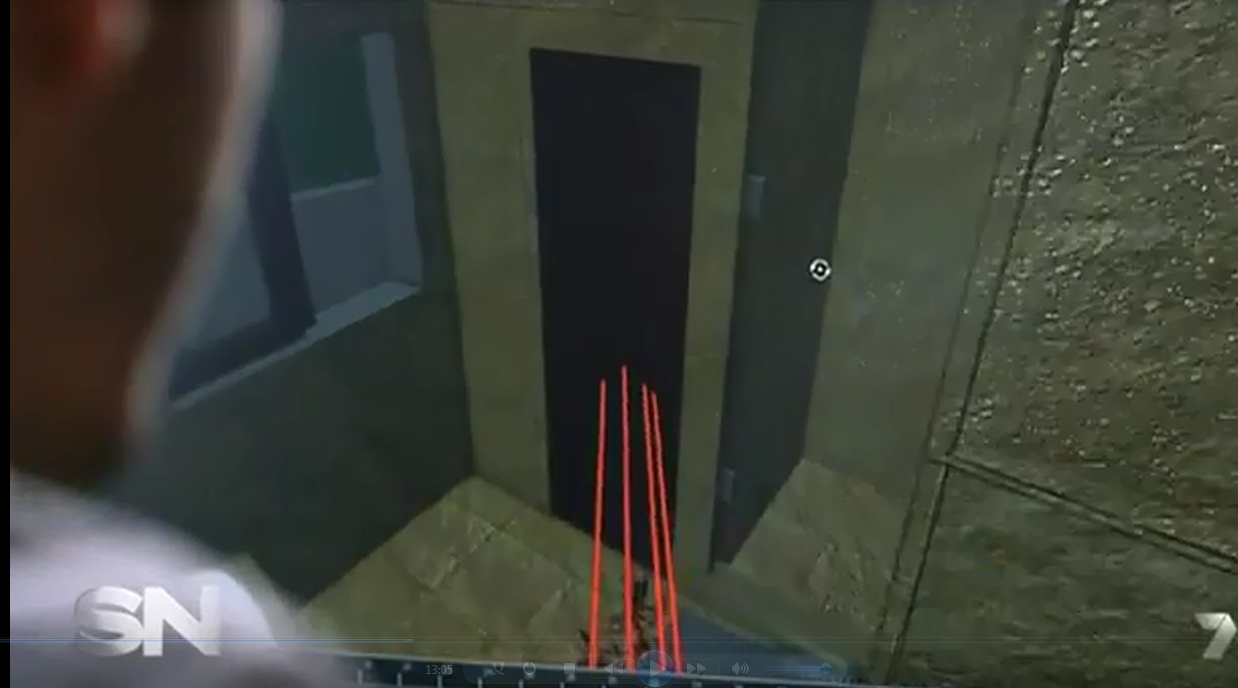
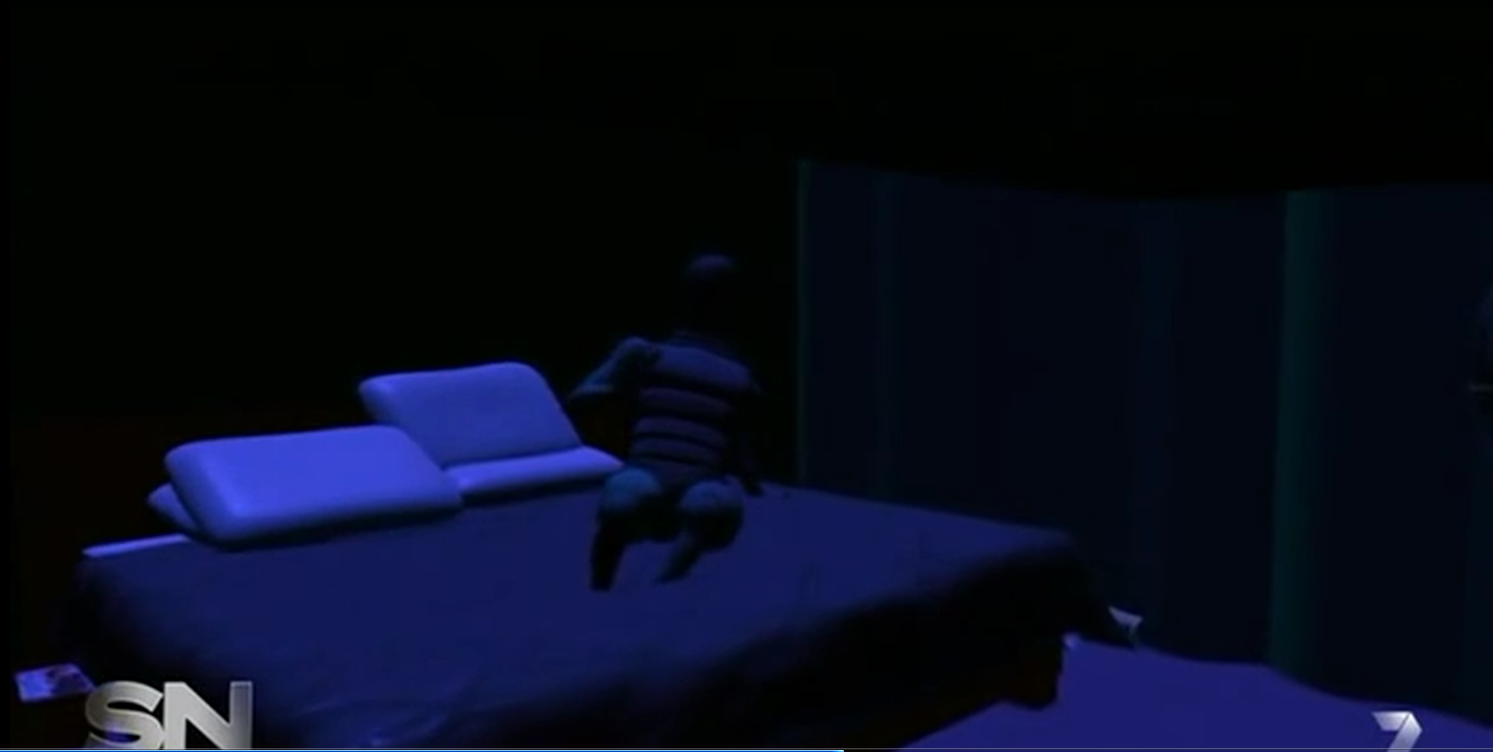
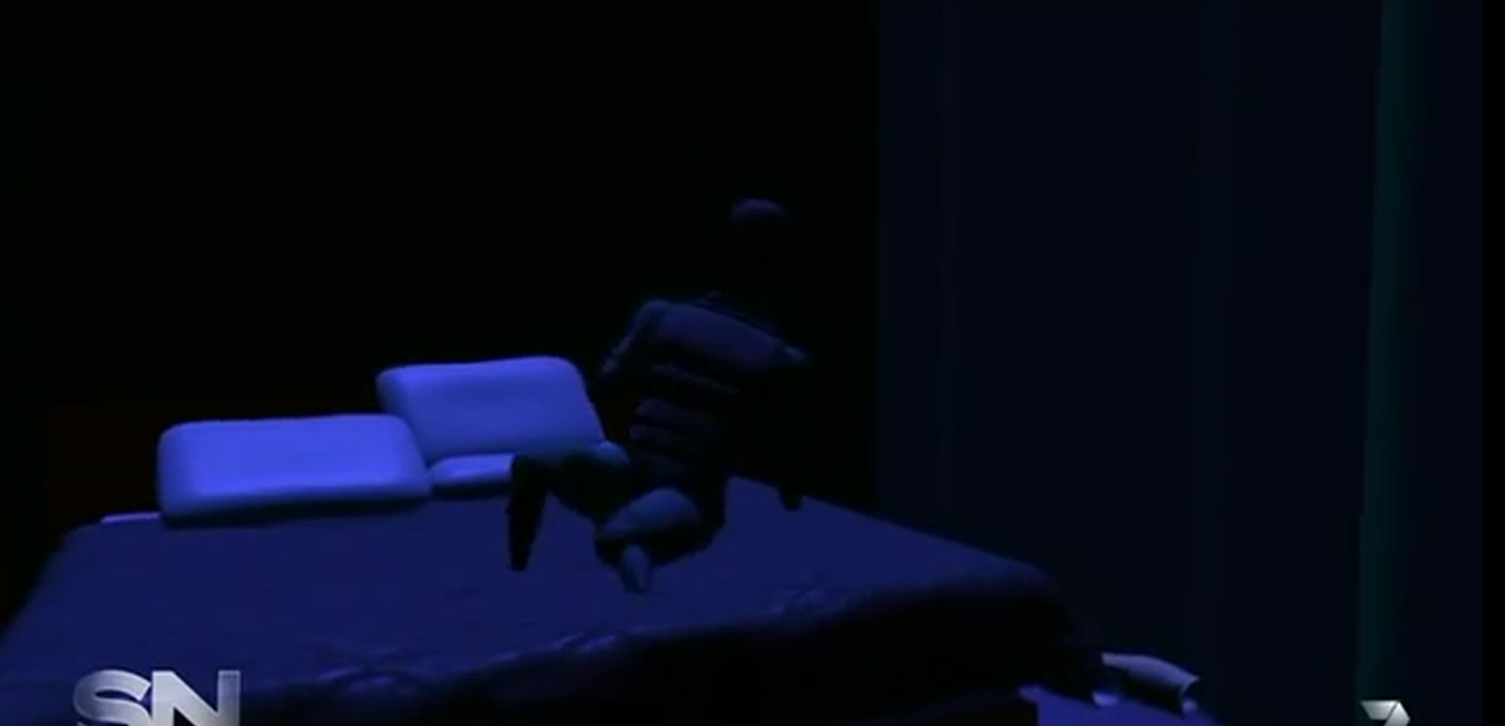
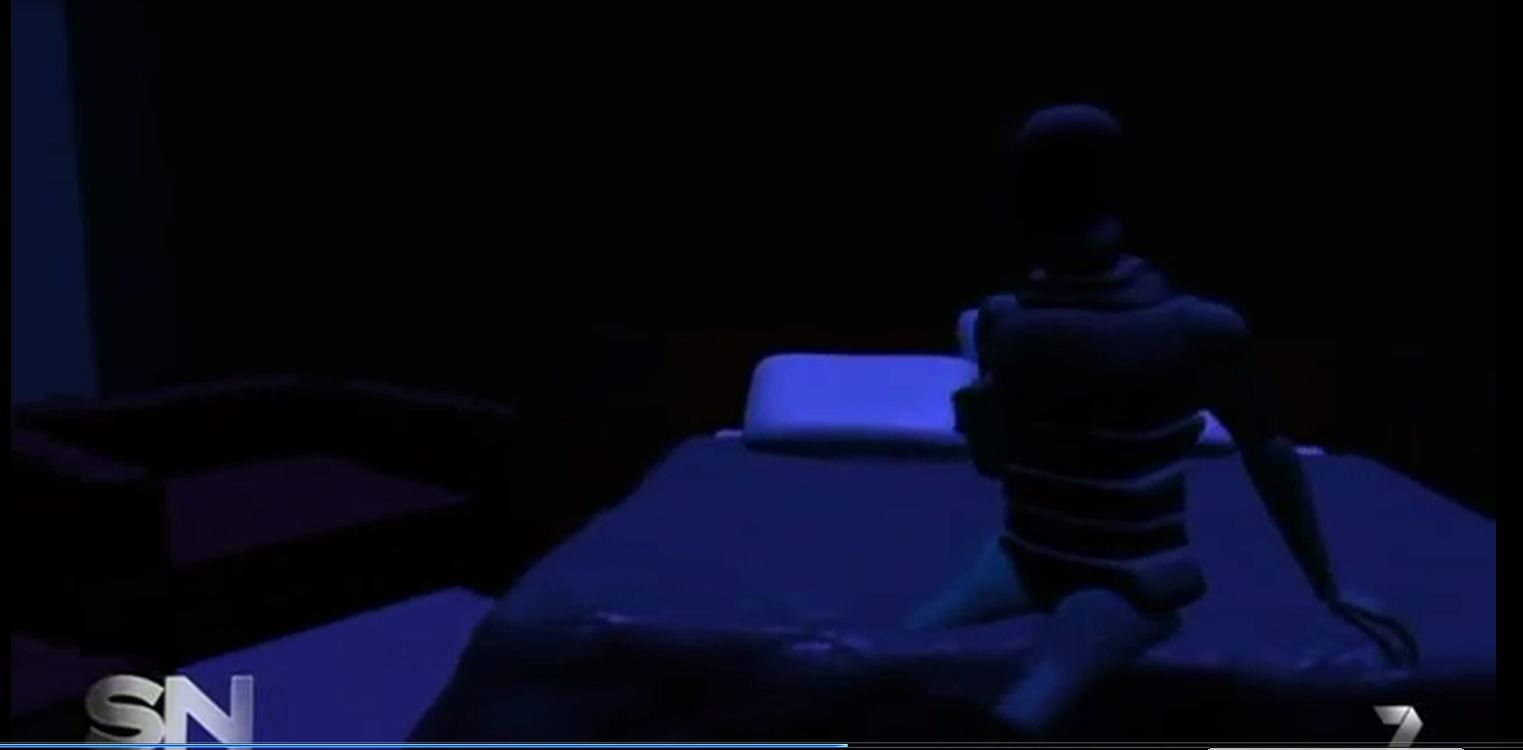
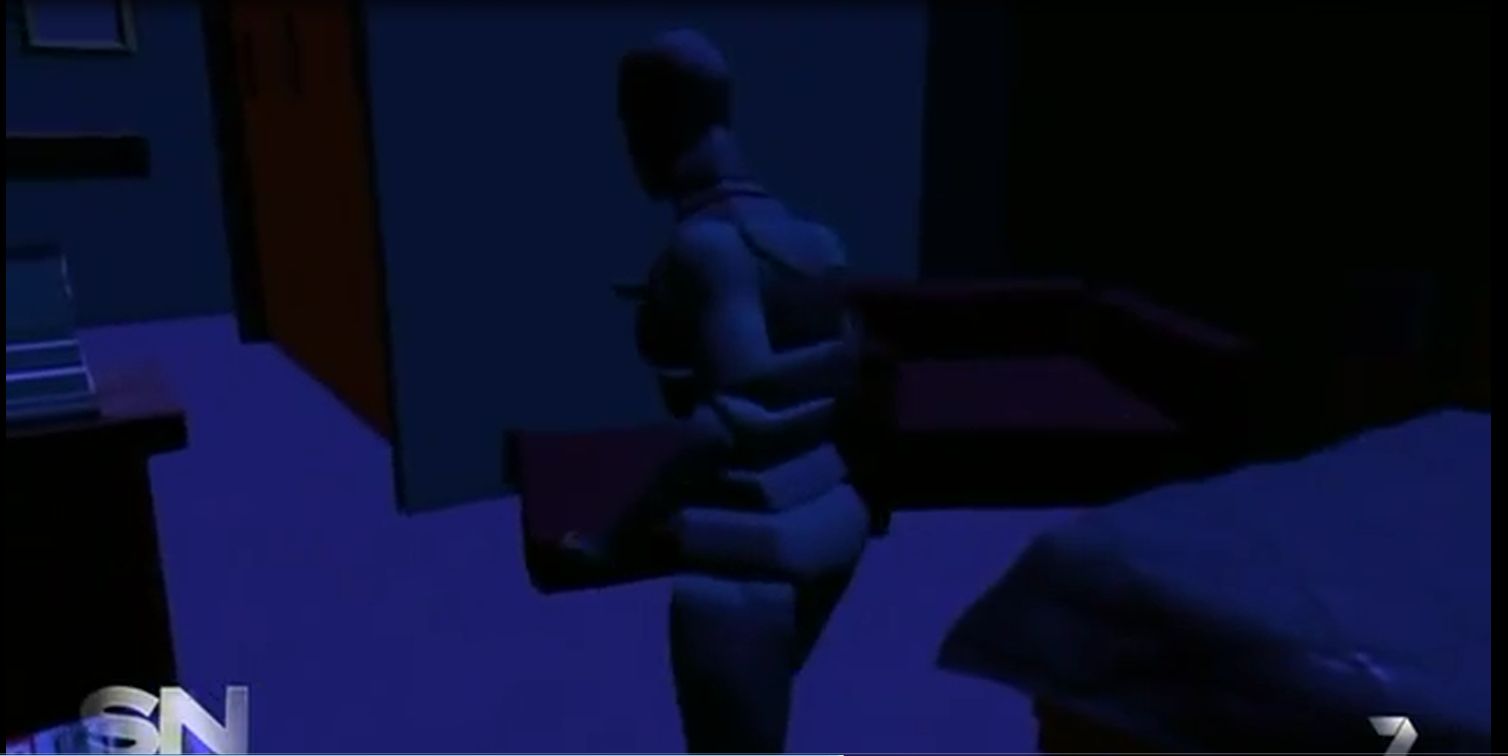

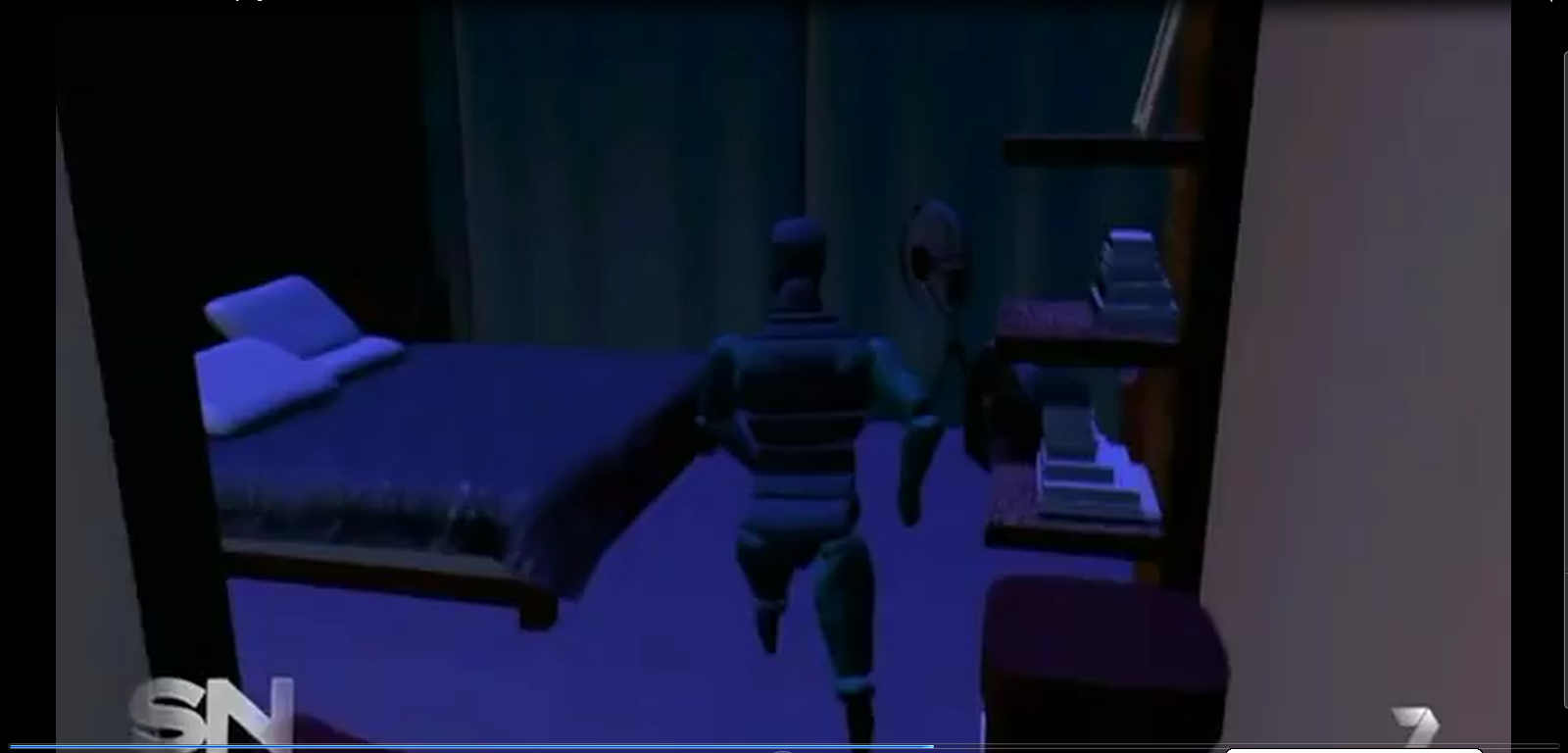

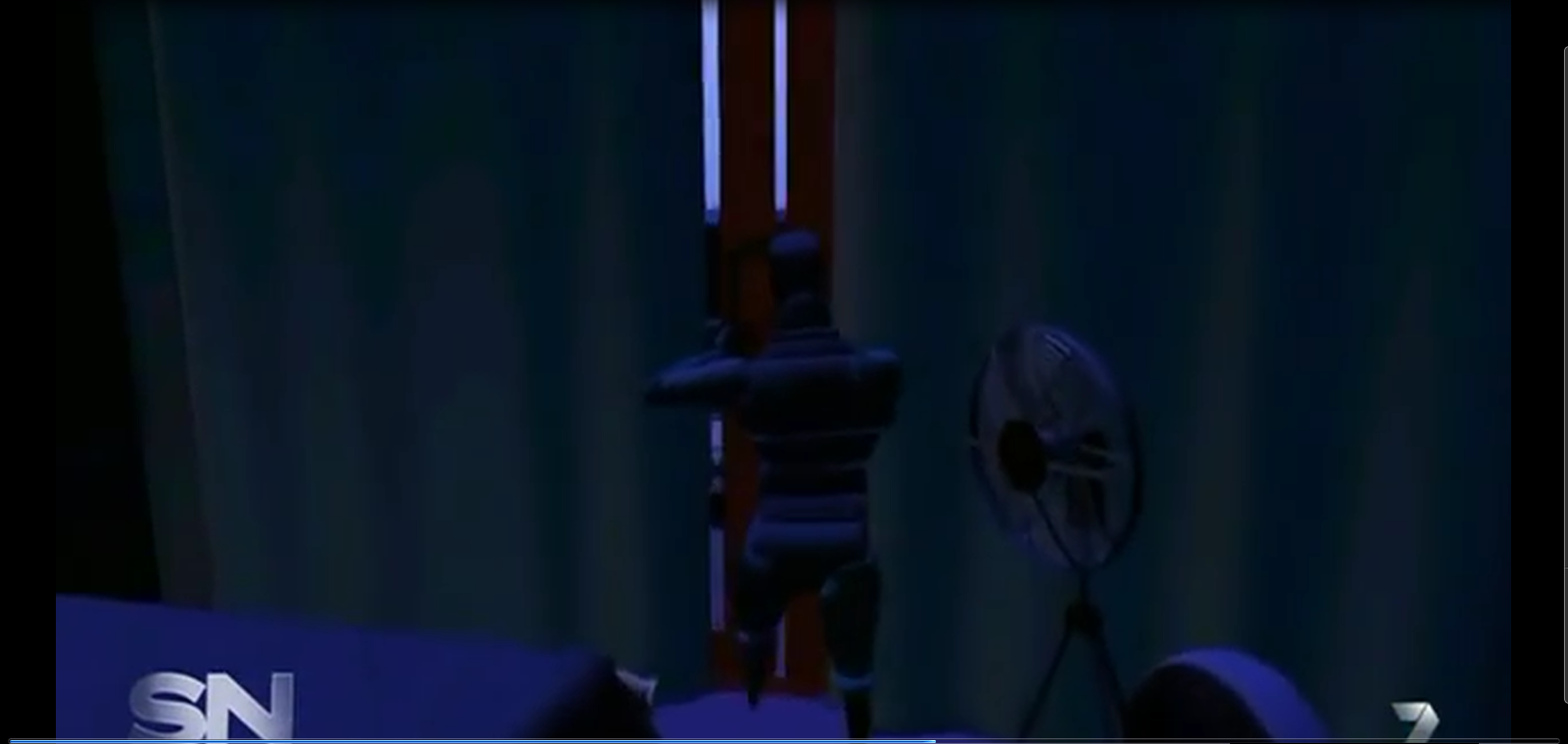
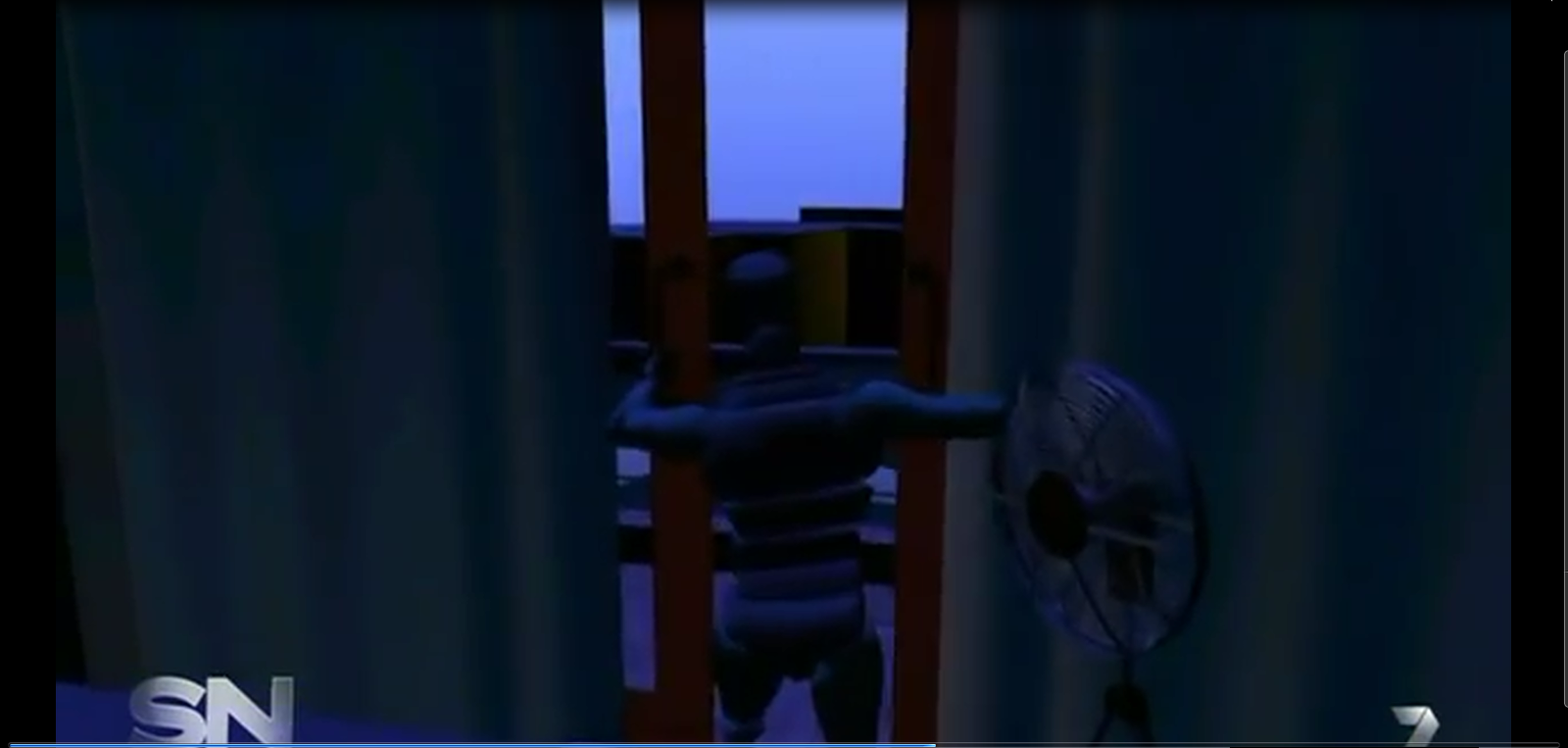


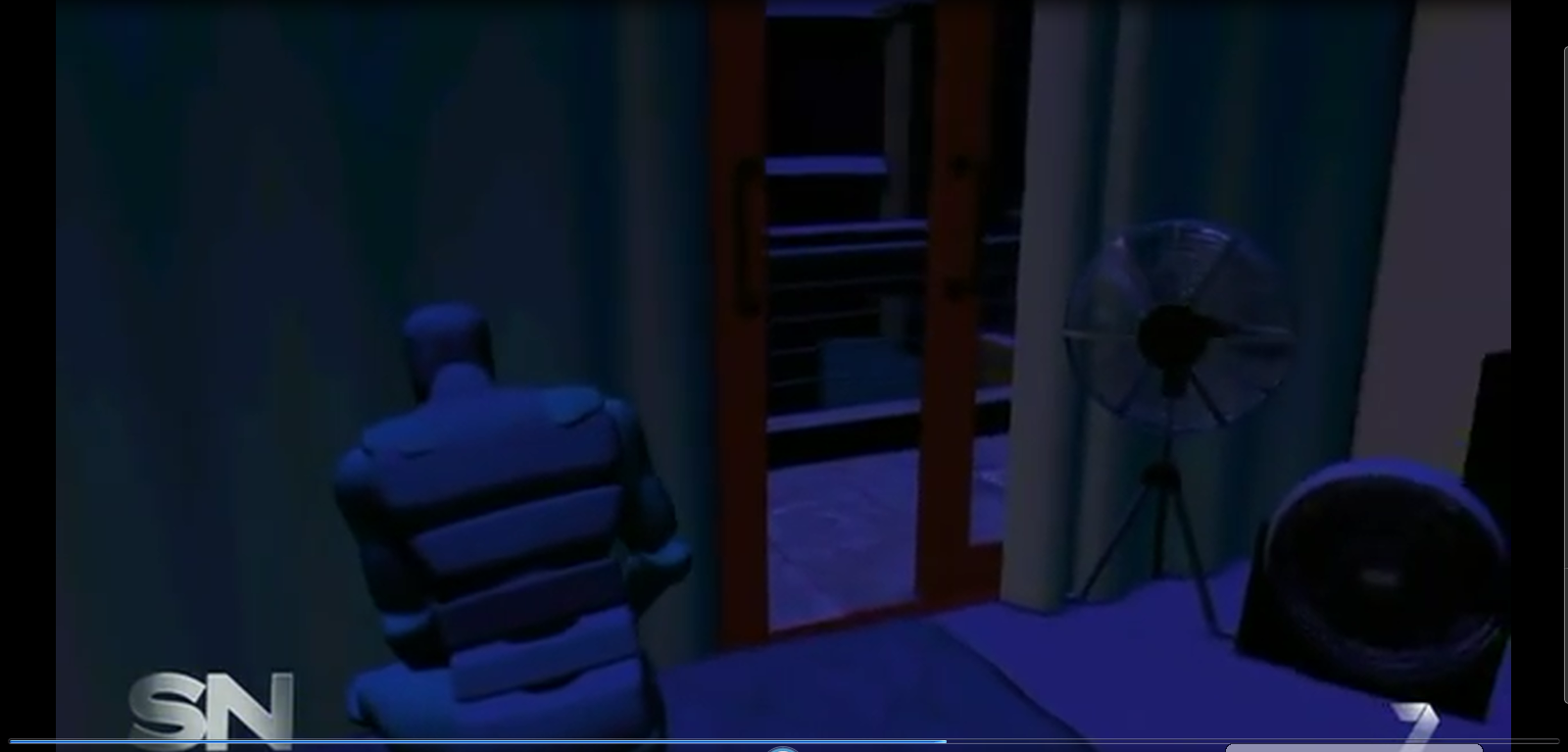
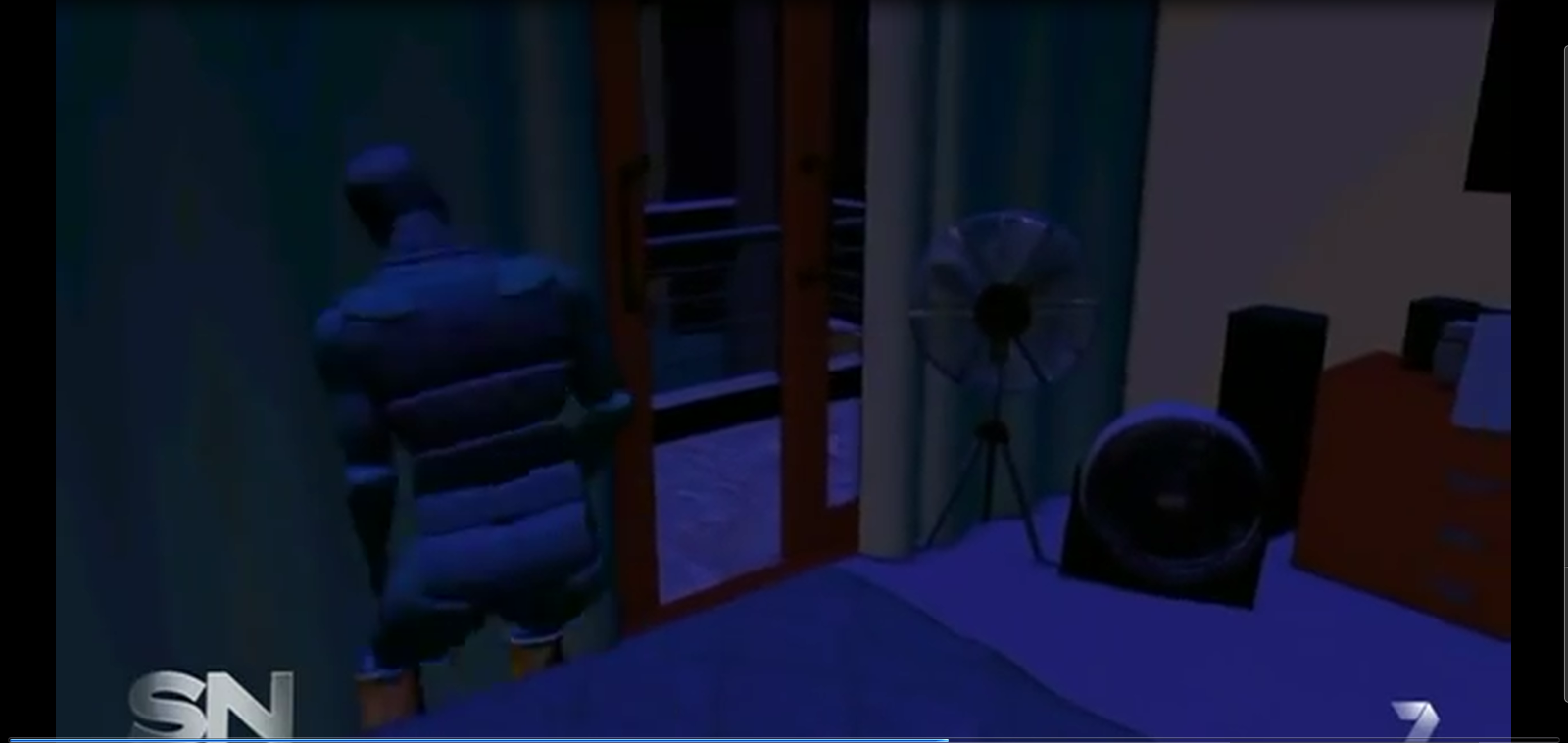
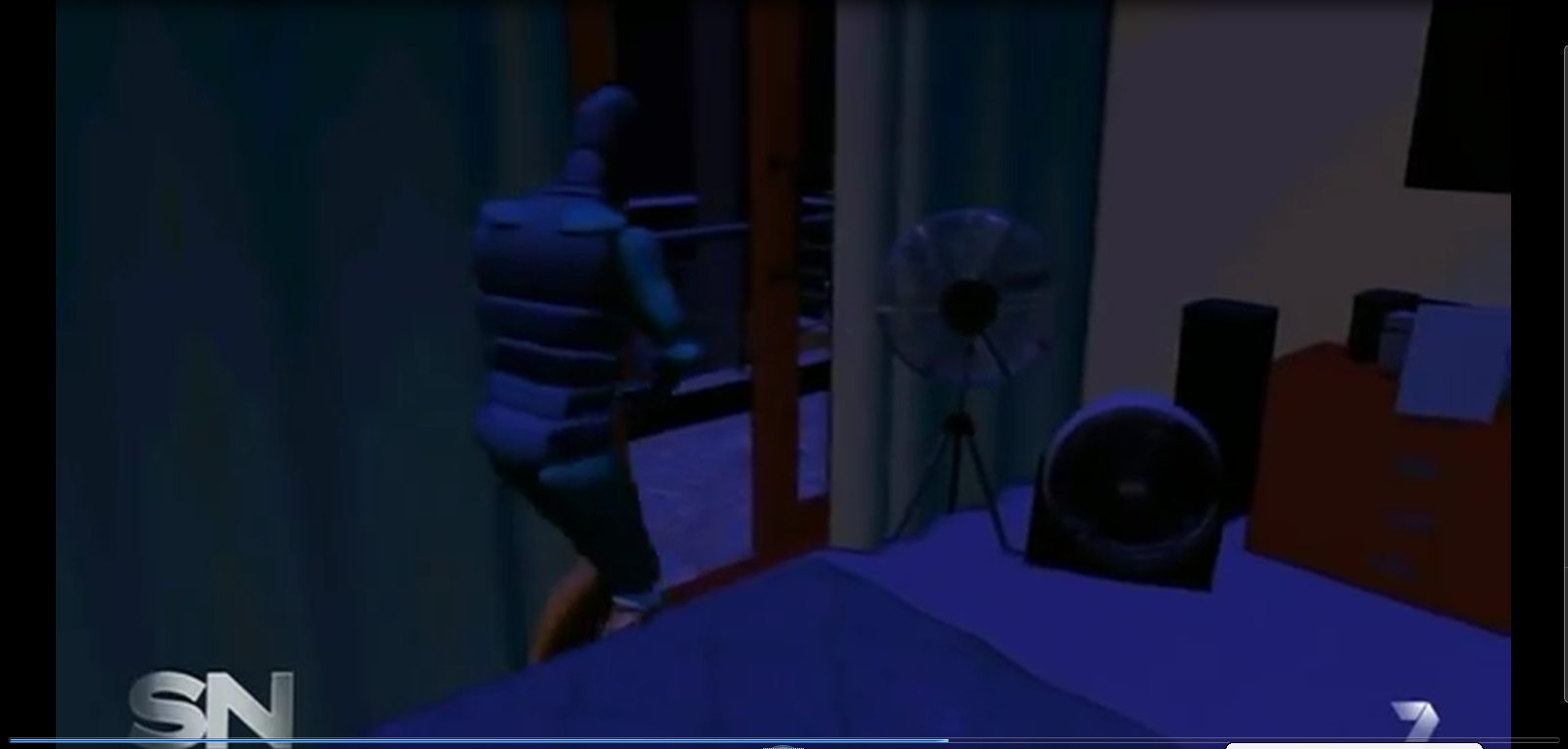

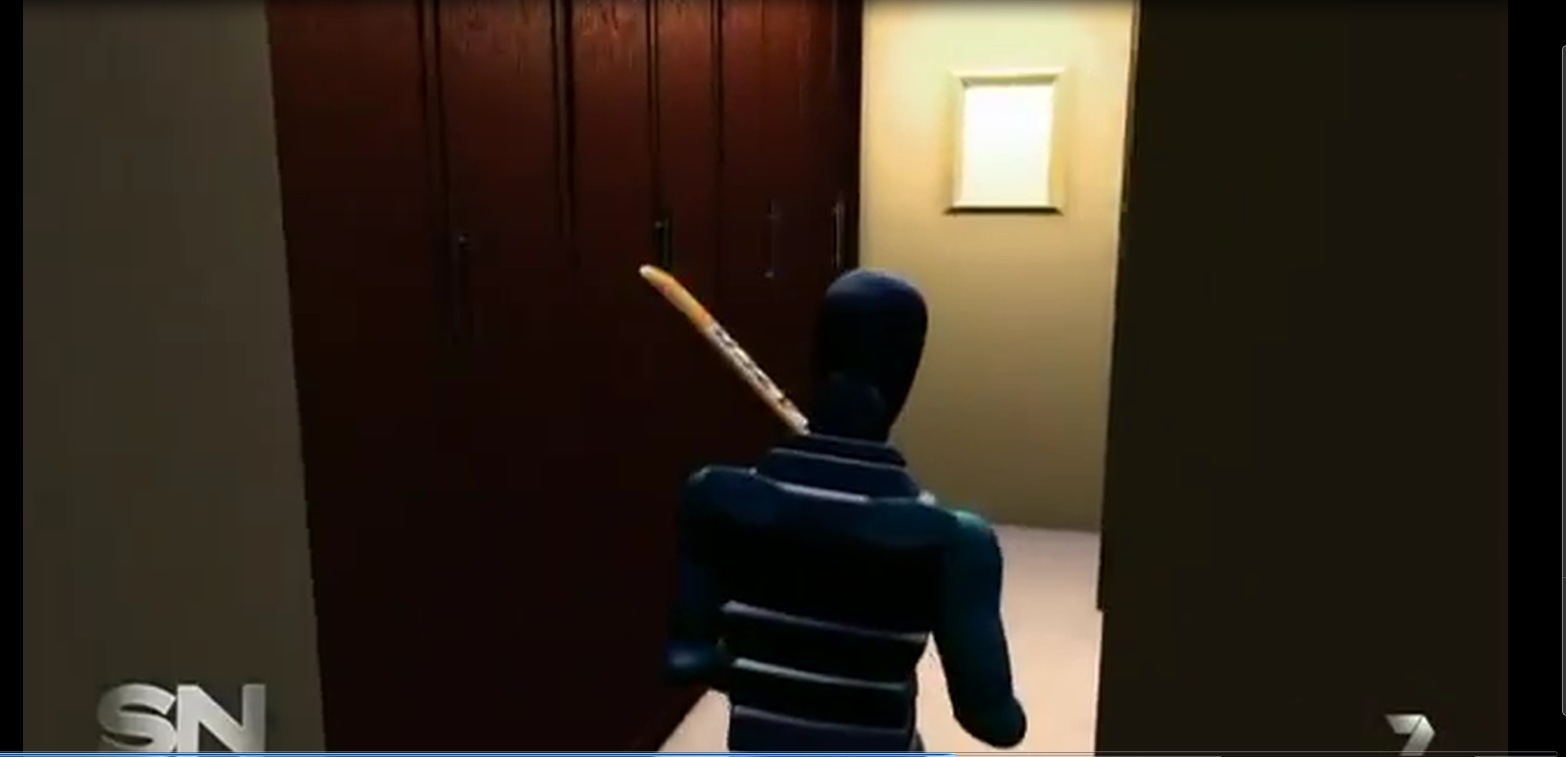
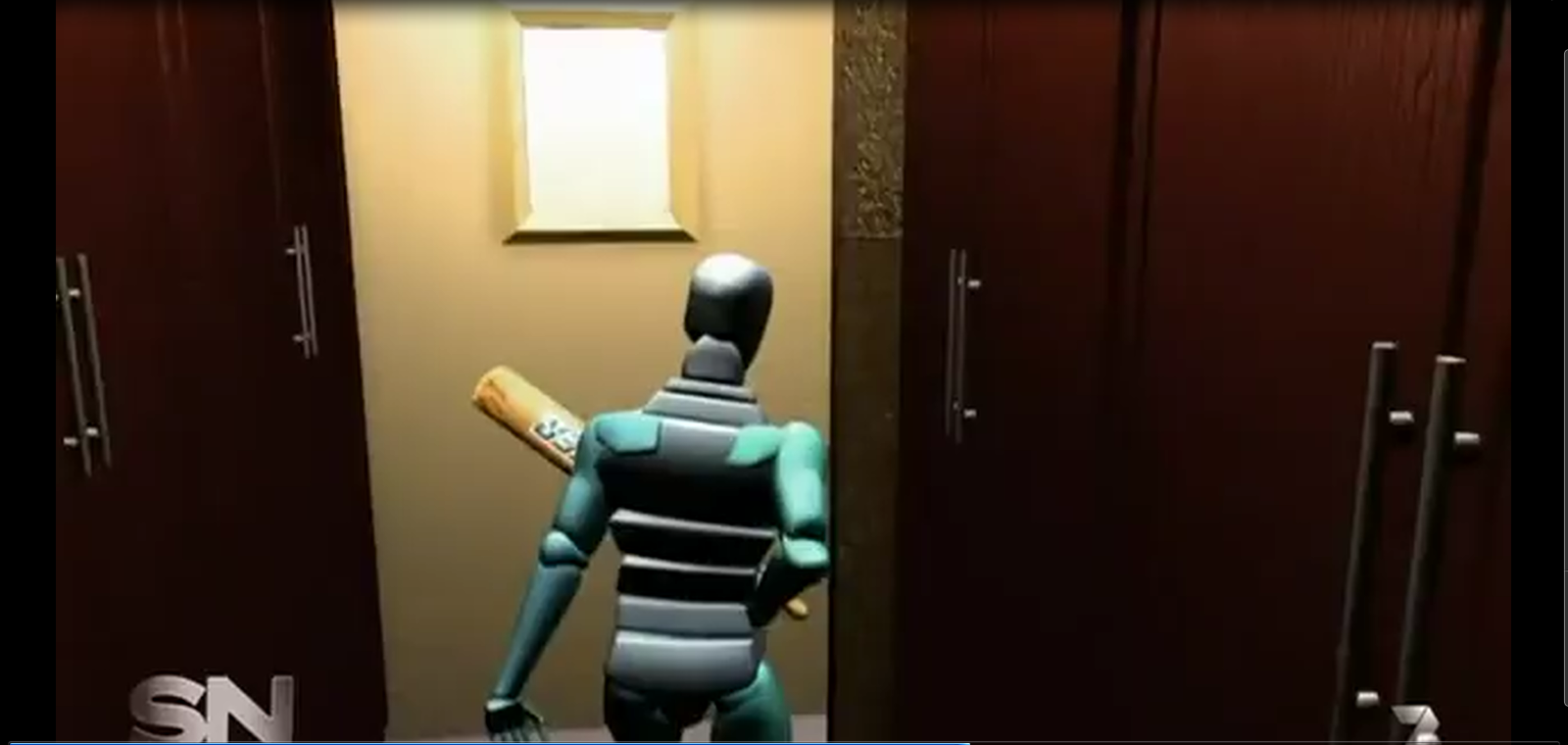
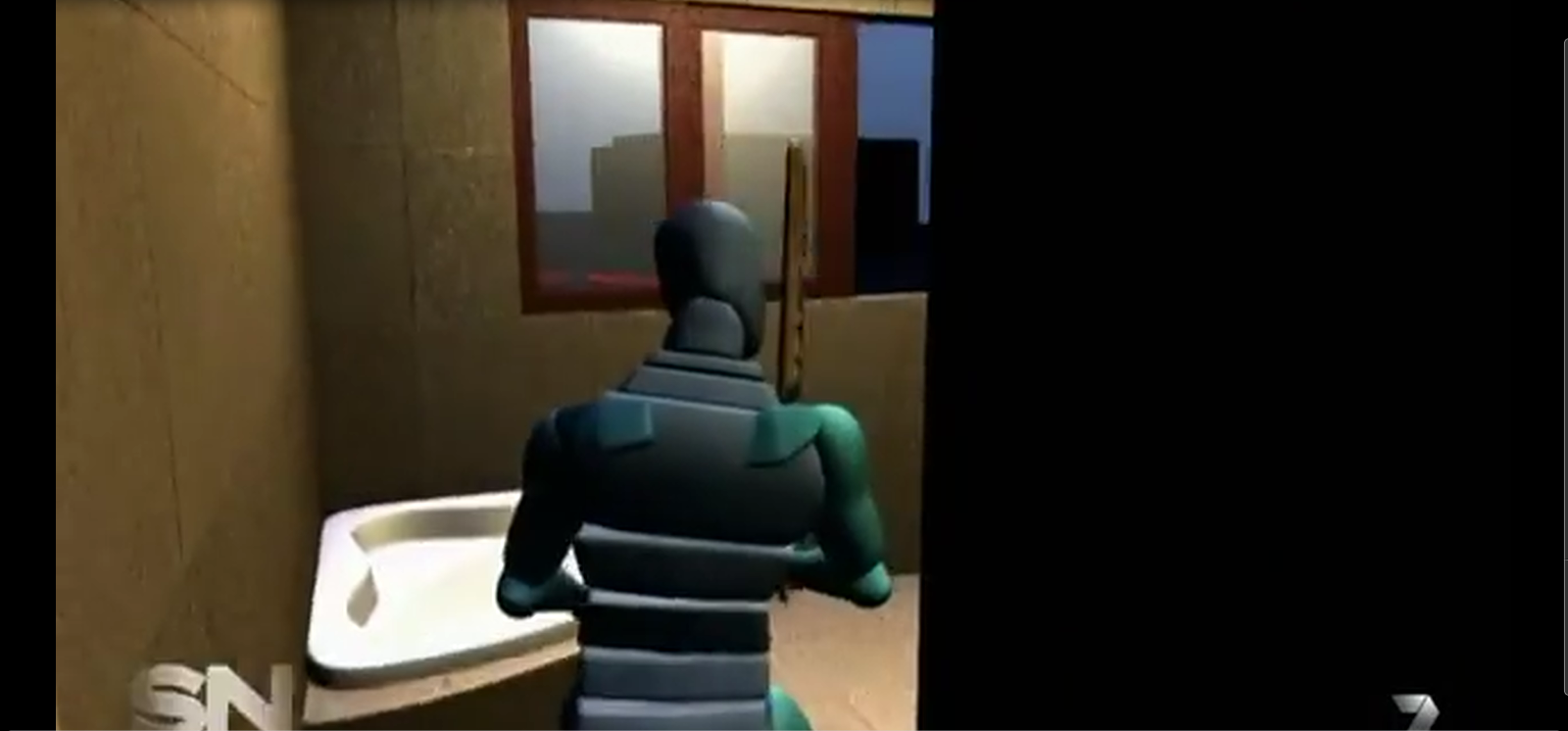

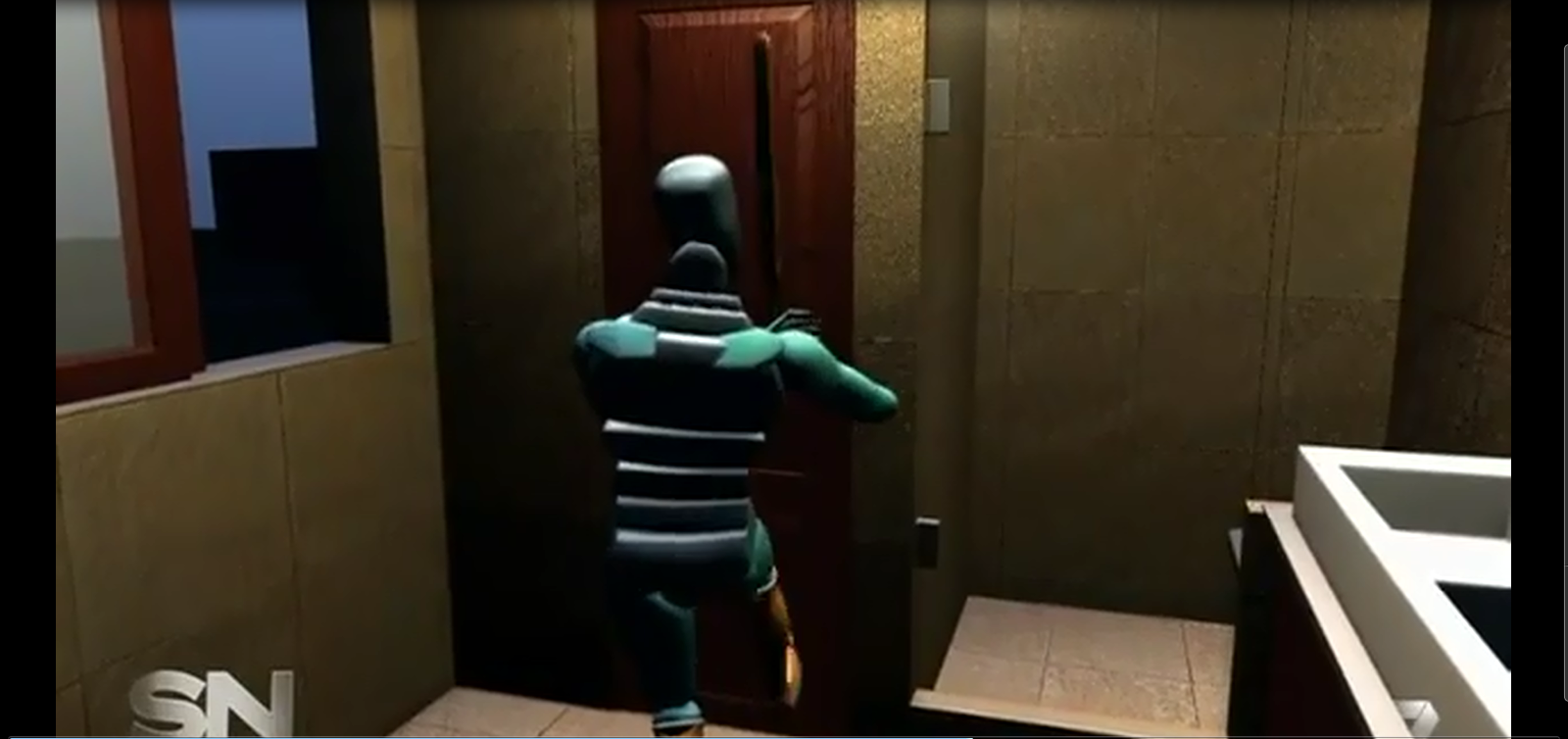
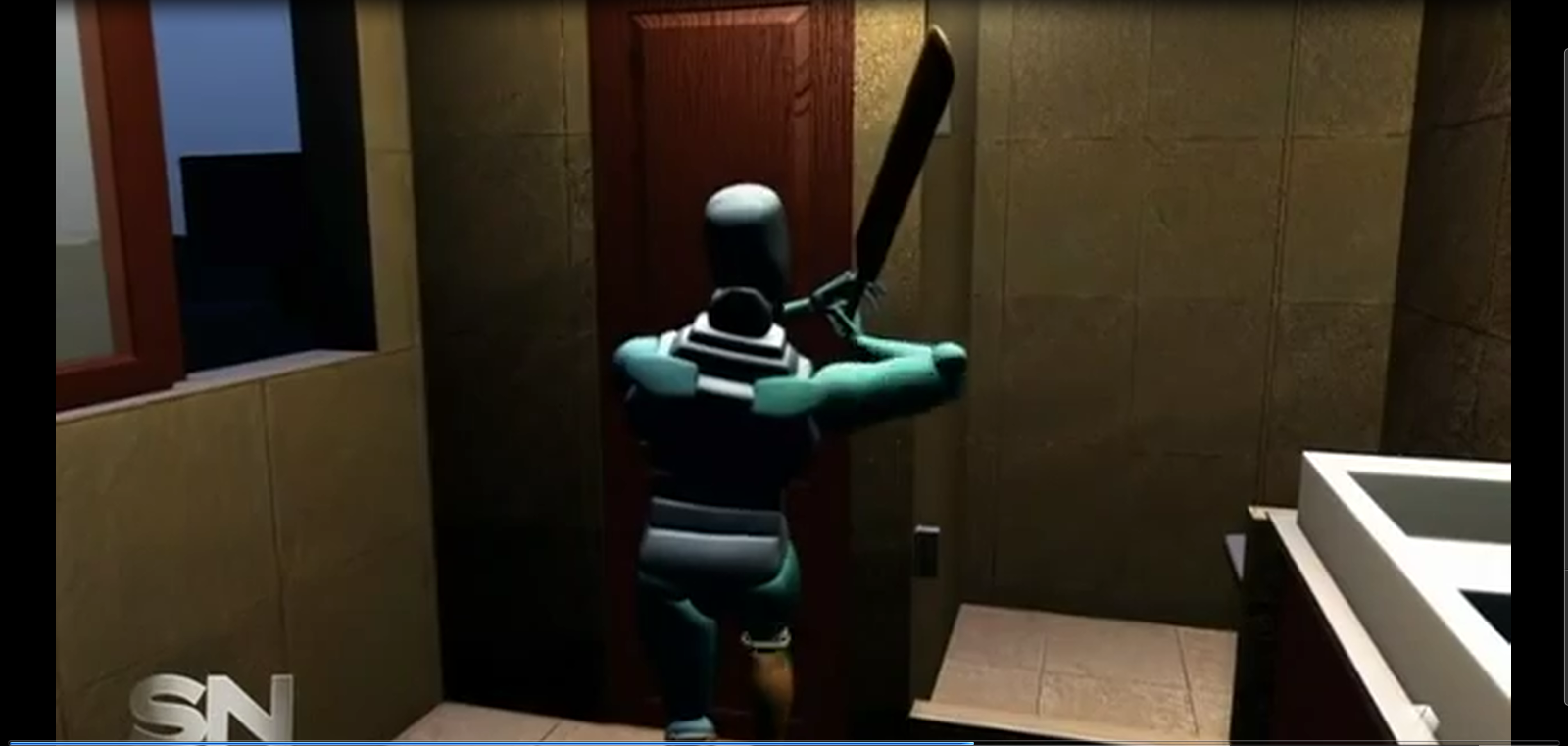
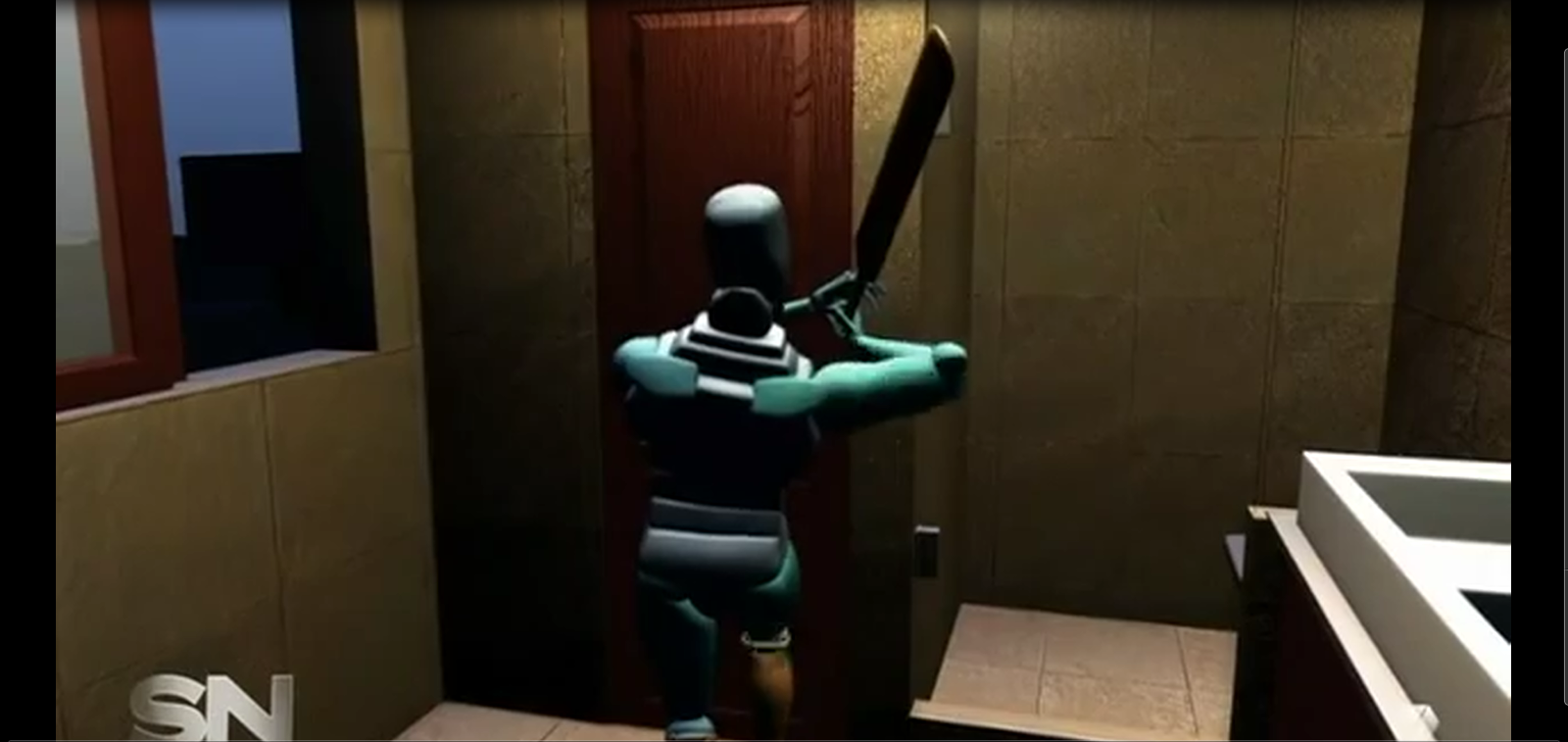


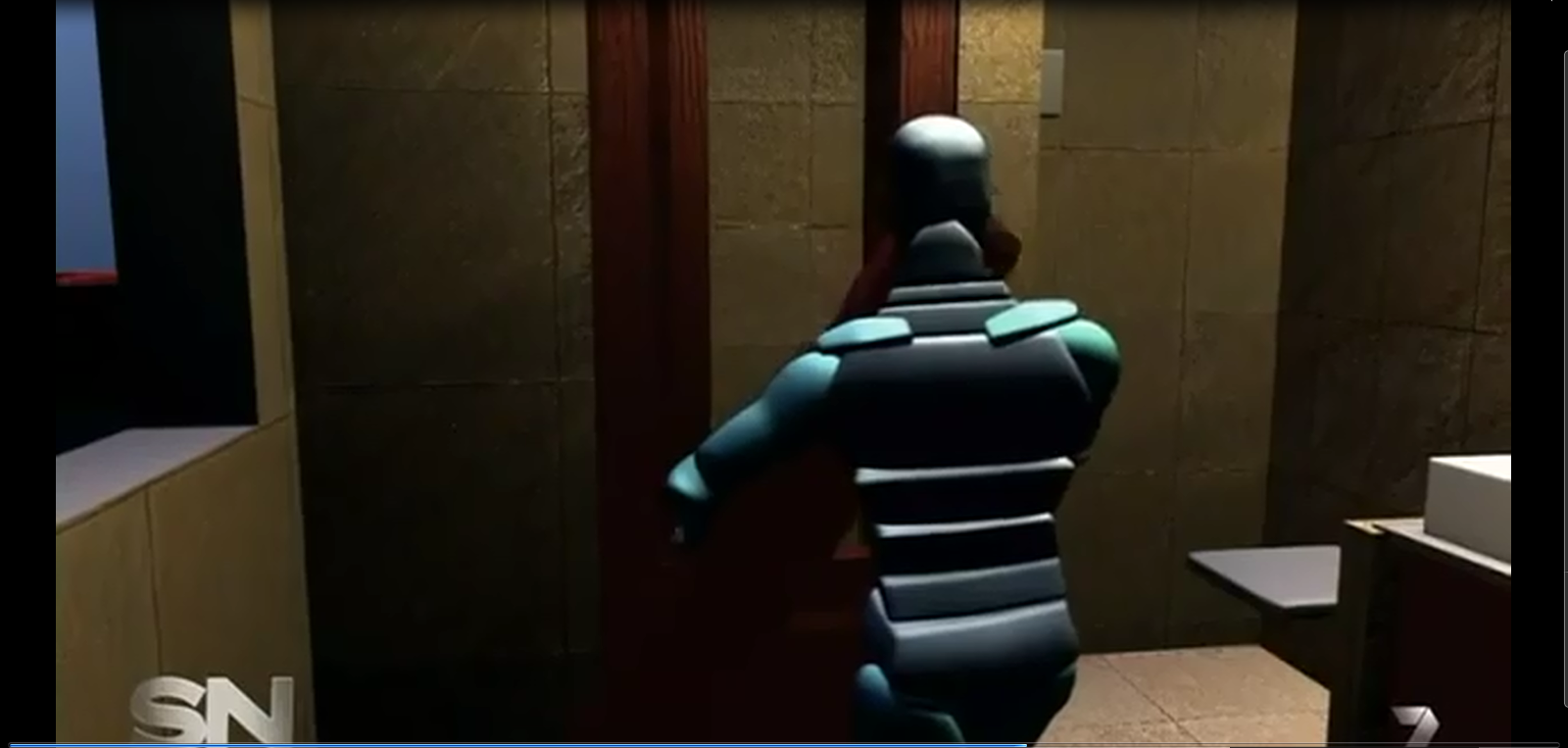
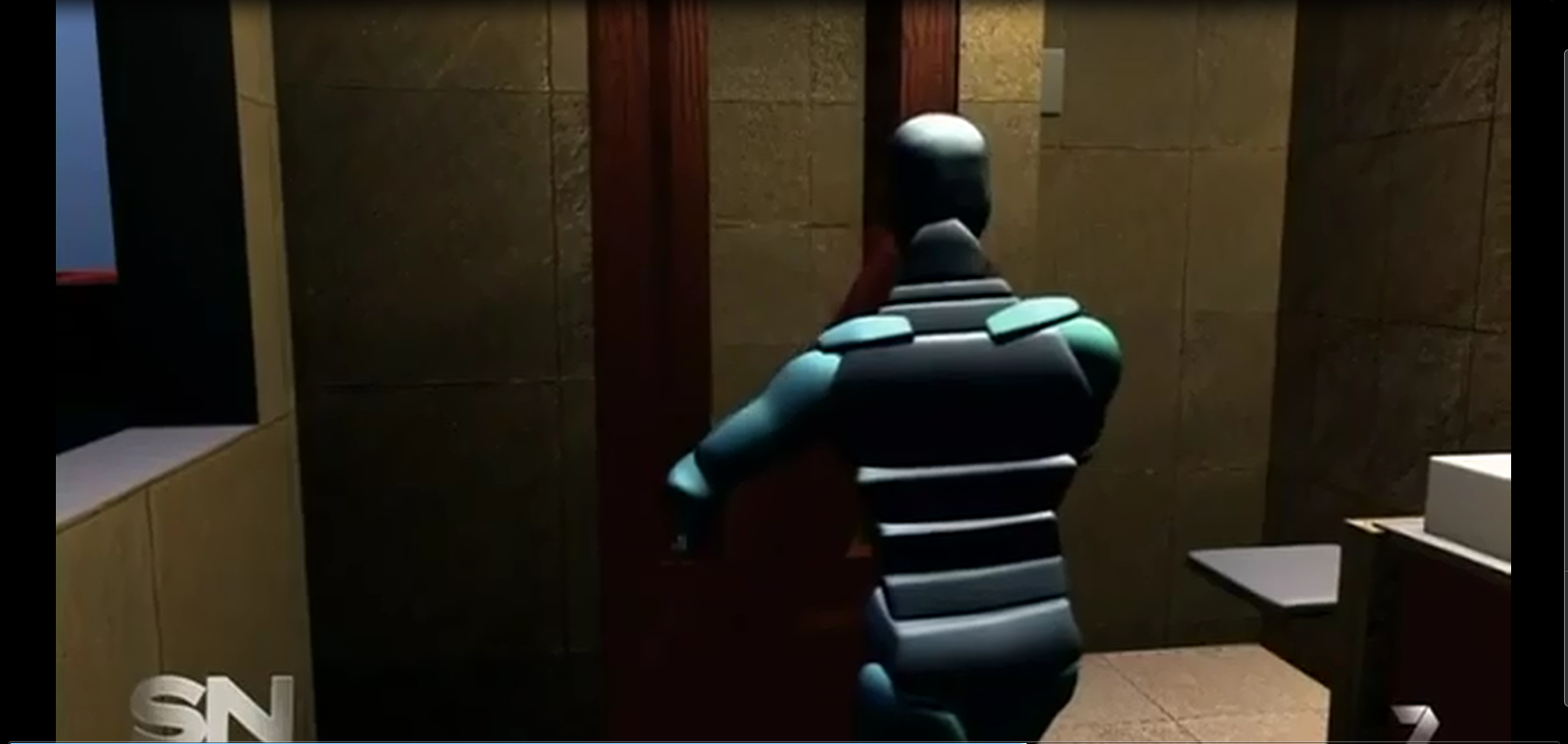

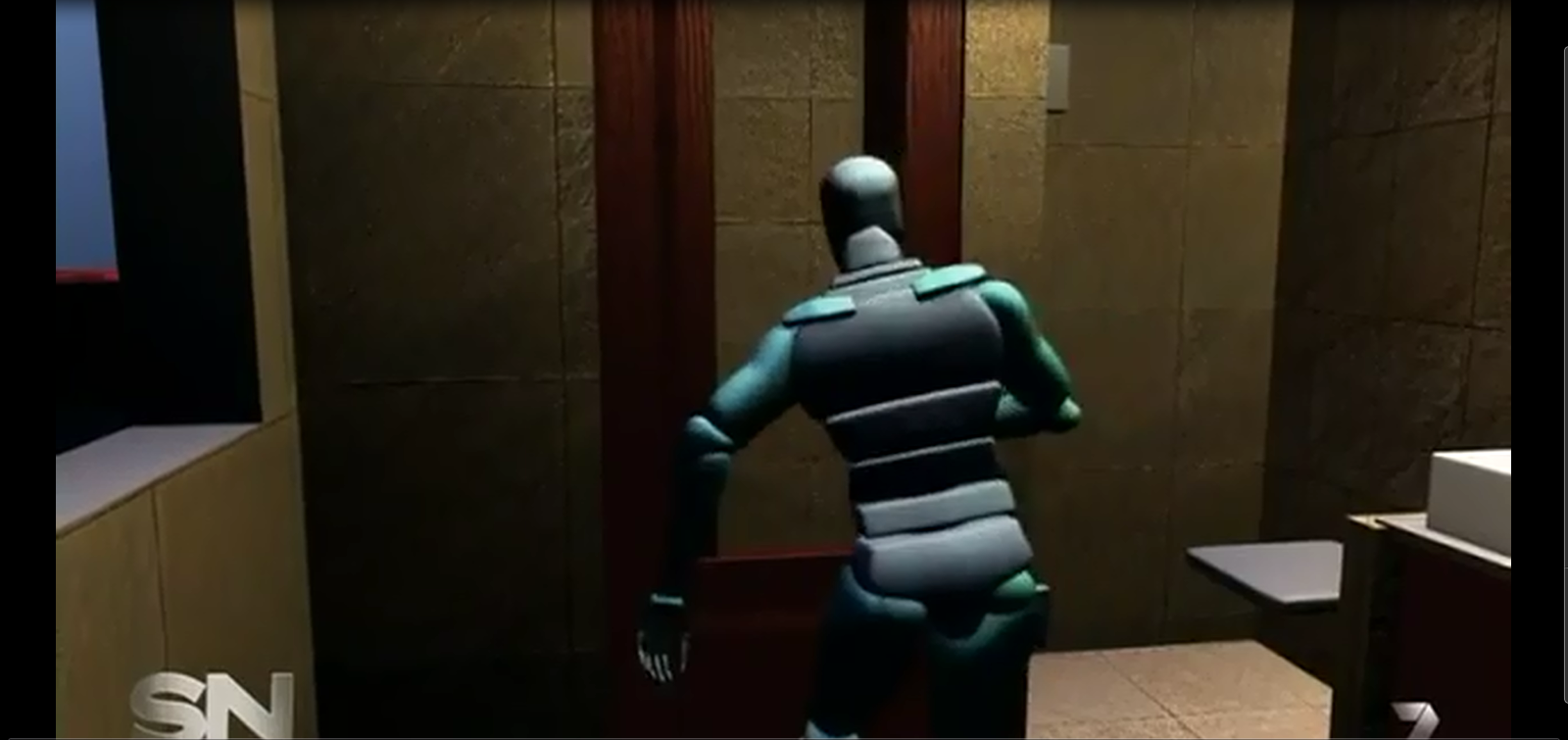
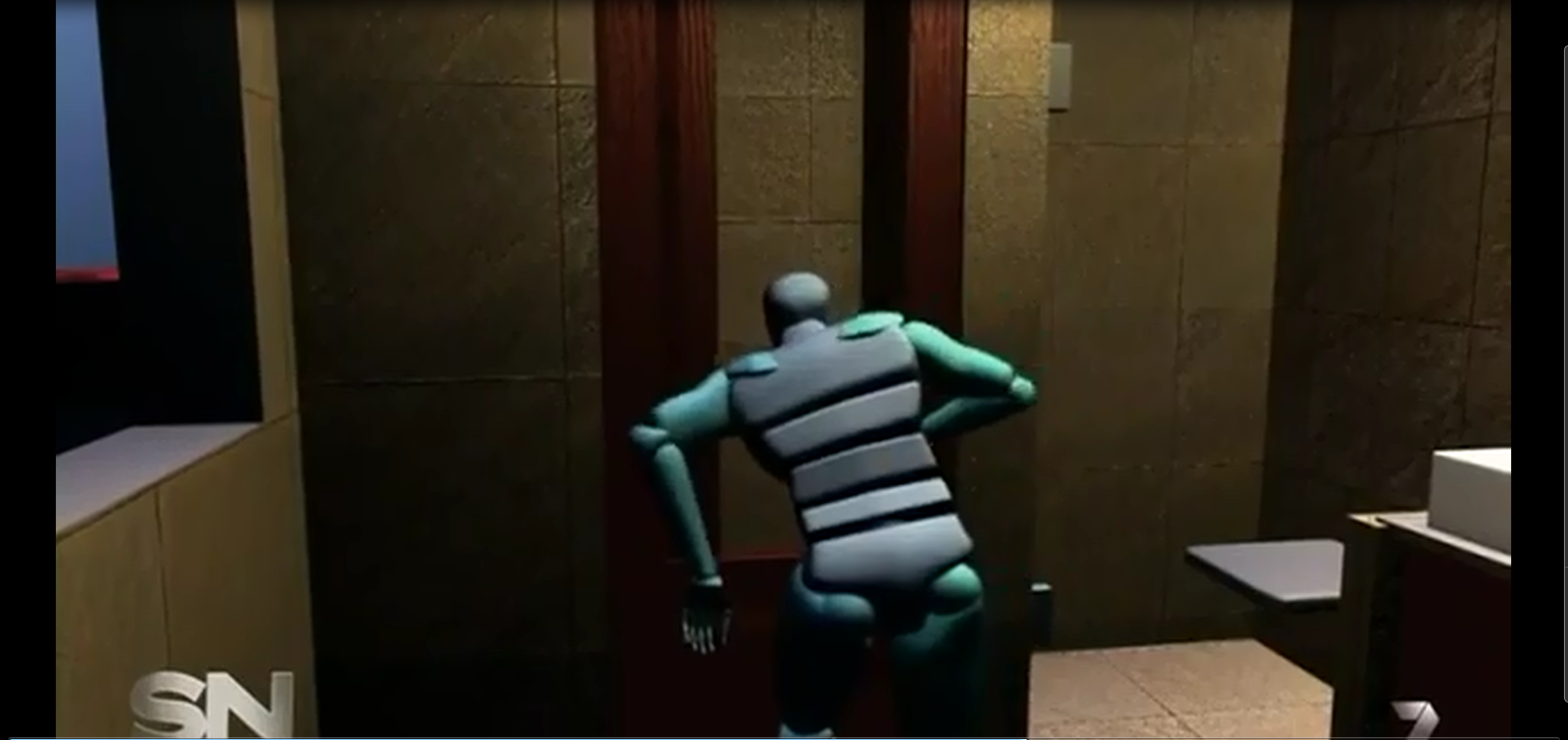
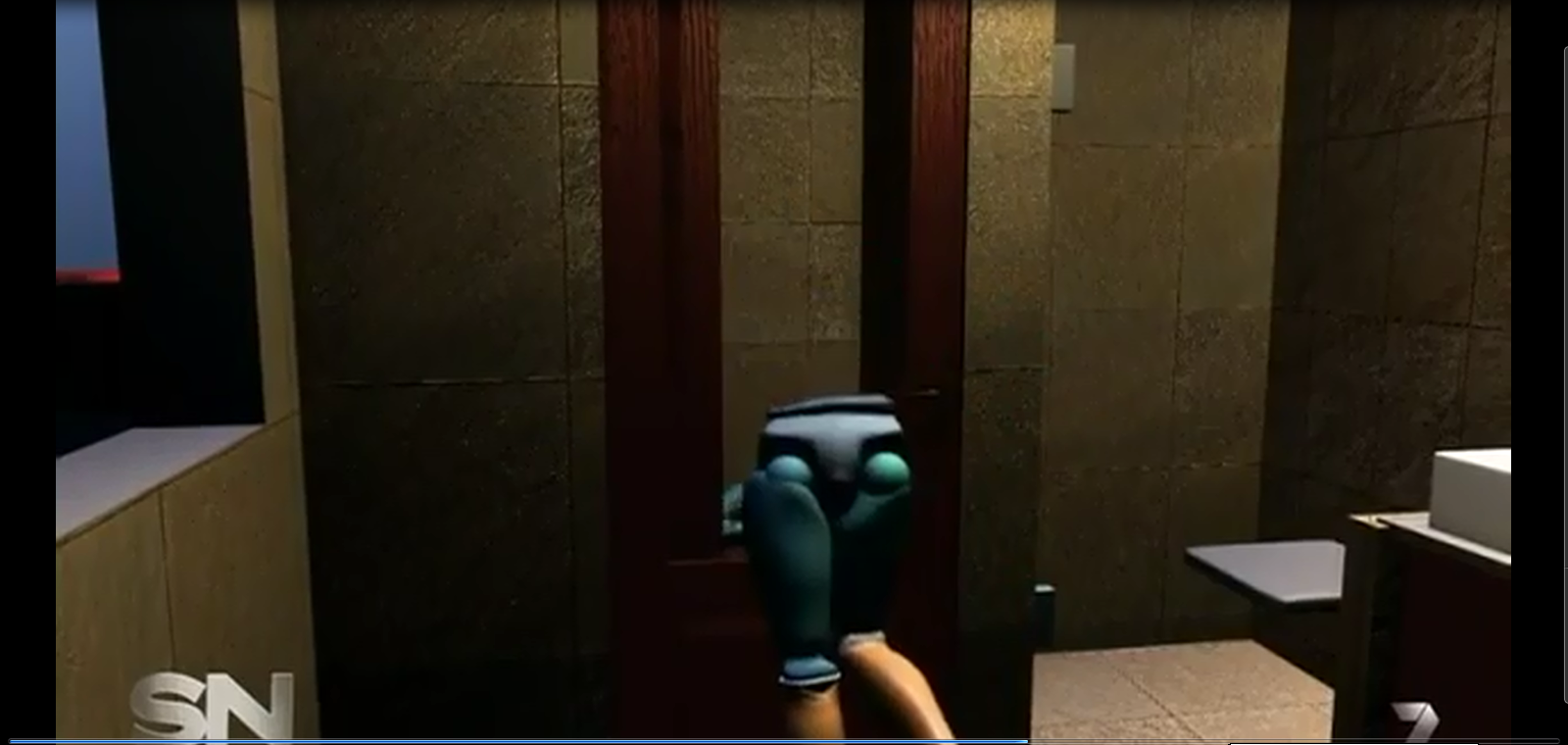
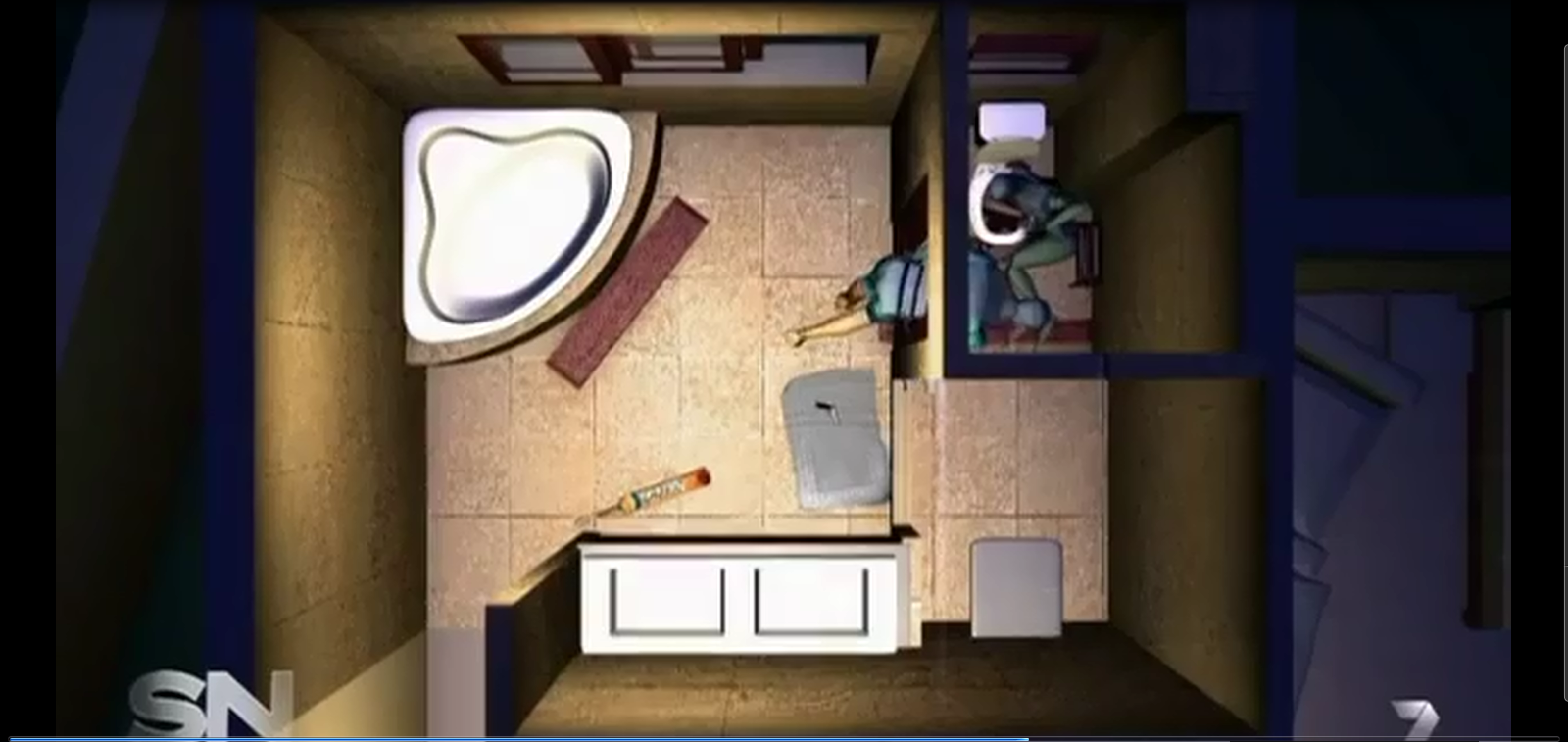
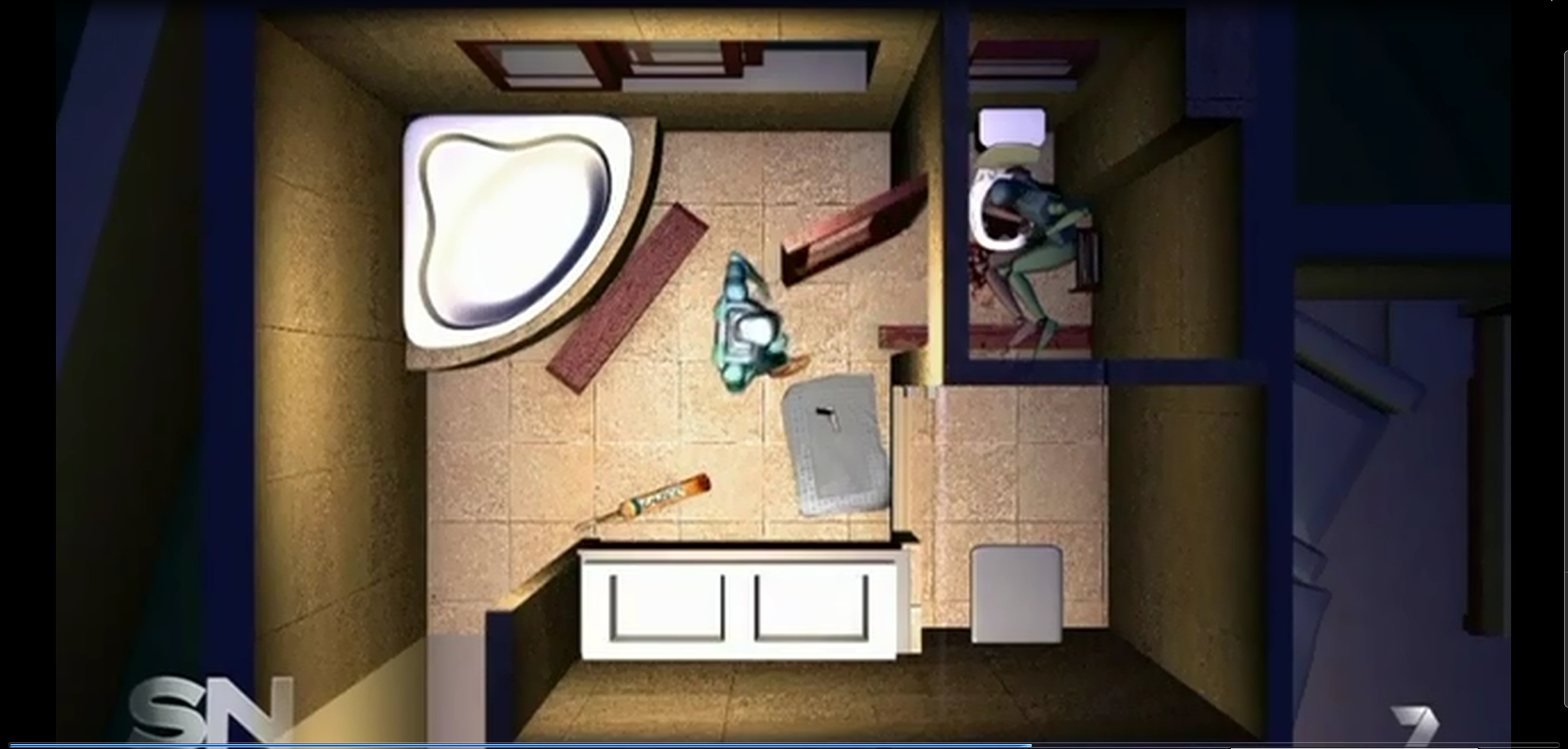
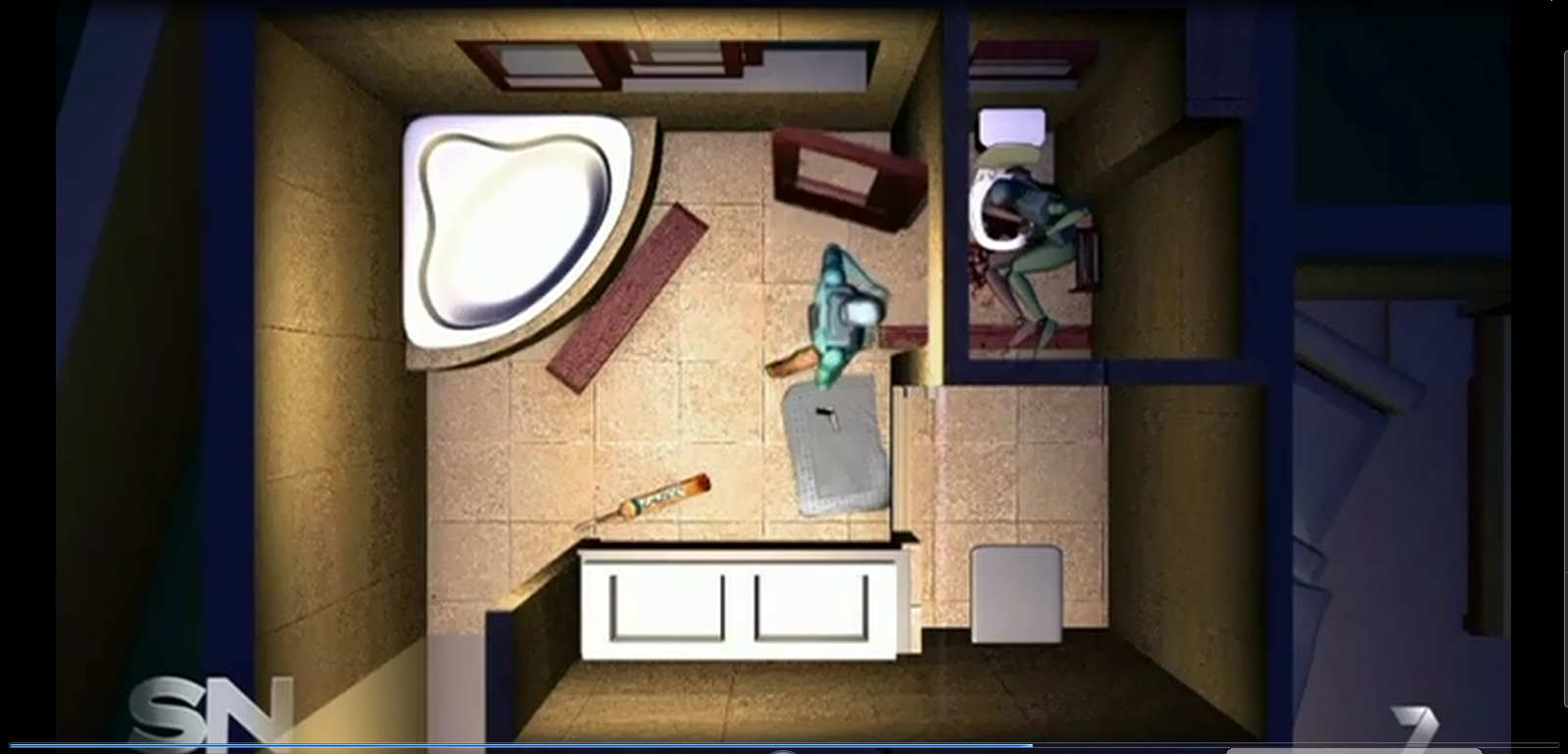
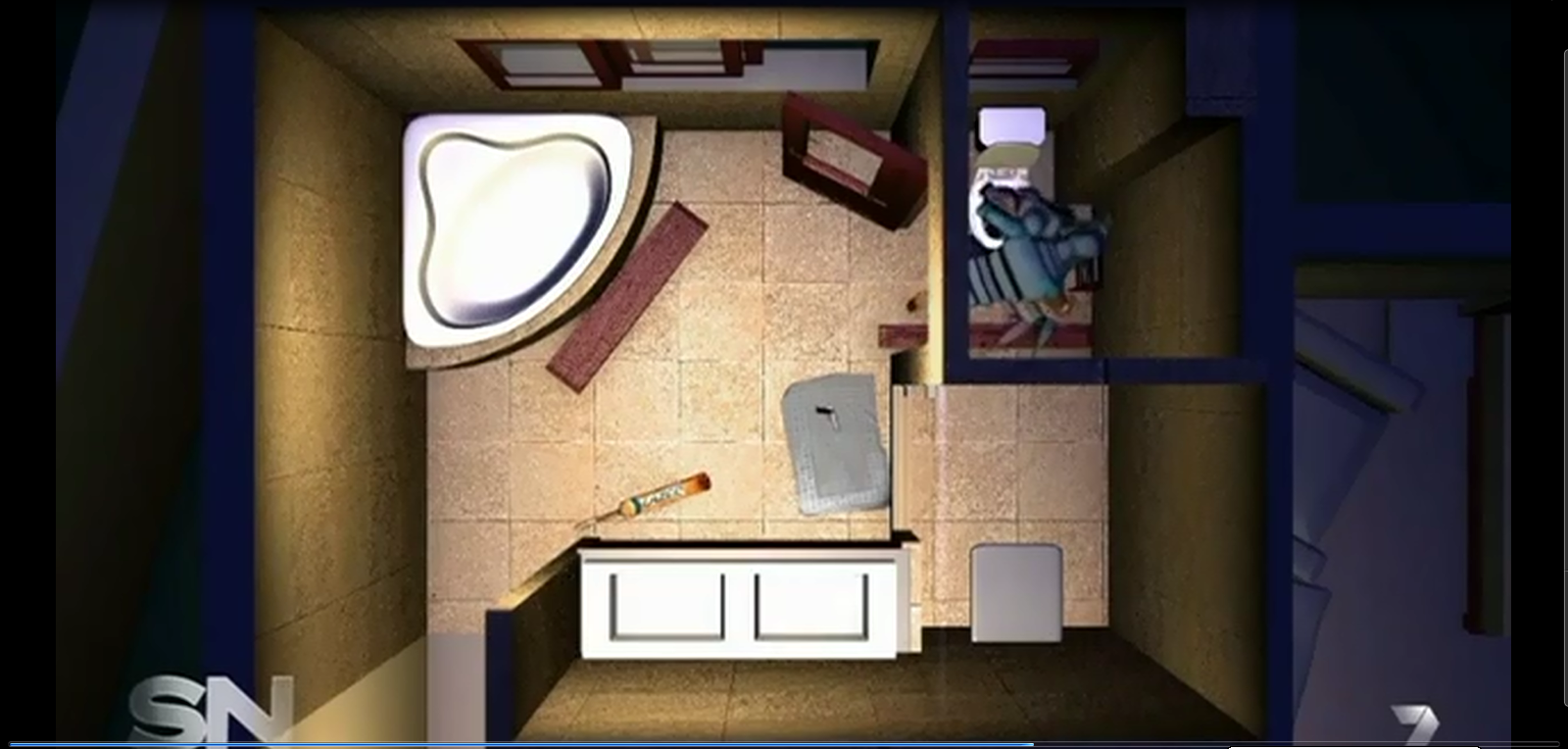
OSCAR AND AIMEE REENACTING HOW REEVA WAS FOUND, HOW HE DRAGGED HER OUT OF THE BATHROOM AND THEN CARRIED HER DOWN THE STAIRS.
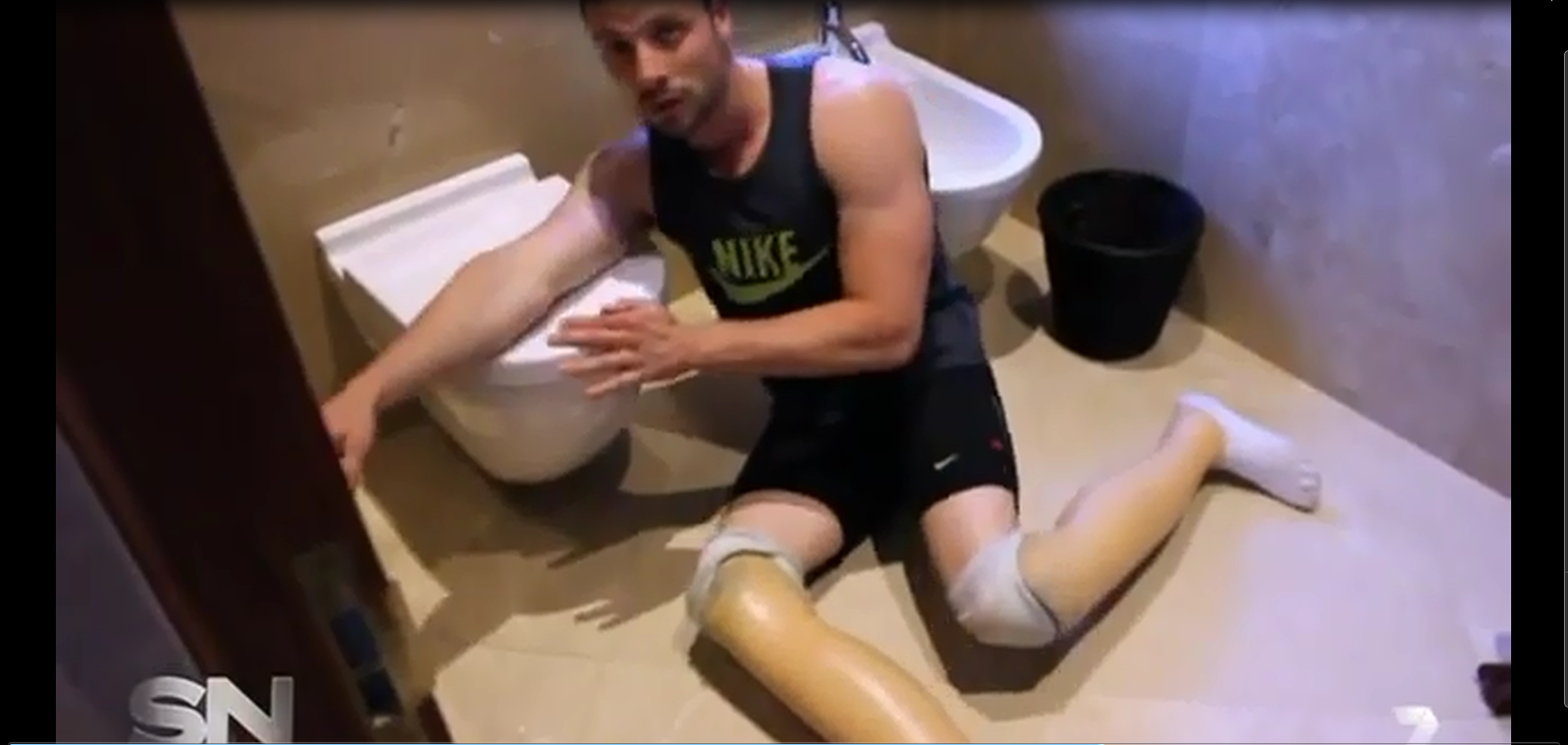

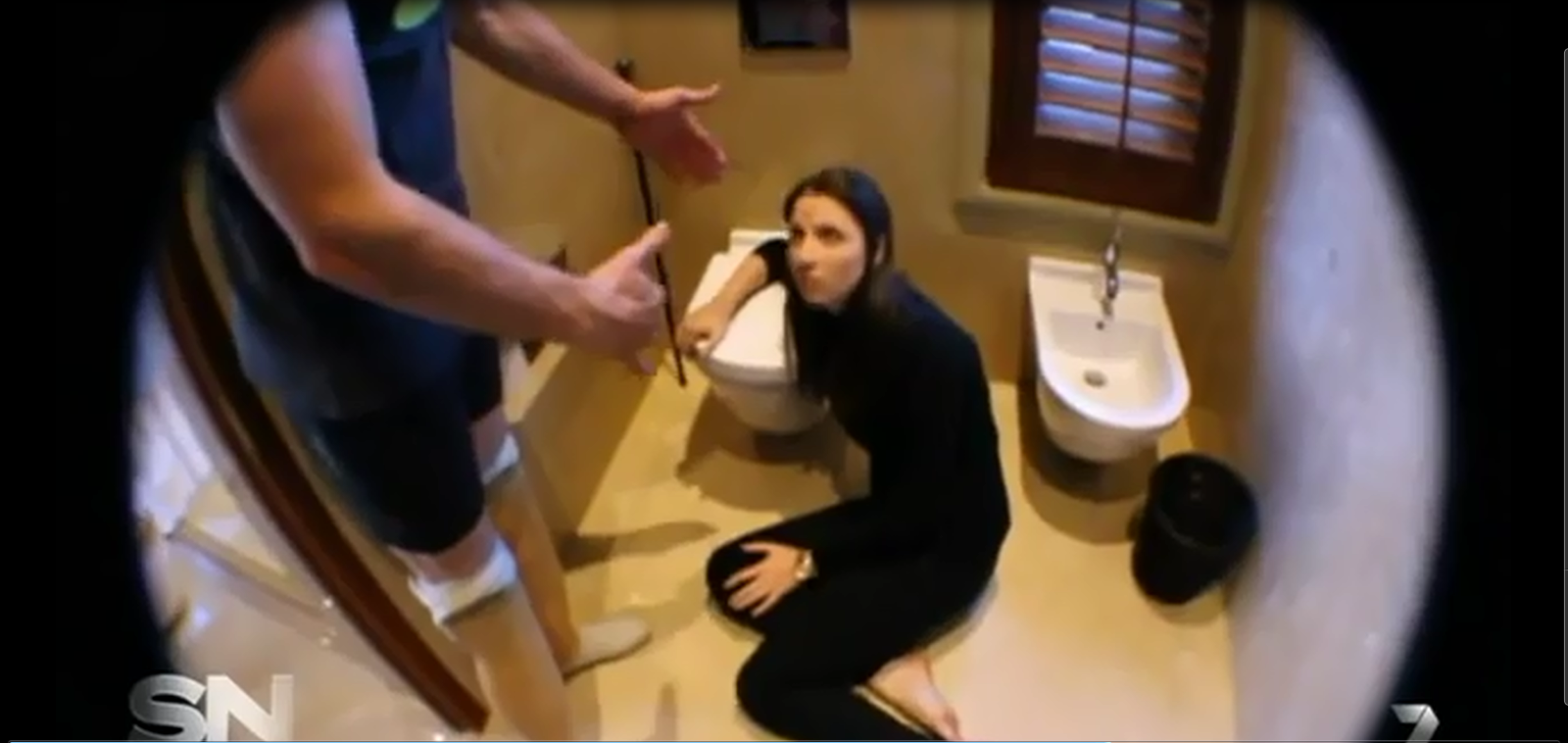
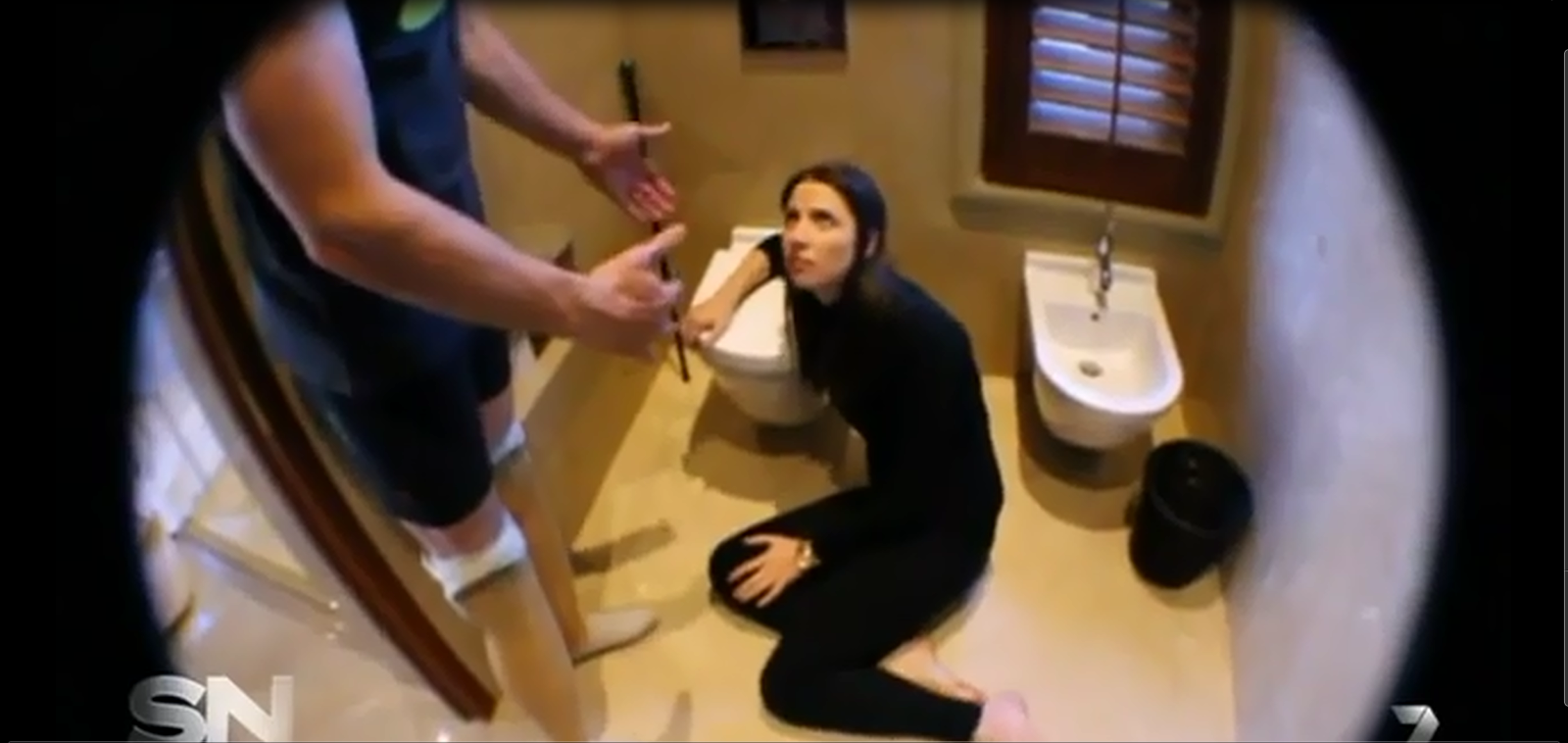
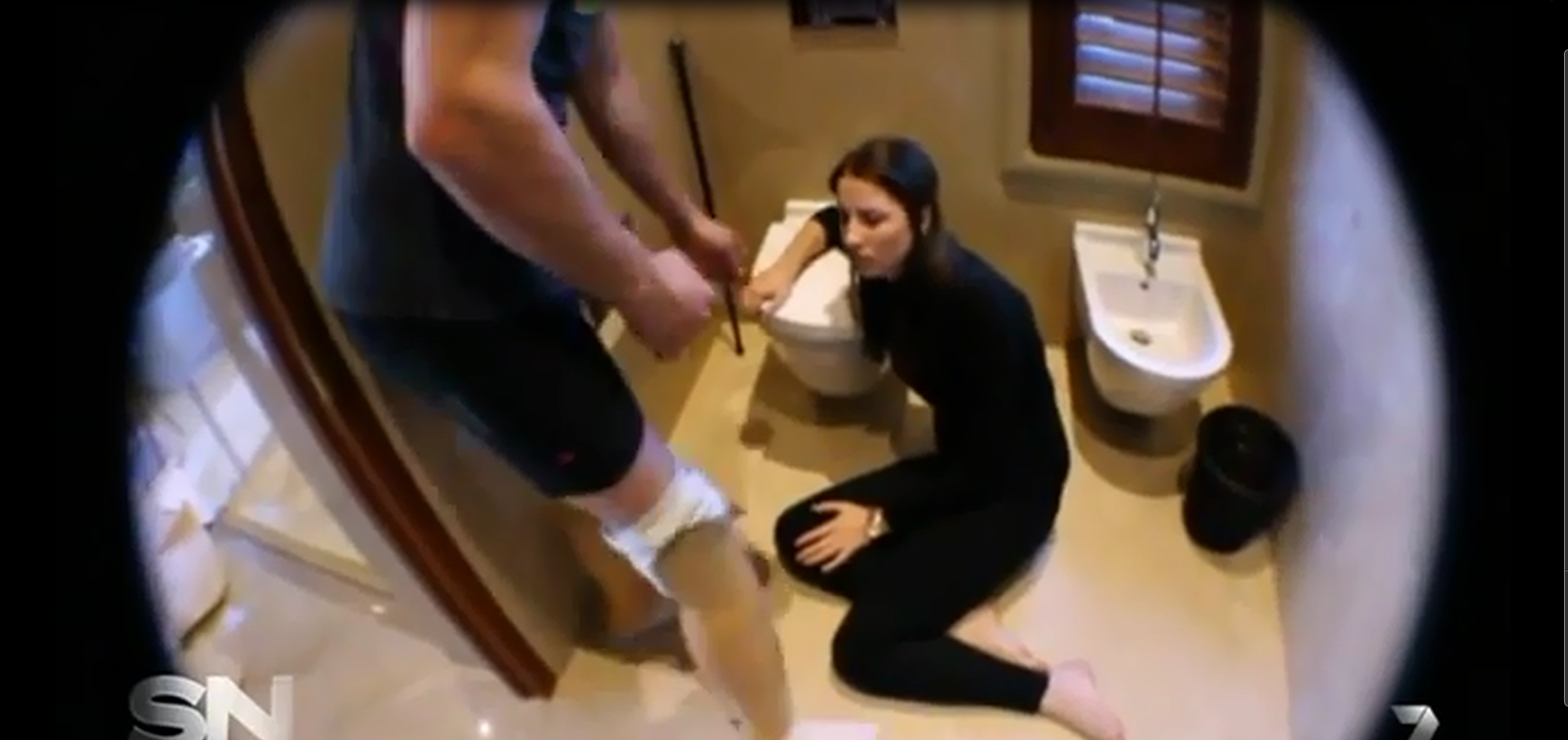

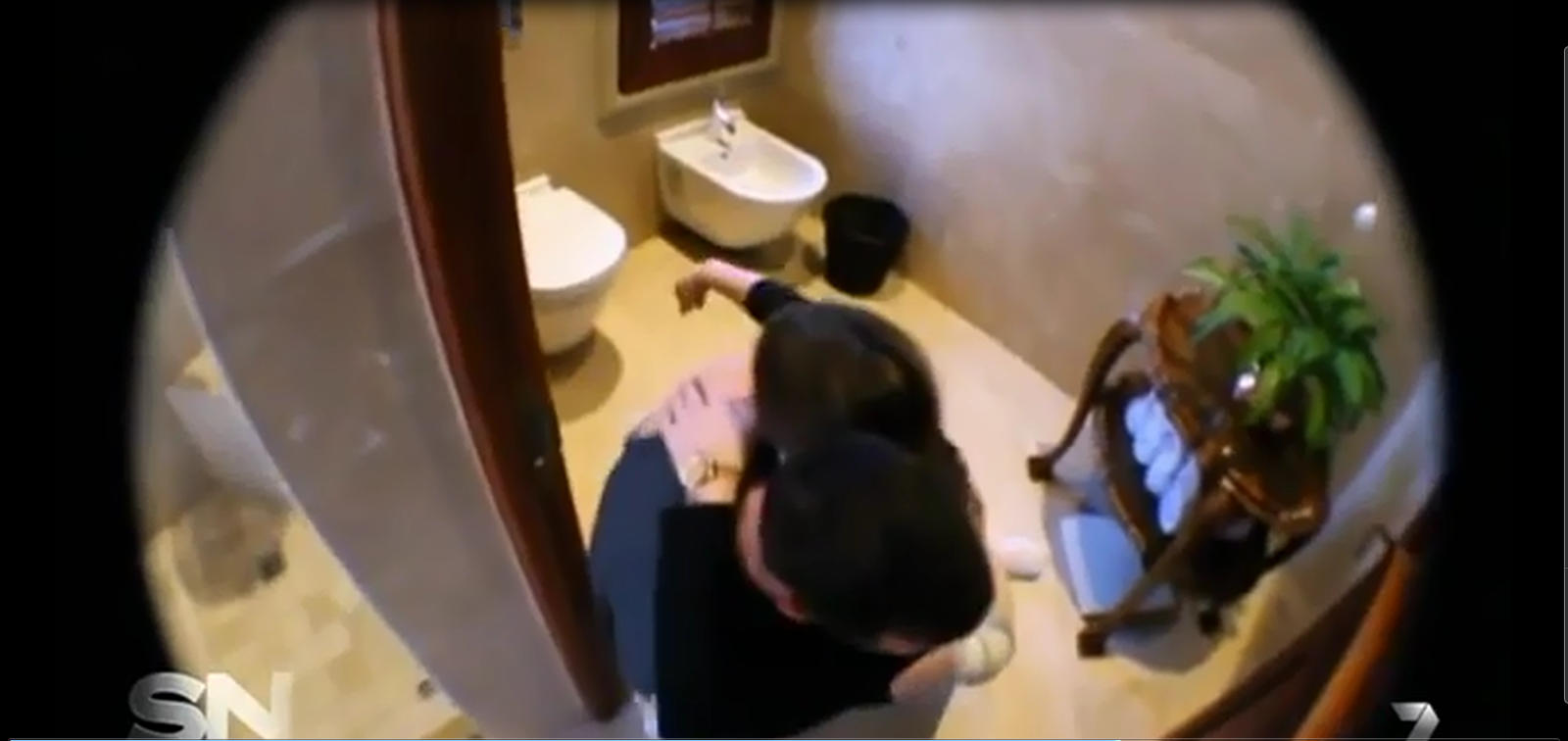


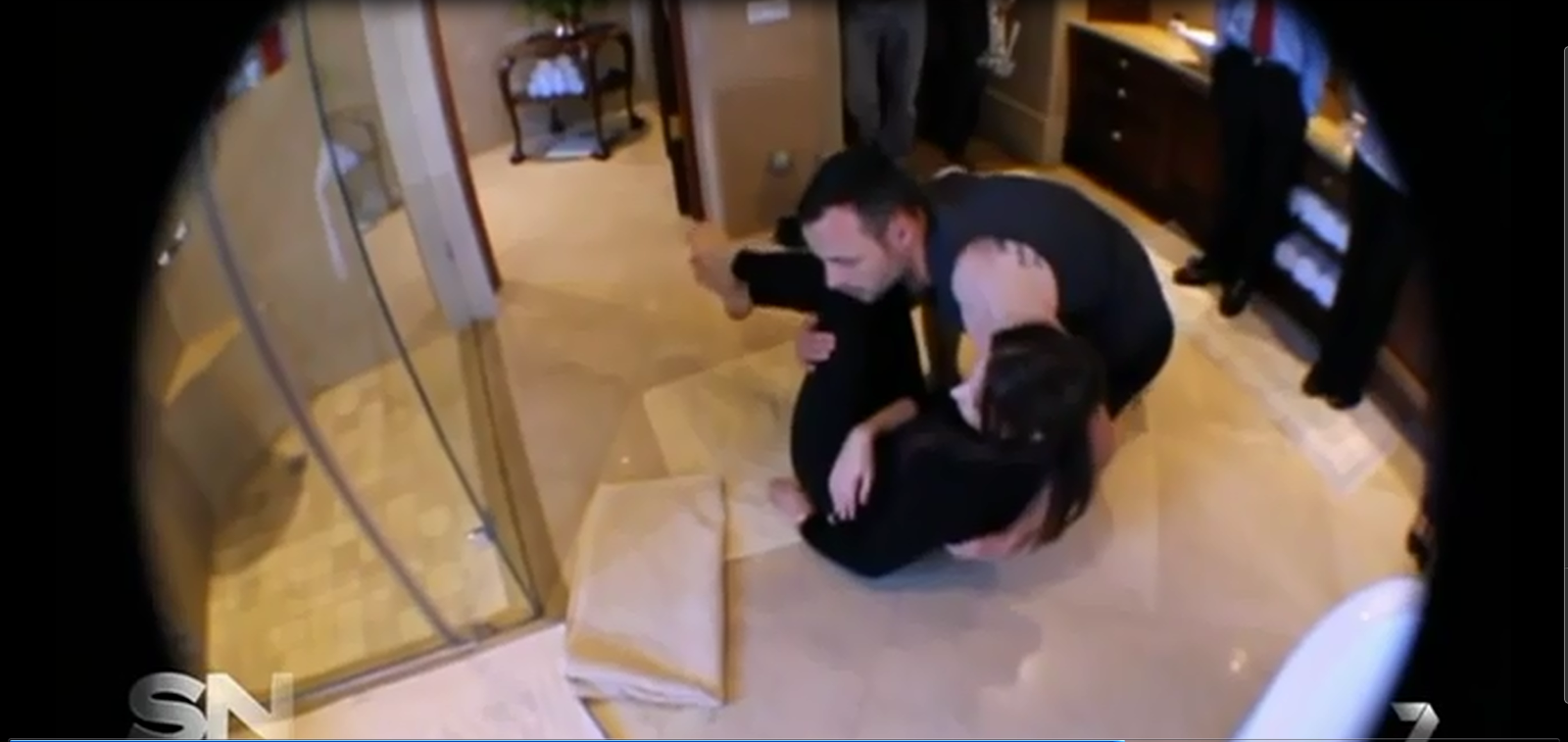

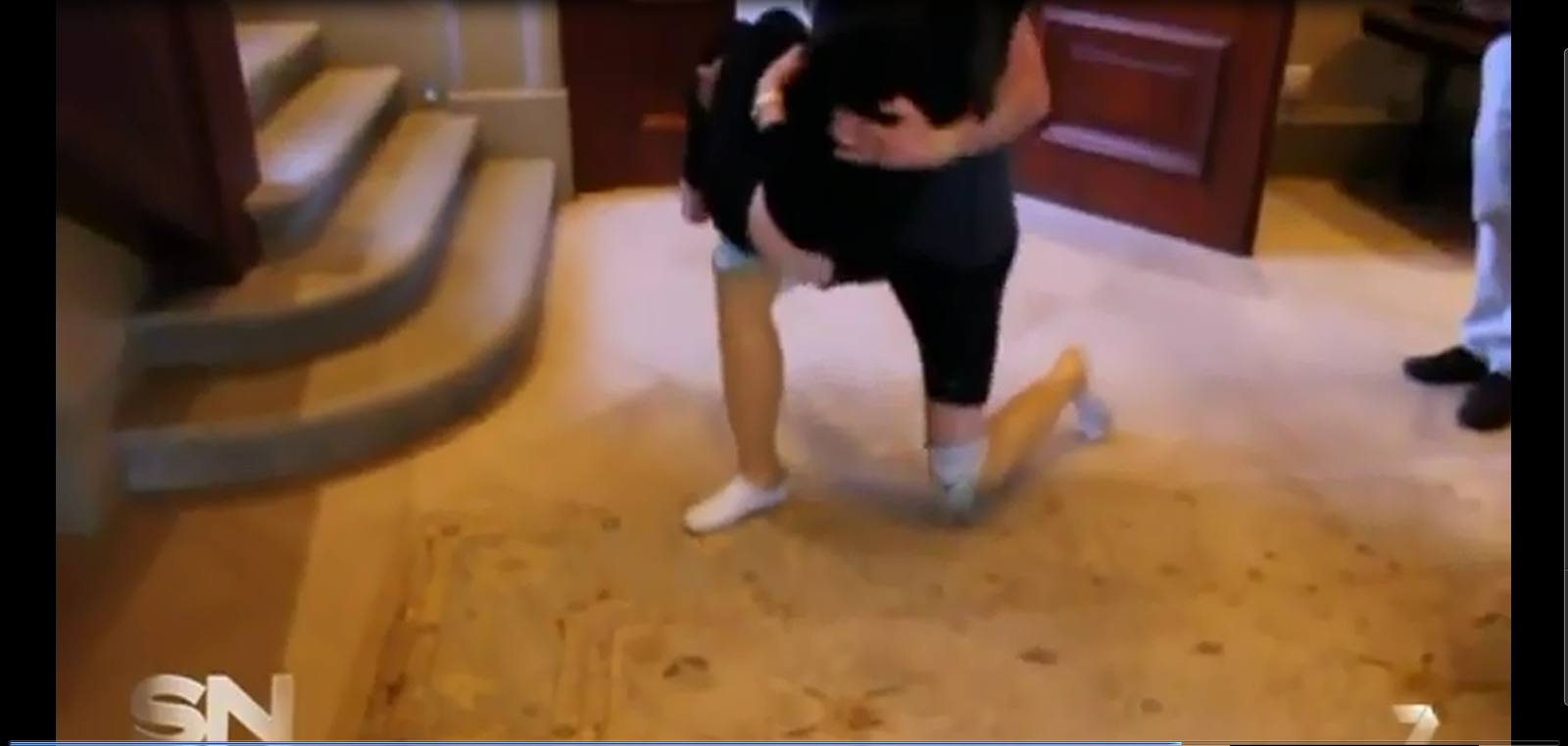
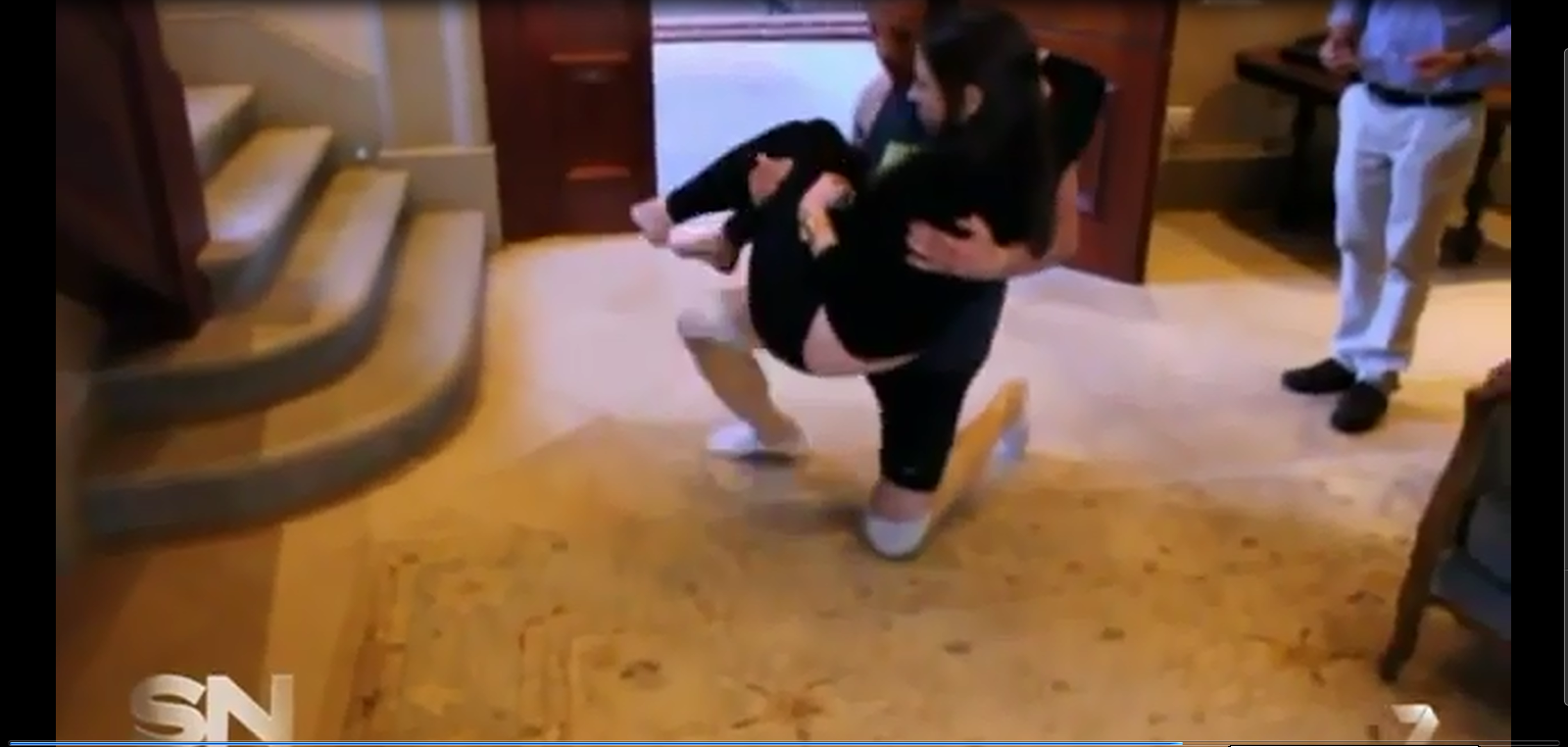

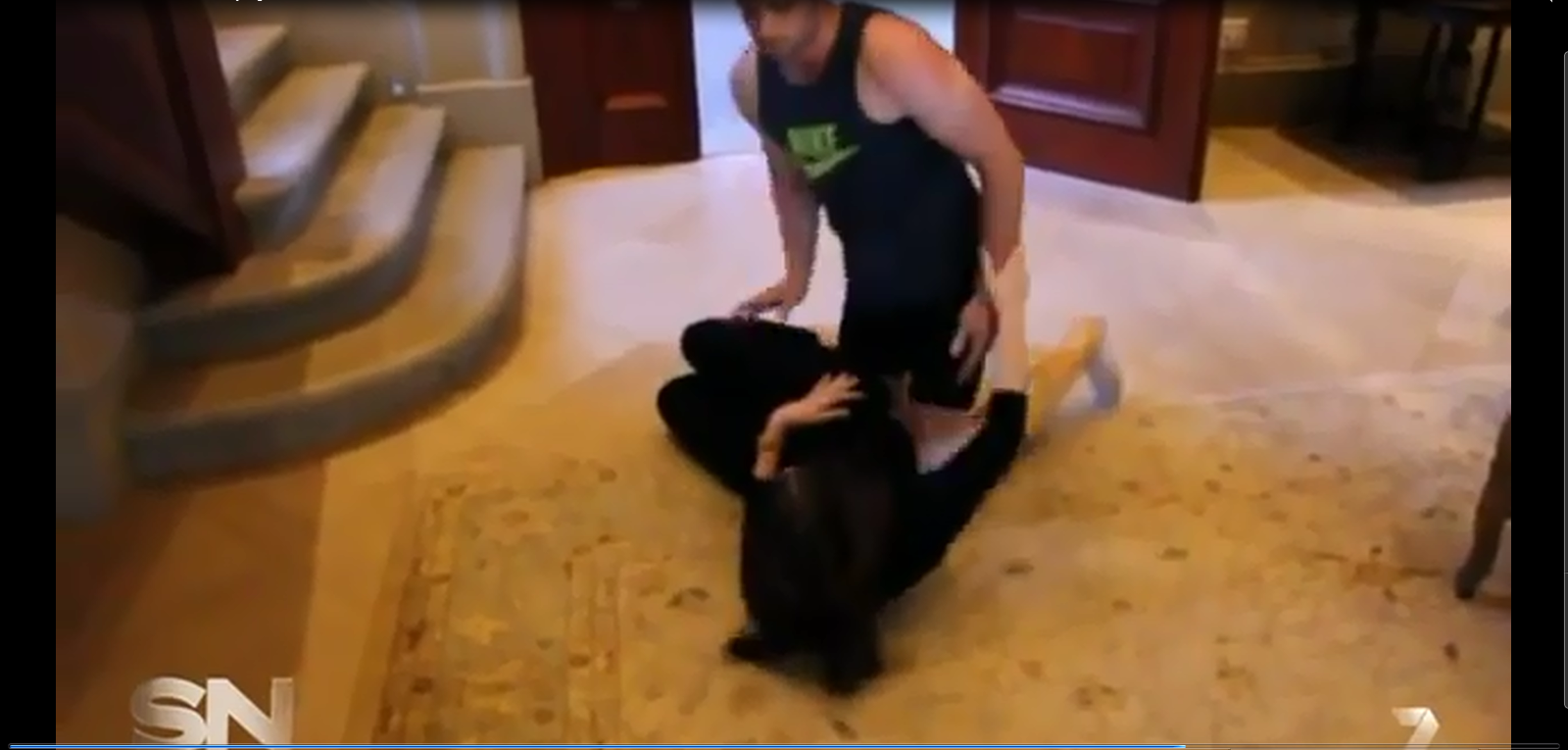



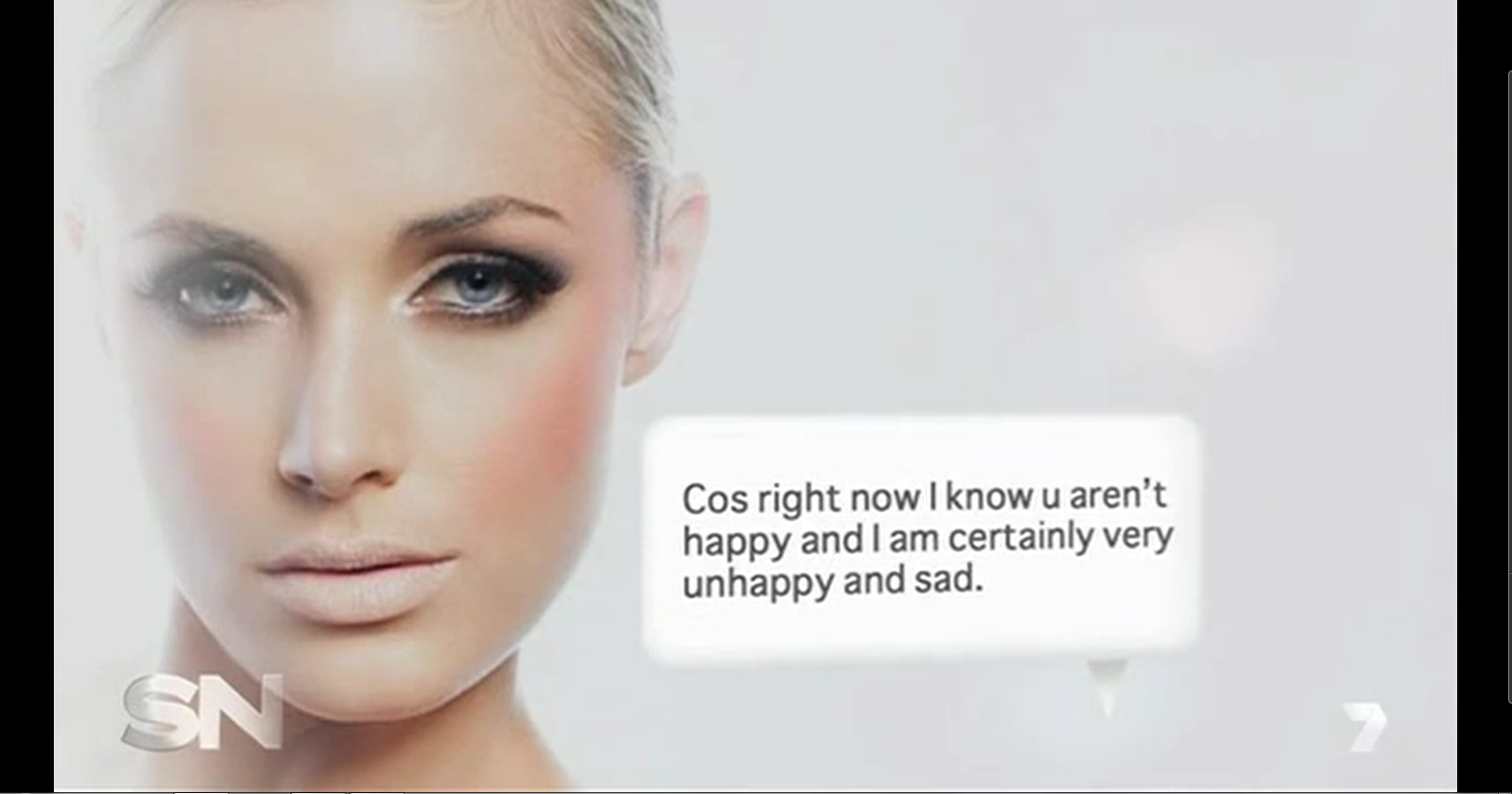












 Juror13